
You’ve got a vacancy coming up, the application looks decent, and the next move is usually the same one every Calgary landlord makes, pull a credit file and see what turns up. That report can be helpful, but it can also send people down the wrong path if they treat it like a verdict instead of one input in a wider screening file.
A credit check for tenants tells you how an applicant handles borrowed money, not whether they’ve been a good renter. That difference matters in Alberta, because rental decisions should rest on consent, lawful collection, and fair handling of consumer data, while the practical screening process still has to deal with income, references, and rental history.
Table of Contents
- Why a Credit Check for Tenants Is Only One Piece of the Puzzle
- Getting the Prerequisites in Place Before You Pull a Report
- Ordering the Credit Check Through a Canadian Bureau
- Reading the Report Without Overweighting the Score
- Combining Credit Findings With Income, References, and Rental History
- When Credit Signals Are Weak or Misleading
- Staying Compliant With Alberta Privacy and Human Rights Rules
Why a Credit Check for Tenants Is Only One Piece of the Puzzle
A landlord hands me an application on a Thursday afternoon. The applicant has a clean-looking file, the rent fits the unit, and the credit pull comes back with a decent score. That still doesn’t tell me whether rent was paid on time at the last place, whether the prior landlord had to chase arrears, or whether the applicant left the suite in a mess.
That’s the core problem with treating credit as the answer. Credit files were built for debt repayment, not lease performance, and the federal market report behind the tenant-screening discussion says rental payment history is still thinly captured in credit-related systems, with coverage estimated at only 1.7% to 2.3% of U.S. renters in the materials on the topic. That gap explains why Alberta landlords keep leaning on employment verification, rental references, and income review alongside the bureau pull, because the report can show delinquencies, judgments, liens, and bankruptcies, but not whether the person paid rent reliably in the past (CFPB market report).
The practical trap most owners fall into
A strong credit file can hide a weak rental history. A thin or bruised file can also belong to someone who pays rent faithfully but has little revolving credit or has been through a non-credit hardship. That’s why the best Alberta screening process treats the credit report as a signal, not a pass or fail stamp.
Practical rule: if the bureau file and the landlord references tell different stories, pause and verify before you decide.
That’s also where owners avoid the mistake of leaning on credit alone, which is one of the quickest ways to create a slow, expensive vacancy cycle. If you want the bigger picture on where landlords go wrong, this guide on the biggest property management mistakes Alberta landlords make lines up closely with what I see in the field.
Getting the Prerequisites in Place Before You Pull a Report
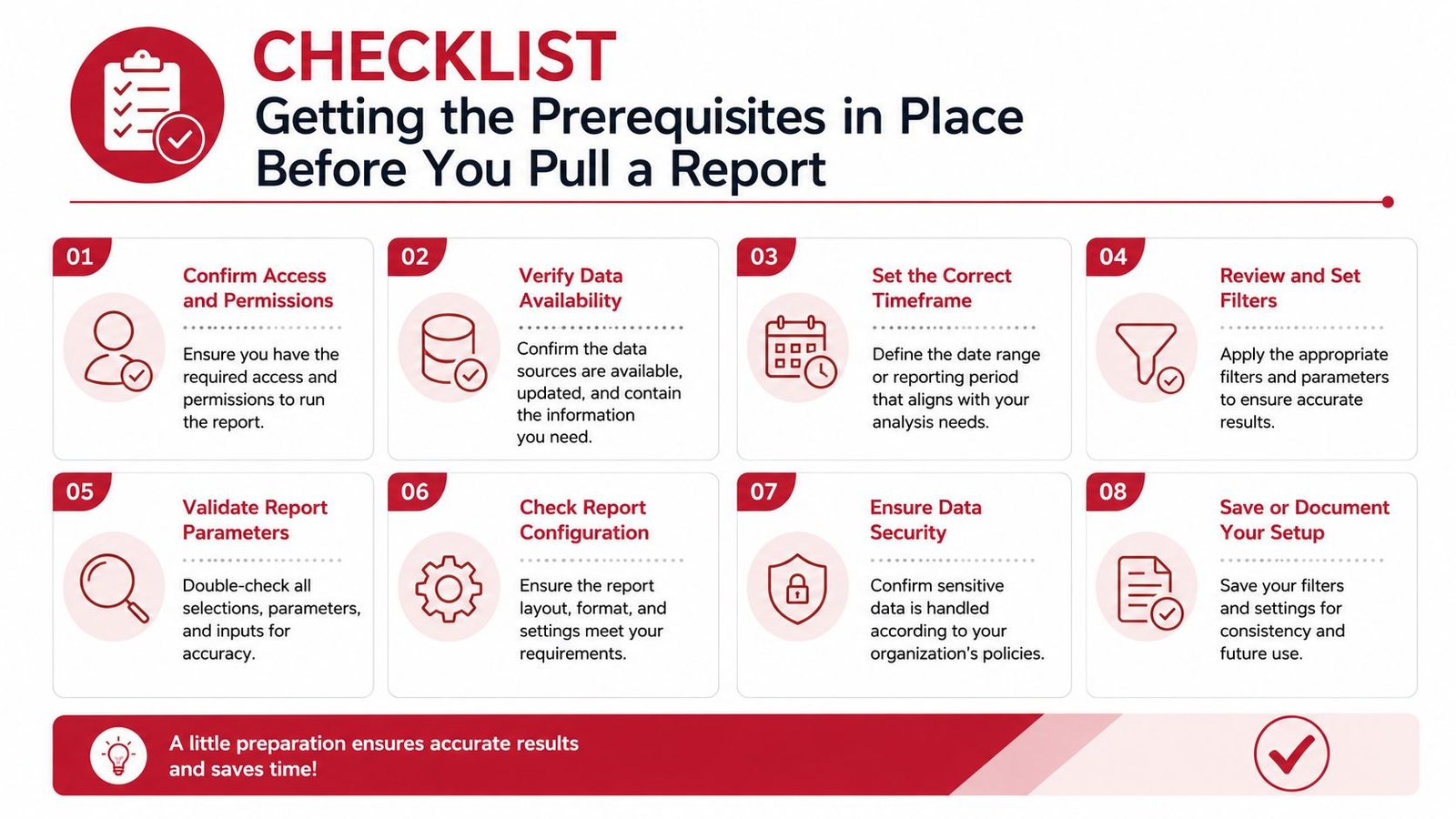
A credit check only stays useful if the paperwork is clean before the request goes out. That starts with written consent, but consent by itself isn’t enough. You also need a process that matches the applicant to the correct file, records what you asked for, and shows why the information was collected.
What belongs in the application package
Before the bureau pull, the application should ask for the applicant’s full legal name, date of birth, current address, and contact details, then match that against identity documents. The reason is simple, screening reports can attach the wrong record to the wrong person if the identifying details are sloppy. That’s one of the main reasons tenant-screening complaints keep coming up in the market materials, especially where incorrect information is involved (DataFacts tenant screening overview).
Your consent form should also state that the landlord may use credit, income, references, and rental history to assess the application. It should say who will see the information, how it will be used, and that the applicant can withdraw consent before the process is complete.
A short internal policy prevents bad judgement calls
A documented screening policy keeps decisions consistent. It should spell out what triggers further review, what documents you ask for when the file is thin or unclear, and who makes the final call. That matters when an applicant challenges a rejection, because a paper trail is easier to defend than a memory.
The lease package should already match the screening approach too, which is why a clean rental lease agreement example is useful before you get to move-in, not after. If the application and lease terms are aligned, you reduce the chance of a dispute over what was promised.
Keep the collection narrow. If you don’t need a document to assess tenancy risk, don’t ask for it.
Ordering the Credit Check Through a Canadian Bureau
Once the file is ready, the process is simple enough, but the choice of route affects what you see and how much manual work follows. Alberta landlords can order through a direct bureau relationship or through a tenant-screening platform that bundles credit with identity and rental-risk checks. A direct pull gives you a plain credit file. A platform is usually easier if you want one report that combines several screening signals and keeps the workflow in one place.
Choosing the right route for the job
A bureau pull works well if you already have a tight internal process and only need credit added to a complete application package. A bundled screening service fits better when you want the same steps every time and less copying between forms, especially if you manage more than one unit or screen people remotely. In practice, I use the bureau directly when the rest of the file is already strong and I just need the credit piece. I use a platform when I want the application, consent, and screening records kept together without extra handling.
The screening-industry description notes that a tenant credit pull is an instant search from one of the three major bureaus and can show current and delinquent accounts, suits, judgments, liens, and bankruptcies (DataFacts tenant screening overview). That speed is one reason these checks became standard. They are fast, easy to fold into a leasing workflow, and useful when you are reviewing several applications under time pressure. Speed still creates risk if the identifying details are weak or the report is read too quickly.
What you need to provide when you order
The bureau or screening platform will usually need the applicant’s legal name, date of birth, current address history, and your signed consent record. If the system lets you narrow the request, ask for the fields that matter to tenancy instead of a bloated file full of noise. For most Alberta decisions, that means current accounts, delinquencies, public records, and any rental-specific notes the platform includes.
You also need to decide who pays. Some landlords cover the cost as part of vacancy management, while others pass it to the applicant if local practice and their process allow it. The point is consistency. If one applicant is charged and another is not, people will question the decision even when the credit file itself is not the issue.
If you cannot explain why you ordered a report on one applicant and not another, your screening process needs work.
Reading the Report Without Overweighting the Score
The score is the first thing many look at, and it’s often the least useful part of the file by itself. A tidy score can coexist with a report that shows warning signs, while a rough score can come from a thin file that doesn’t tell you much about rent behaviour at all. Credit reports are better read as a set of clues.
The fields that actually matter for tenancy
Tradelines show active and closed accounts, which help you see whether the applicant handles revolving credit and instalment obligations in an orderly way. Payment history is the clearest window into whether bills are being paid on time, but it still reflects debt habits more than rent habits. Public records like judgments, liens, and bankruptcies deserve attention because they can signal unresolved financial strain.
You don’t have to pretend every negative item means the same thing. A small collections account from years ago is not the same as a recent judgment. A report with a few late payments can still be better than one that’s clean but too thin to judge.
| Credit Report Fields and Their Rental Significance | ||
|---|---|---|
| Report Field | What It Shows | Rental Significance |
| Tradelines | Current and closed credit accounts | Shows whether the applicant manages ongoing obligations |
| Payment history | On-time and late payments | Helps gauge reliability, though not rent-specific |
| Credit utilisation | How much revolving credit is being used | Can signal financial pressure if balances are stretched |
| Public records | Judgments, liens, bankruptcies | Stronger risk signal, especially when recent or unresolved |
| Score | Summary number derived from credit data | Useful as a shortcut, but too blunt on its own |
The report should never replace judgement. It should tell you where to ask a follow-up question, not where to stop thinking.
Combining Credit Findings With Income, References, and Rental History
The best decisions I've seen in Calgary are layered. Credit tells you part of the story, income tells you whether the rent can fit, references tell you how the person behaved, and rental history tells you what happened when they lived somewhere. None of those inputs is perfect on its own.
A stepwise file review beats a single cutoff
Start with the application authorisation, then match identity, then pull credit, then verify landlord references, then review income against rent. That sequence matters because it keeps you from wasting time on the wrong file and forces you to compare the facts instead of reacting to one number. The screening materials summarise a dataset where applicants with clean rental history had a 5.96% default rate, compared with 23.2% for those with one prior rental debt and 35.2% for those with two or more rental debts, which is a clear reminder that rental history carries weight that credit-only review can miss (PM Assist tenant screening materials).
That doesn't mean you ignore credit. It means you place it inside a broader decision file. In practice, a file with modest credit but strong income, solid references, and verified on-time rent history often deserves a second look. A shiny score with a vague work history and a bad landlord reference deserves the opposite.
How to document the decision
Write down what mattered. If income supported the rent but references were weak, note that. If a negative item on credit was offset by a clean rental history and a stable employer, note that too. Those notes are what protect you later, because they show you used a consistent process rather than a hunch.
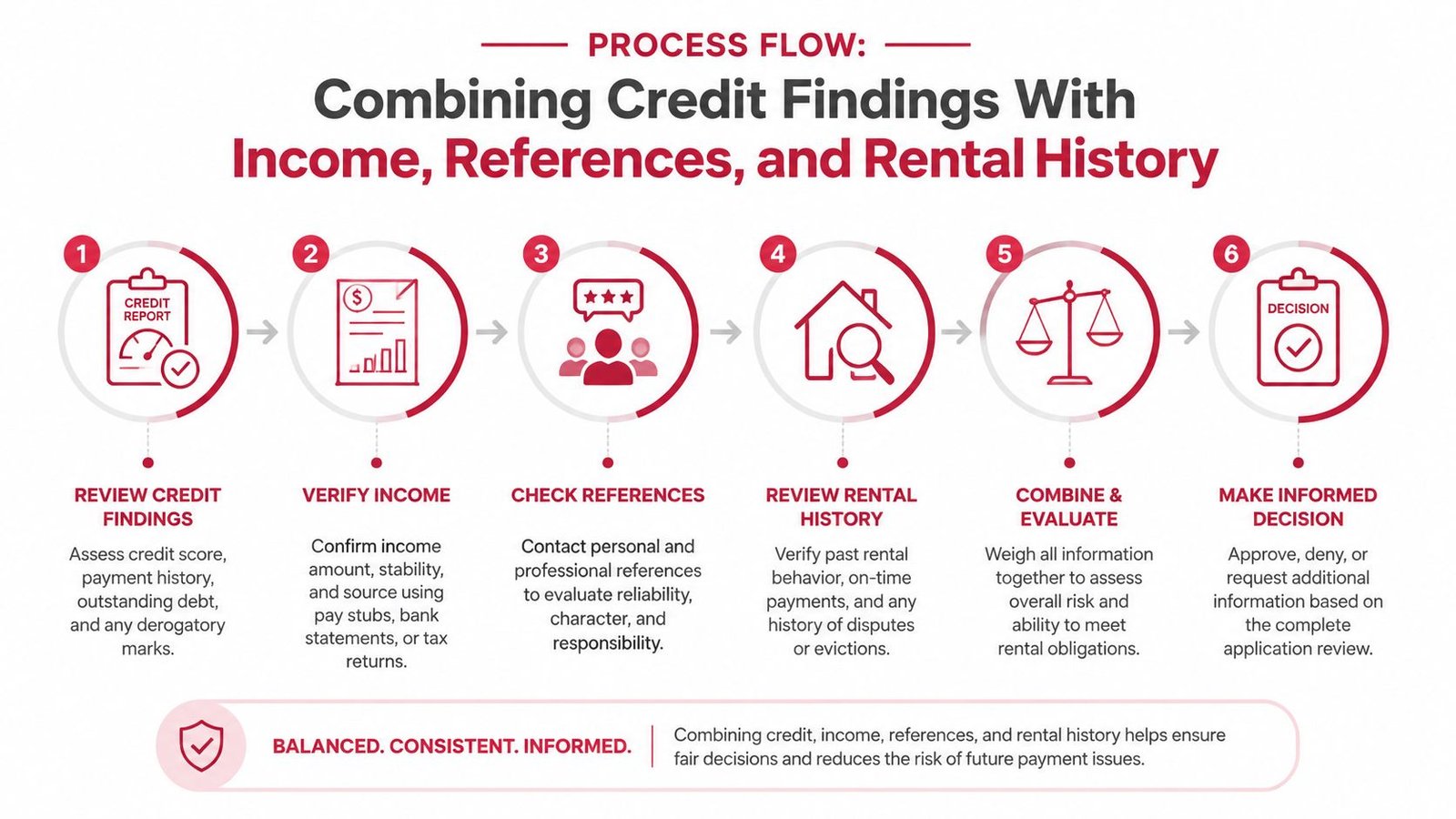
An organised workflow is easier to defend and easier to repeat. The more moving parts you compare, the less likely you are to overreact to one bad line item or miss a real pattern.
When Credit Signals Are Weak or Misleading
Some applications are poor fits for a credit-first approach. Thin-file renters, newcomers, students, and households that rely on housing support can all look risky on paper when the paper is just not telling the right story. That's where landlords get into trouble if they use the same weightings for every applicant.

Thin files need different evidence
If someone has very little credit history, the report may be almost silent. That doesn't automatically make them a bad tenant. It means you have to lean harder on employment verification, bank statements where appropriate, and landlord references that are recent and specific.
Rent reporting is part of the fix over time. The HUD material on rent reporting and credit building makes the point that on-time rent can help build credit history, which matters because many otherwise solid renters are weak on bureau data because their rent hasn't been reported (HUD rent reporting webinar slides). In Alberta, that makes the question less about whether a file is thick enough and more about whether the evidence best predicts rent performance.
Subsidised rent changes the risk picture
Credit checks are also a poor fit when rent is stabilised by housing assistance or supplements. U.S. housing-policy materials explicitly say credit scores have no bearing on ability to pay when a subsidy covers rent, and the policy materials linked to that discussion note that some authorities have prohibited credit checks for certain subsidy applicants (housing assistance policy materials). For Alberta landlords, that doesn't mean every supported tenant should be screened the same way as every other applicant. It means the file should be judged against the actual rent structure.
A score can be noisy. Payment flow still matters more than the score when the rent is heavily stabilised by a third-party program.
If you screen these applicants the same way you screen someone paying full market rent out of pocket, you'll reject people for the wrong reasons and still miss the risk factors.
Staying Compliant With Alberta Privacy and Human Rights Rules
A credit check for tenants in Alberta usually creates legal risk through mishandled information, not through the pull itself. Consent has to be real, collection has to be lawful, and the file has to be handled carefully from the first application email to the final decision. If a piece of personal information is not needed for screening, do not keep asking for it. That same discipline should show up in your posted process and in your privacy policy.

The compliance checklist that holds up in practice
Use the same sequence every time.
- Get written consent first. Make clear that credit, income, references, and rental history may be reviewed for tenancy screening.
- Verify identity before the bureau pull. Match the application to government ID and basic contact data so the wrong file does not get attached.
- Collect only what you need. Keep the request tied to tenancy risk, not curiosity.
- Document the reason for the decision. Write down what you relied on, especially if you declined an applicant.
- Handle disputes promptly. If the report looks wrong, pause and verify before you act.
- Store the file securely. Limit access to the people who need it.
- Follow your retention policy. Do not keep personal information longer than your process requires.
- Stay consistent. Use the same screening framework across applicants so the process does not drift into unfairness.
Those habits also reduce the chance of indirect discrimination. A blanket score cut-off can screen out people for reasons that have little to do with rent performance, especially where the applicant has limited credit history or relies on non-traditional income. The same caution applies when an applicant is connected to subsidised housing or another arrangement that changes how rent is paid.
Alberta landlords should also keep privacy and human rights rules in the same frame, not separate ones. The Alberta Human Rights Commission's guidance on protected grounds and accommodation, along with the province's privacy rules for collecting personal information, both push screening toward relevance and away from guesswork, especially where a decision could affect a protected group (Alberta Human Rights Commission guidance). A file that asks for more than it needs is harder to defend, and a file that treats credit as the final answer can create the wrong result.
A few common questions come up again and again. Who pays the fee, the landlord or applicant, depends on your process and local practice, but whatever you choose needs to be consistent. If the applicant withdraws consent, stop the process and do not use information you no longer have authority to collect. If a report is stale, do not reuse it for a later tenancy without fresh consent and a fresh application, because the decision belongs to the current file, not the old one.
For landlords who want a cleaner screening process, better lease files, and day-to-day help sorting applicants without cutting corners, Dreamhouse Realty Ltd. works with Alberta owners on rental management, tenant placement, and compliance. Visit Dreamhouse Realty Ltd. if you want a team that handles the screening workflow with the same practical discipline you would expect from a property manager on the ground.