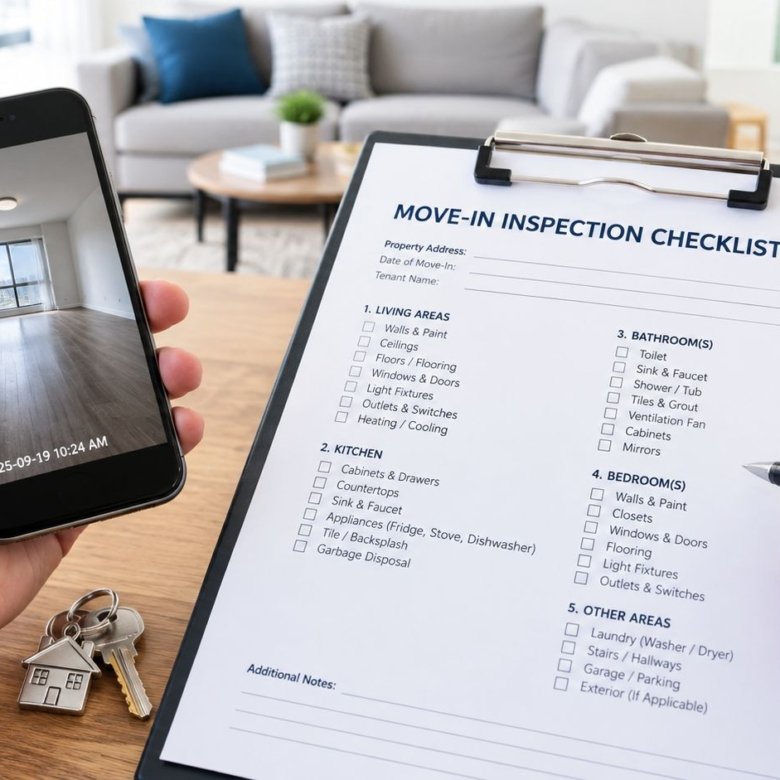

A lot of Alberta landlords only realise how important a proper inspection file is after a tenant leaves, the keys are back, and the damage argument starts. The unit looked fine in casual photos during the tenancy. Then the move-out reveals stained carpet, patched but visible nail holes, a painted accent wall that wasn't approved, and swelling under the bathroom vanity that nobody documented when the leak first started.
That's the moment when memory stops helping. The inspection record becomes the file that decides what can be charged back, what counts as ordinary wear, and what has to be absorbed as the owner's cost.
For landlords in Calgary and other Alberta cities, property inspection for rental isn't just a housekeeping task. It's part compliance, part evidence control, and part asset protection. The owners who avoid the worst disputes usually aren't the ones doing the most inspections. They're the ones with the cleanest chain of documentation from possession to possession.
Table of Contents
- The Inspection Most Alberta Landlords Wish They Had Done
- Why Alberta Treats Rental Inspections as a Legal Requirement
- Move-In, Periodic, and Move-Out Inspections Explained
- Running a Compliant Inspection in a Seven-Day Window
- Documentation and Moisture Evidence That Actually Holds Up
- Remote Owners, Occupied Units, and the Frequency Trap
- Turning Inspection Discipline into a Better-Managed Rental
The Inspection Most Alberta Landlords Wish They Had Done
The common failure isn't dramatic. It's usually ordinary, rushed, and avoidable.
A landlord turns over a Calgary condo quickly, trusts that the tenant left it “in good shape,” and skips a proper move-out walkthrough. Maybe there's a basic checklist in the file. Maybe there are a few scattered phone photos. But there isn't a signed, detailed comparison against the original condition. When the security-deposit dispute starts, the owner has opinions about the damage but weak evidence about when it happened and how serious it was.
Where deposit claims usually fall apart
The weak point is rarely the existence of damage alone. It's the break in the evidence chain.
A proper rental inspection system works as one connected record:
- Move-in condition report: This sets the baseline. Without it, later damage arguments become guesswork.
- Mid-tenancy observations: These catch leaks, ventilation issues, and misuse before they grow into larger repair files.
- Move-out comparison: This is the closing record that ties the final condition back to the original handover.
If one of those pieces is missing, the landlord often ends up arguing from memory while the tenant argues from memory too. That's a poor place to be when the money in dispute depends on proof.
Practical rule: A move-out inspection only has value when it can be compared to a strong move-in report.
That matters more than many owners expect. Carpet condition, wall paint, appliance cleanliness, cabinet damage, burns, scratches, and moisture staining aren't separate issues. They're all entries in the same evidentiary chain. If the first record is thin, the last record has much less force.
What actually prevents the next dispute
The landlords who handle turnovers well build their process around three things:
- Timing discipline
- Signed written reports
- Photo evidence tied to specific rooms and defects
That approach is what protects the next tenancy, not a generic checklist downloaded the night before key return. In Alberta, the details around timing and documentation are what give the inspection legal weight. Those details decide whether the file supports the owner's position or leaves holes that the tenant can challenge.
Why Alberta Treats Rental Inspections as a Legal Requirement
Alberta doesn't treat inspections as an optional management habit. It treats them as part of tenancy compliance.
Under section 19 of the Residential Tenancies Act, landlords and tenants must complete both a move-in and a move-out inspection report, and each inspection must happen within one week before or after possession changes according to the Residential Tenancies Act. Alberta guidance also states that the landlord must provide the tenant a written inspection report immediately after completion and keep copies for three years after the tenancy ends under the province's inspection report guidance.
Why the inspection report carries so much weight
This is why the inspection file matters so much in real disputes. Alberta's framework makes the report the primary condition record at the beginning and end of the tenancy. If an owner wants to distinguish normal wear from tenant-caused damage, the inspection document is the first place that argument stands or falls.
The report also isn't meant to be casual. Alberta's landlord guidance says the landlord and tenant should inspect together, write down the condition and any damage such as scratches or burns, sign the reports, and exchange copies as soon as they're completed in the Information for Landlords handbook.
For owners who want the practical version of the rules in one place, the Alberta RTA handbook overview is a useful starting point.
The file you keep is the file you defend
A lot of landlords know they should “do an inspection.” Fewer build a file that can survive scrutiny later.
The formal report should include required identifying details. Alberta's RTA handbook says the inspection report must include information required by regulation, including the inspection date, the names of the people present, and the landlord's signature in the RTA handbook. That turns the inspection into a compliance document, not a private note.
A landlord can fix paint and patch drywall later. A missing move-in or move-out report can't be recreated after the fact.
That's the distinction in Alberta. The inspection isn't there to make the file look organised. It's there to establish admissible, contemporaneous evidence about condition at the exact points when possession changes.
Move-In, Periodic, and Move-Out Inspections Explained
Many landlords treat every inspection as the same walkthrough repeated at different dates. That's where the process starts to lose value. Each inspection type has a different job.
Inspection types at a glance
| Inspection Type | Primary Purpose | Statutory Timing | Risk If Skipped |
|---|---|---|---|
| Move-in | Establish the baseline condition at handover | Within one week before or after the tenant takes possession | Later damage claims become hard to prove against original condition |
| Periodic | Spot maintenance, moisture, ventilation, and housekeeping issues before turnover | No single statutory cycle for recurring checkups. Alberta guidance describes annual checks as good business practice in long-term tenancies | Small defects go unreported and become larger repairs or harder causation disputes |
| Move-out | Compare final condition to the baseline and support deposit reconciliation | Within one week before or after the tenant gives up possession | Deposit deductions become harder to defend because the comparison record is weak or missing |
Move-in is the baseline, not a formality
The move-in report is the most important document in the whole chain because every later claim depends on it. If the owner can't show the original state of the flooring, walls, appliances, counters, blinds, and fixtures, then the move-out report loses context.
A good move-in inspection is detailed, not theatrical. It records scratches, burns, chips, stains, and pre-existing wear item by item. Owners who want a room-by-room format can adapt a structured move-in inspection checklist into their own file standards.
Periodic inspections are for risk control
Periodic inspections have a different purpose. They aren't mainly about future deposit deductions. They're about finding developing problems while they're still cheap to fix and easy to trace.
Alberta's inspection guidance notes that good business practice is to inspect at least once a year in a long-term tenancy in the province's inspection report publication. That doesn't create a statutory annual requirement. It does point landlords toward a sensible maintenance rhythm.
These visits are where owners usually catch:
- Condensation patterns on windows and sills
- Cabinet staining under kitchen or bathroom plumbing
- Bathroom fan performance that isn't keeping moisture down
- Unreported wear around doors, flooring transitions, and appliances
Move-out is a comparison exercise
The move-out inspection isn't just a final look. It's the direct comparison point against move-in. That's where the owner documents what changed, what stayed within normal wear, and what appears to be tenant-caused damage.
Who can perform it? The landlord can. A property manager can. An appointed representative can, provided the process is documented carefully and the person doing it understands Alberta's reporting standards. Independence matters less than consistency, accuracy, and the ability to produce a defensible record.
Running a Compliant Inspection in a Seven-Day Window
Most inspection problems in Alberta come from timing mistakes, not from a lack of effort. The owner means to do the right thing, but the turnover is busy, cleaners are booked, keys are moving, and the paperwork gets done late or done casually.
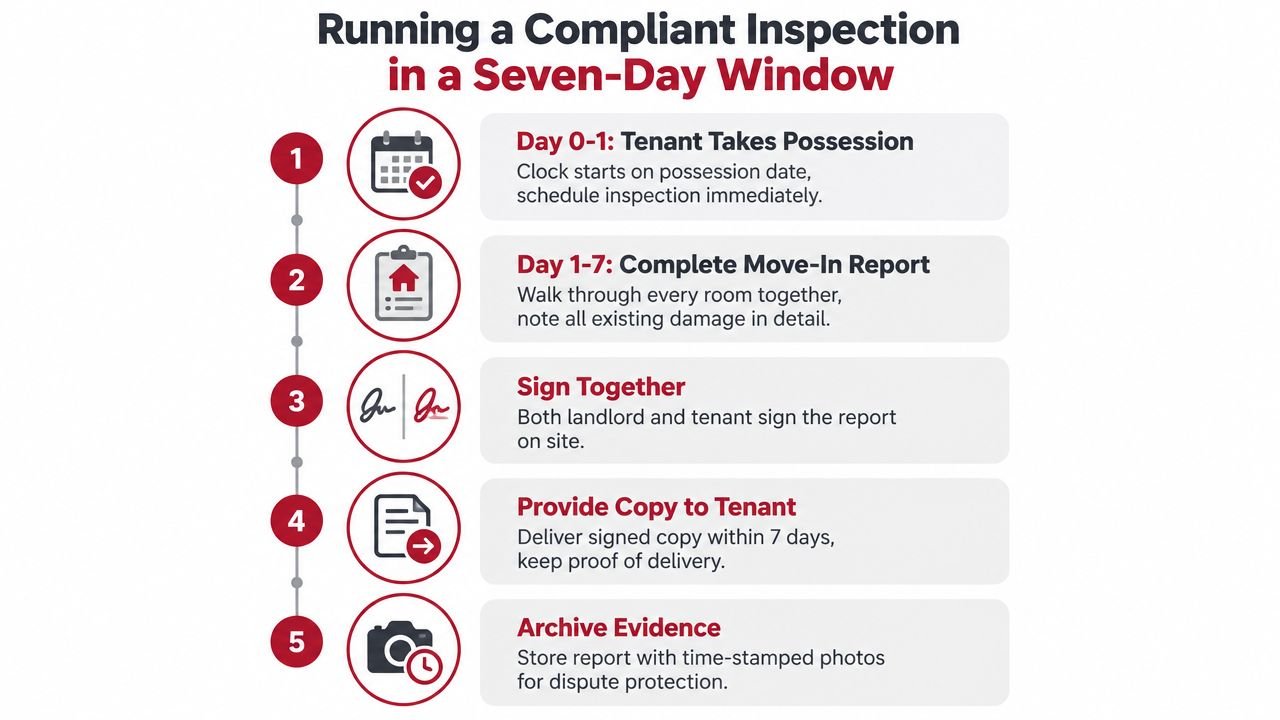
The statutory window is tight. Alberta requires move-in and move-out inspections to be completed within one week before or after possession changes under the Residential Tenancies Act. Operationally, that means the calendar has to be built around the possession date, not around convenience.
The five-step compliance flow
What has to happen on the ground
For Alberta landlords, a compliant process is usually best handled in this order:
- Lock in the inspection date early. As soon as possession timing is known, book the inspection inside the statutory window.
- Walk room by room. Use the same order every time. Entry, living areas, kitchen, bathrooms, bedrooms, storage, balcony or exterior, then utility spaces if applicable.
- Describe condition in writing. “Dirty” is weak. “Grease residue on range hood filter, staining inside oven, chip at left cabinet base” is useful.
- Get signatures or record refusal. If the tenant refuses to sign, note that clearly on the report.
- Give the tenant a copy immediately after completion. Alberta requires immediate copy delivery as part of the inspection process in the province's inspection rules guidance.
When the tenant isn't present
Many remote landlords get exposed. Alberta allows the landlord to proceed only after giving the tenant two opportunities on different days, between 8 a.m. and 8 p.m., and not on holidays, if the tenant isn't present, as set out in Alberta's during a tenancy guidance.
That means “the tenant didn't show up” is not enough by itself. The file should show:
- The date and time of each offered inspection
- That the opportunities were on different days
- That the timing fell within the permitted hours
- How notice was delivered
- What happened at the door if attendance failed
If a tenant doesn't attend, document the missed appointment like evidence, not like an inconvenience.
A simple note, timestamped phone photos at the entry, and a saved copy of the notice can make the difference between a clean file and an argument about whether the process was fair.
A compact field checklist
- Before the visit: Confirm possession date, prepare the report form, charge the phone or camera, clear enough time for a full walkthrough.
- At the unit: Inspect each surface and fixture in a fixed sequence, photograph defects, note cleanliness and damage separately.
- At closing: Record who attended, get signatures where possible, issue the tenant copy right away, archive the full file.
Some owners compare vendor pricing before deciding whether to use a third-party inspector, and a general market explainer on 2026 home inspection costs can help frame that budget decision. The Alberta rental issue, though, isn't only cost. It's whether the report will satisfy the province's timing and documentation rules when a dispute starts.
Documentation and Moisture Evidence That Actually Holds Up
A signed report is the foundation. It still isn't enough on its own when the dispute involves moisture, mould, staining, swelling, or damage that developed over time.
Adjudicators and decision-makers tend to trust records that were created at the time of the inspection, tied to exact locations, and specific enough that another person could identify the same defect later. Generic room photos and broad comments usually don't do that well.
What stronger evidence looks like
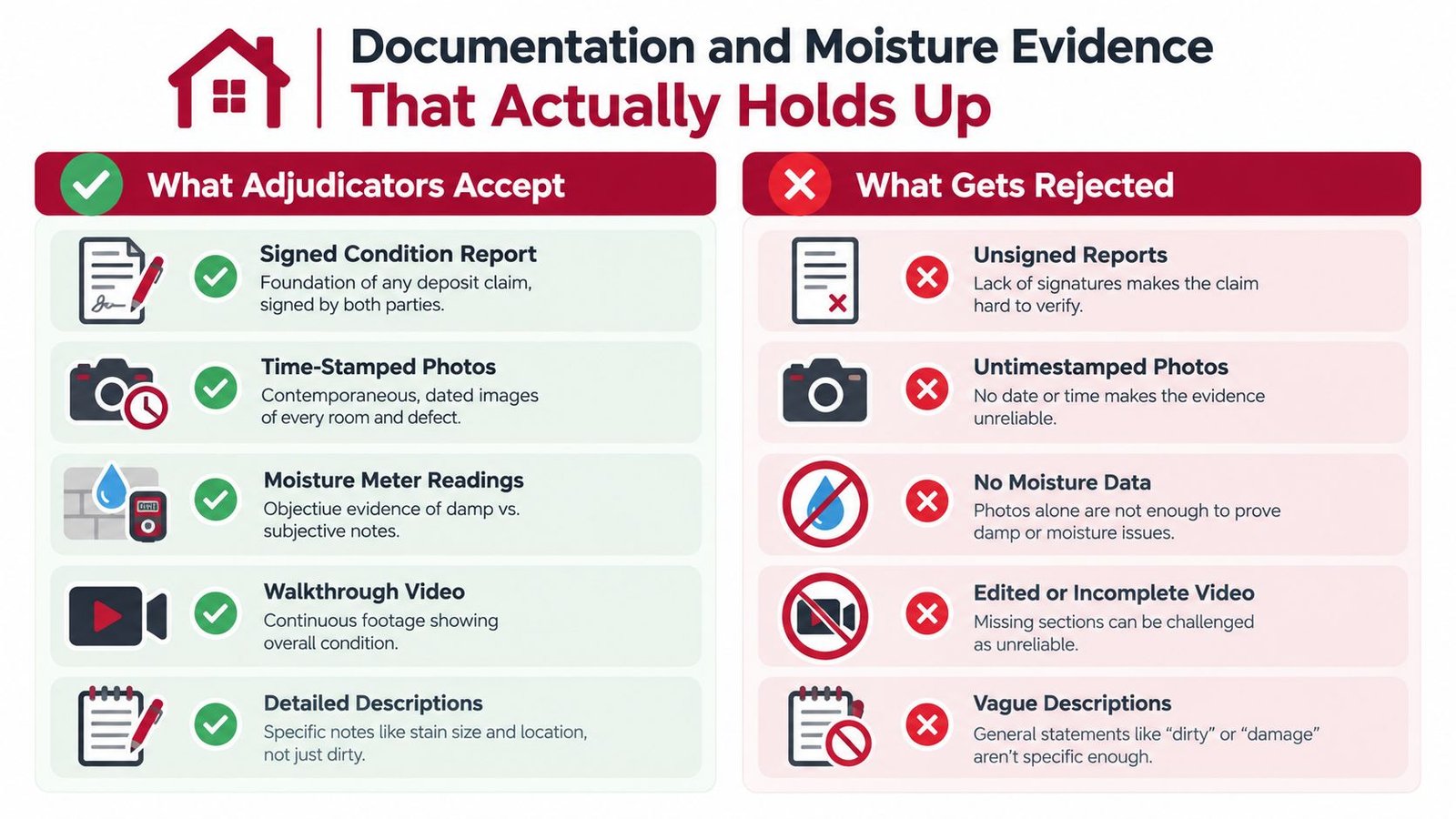
Alberta guidance is especially useful on moisture. The province explicitly treats excessive moisture and humidity as inspectable defects during landlord entry in the landlord right of way guidance. That means a technically sound property inspection for rental should go beyond cosmetic comments.
The stronger file usually includes:
- Signed condition reports linked to the exact date of the visit
- Time-stamped photos attached to specific report entries
- Close-up and context photos for the same issue
- Written notes describing location relative to fixed features
- Raw photo files preserved with metadata intact
Moisture and mould need cause-and-location notes
Moisture problems are where vague documentation causes the most trouble. A photo of a stained baseboard helps, but it doesn't explain whether the issue likely came from condensation, an active plumbing leak, poor ventilation, or an older unresolved defect.
A better inspection note records observations such as:
- Window condensation: Heavy moisture at bedroom window corners and lower frame
- Cabinet evidence: Staining or delamination under the sink, especially at supply lines and trap connections
- Wall and ceiling clues: Rings, bubbling paint, swollen trim, soft drywall, or visible spotting
- Odour evidence: Musty smells in enclosed areas like vanities, closets, and furnace rooms
That source-path-receptor logic matters. It links the visible damage to a likely mechanism. For owners managing repairs, it also helps decide whether the issue belongs with plumbing, ventilation, building envelope, or housekeeping follow-up.
Moisture claims are won or lost on location detail. “Mould in bathroom” is weak. “Dark spotting at upper right ceiling corner above shower, fan running weakly, condensation visible on mirror and window” is a usable record.
Even though it's written for another climate, a visual primer on identifying water damage for Florida can still be useful for understanding common surface clues. Alberta landlords just need to apply those observations within Alberta's tenancy and evidence framework.
For owners who want cleaner maintenance follow-through after an inspection, a structured maintenance work order template helps connect the inspection finding to the repair record. That link between discovery and action often matters as much as the photo itself.
Remote Owners, Occupied Units, and the Frequency Trap
Remote landlords often ask the wrong question first. They ask how often the unit should be inspected. The better question is whether the owner can produce a defensible record when access, attendance, or condition later becomes disputed.
Frequency by itself doesn't protect anyone. A poorly documented annual visit can be less useful than one strong move-in file and one strong move-out file. Alberta guidance points in that direction by focusing on evidence quality, tenant participation, and formal reports rather than promoting constant checkups.
Why more visits don't automatically create a better file
Alberta's official guidance centres on entry and exit documentation. It also says the rental premises should be vacant for inspections unless landlord and tenant agree otherwise, and that landlord and tenant should inspect together in the province's tenant information guidance. That makes a practical point clear. The most defensible inspection is the one that captures unobstructed condition and clear participation, not the one that happens most often.
For occupied units, access discipline matters. The landlord should serve proper written notice for entry where required, specify the reason, and keep proof of delivery. If that process is sloppy, the relationship with the tenant often deteriorates before the inspection even starts.
What remote landlords should put in place
Owners based in Toronto, Vancouver, or elsewhere outside Alberta usually need process more than presence. A workable remote setup includes:
- Documented authority: The property manager or representative should have clear written authority to inspect, sign, and deliver records.
- Standard reporting forms: Every unit should use the same condition language and room order.
- Access protocol: Keys, lockboxes, and appointment confirmations should be controlled and logged.
- Inspection kit: Phone or camera, backup battery, flashlight, moisture meter if used, and preformatted report template.
Dreamhouse Realty Ltd. is one option landlords use for local oversight in Calgary and other Alberta markets because it handles inspections, reporting, maintenance coordination, and compliance record-keeping as part of property management operations.
The real trap
The trap is assuming that a calendar creates protection. It doesn't. Strong records do.
A landlord with fewer but better inspections usually has a cleaner position than a landlord with frequent visits and weak notes. For occupied properties, the goal isn't to maximise entry. It's to create a lawful, orderly record of condition that can support maintenance decisions and, if necessary, defend deposit deductions later.
Turning Inspection Discipline into a Better-Managed Rental
Inspection discipline pays off well beyond the damage dispute at the end of the tenancy. It improves how the whole rental operates.
When the file is organised, turnovers move faster because cleaners, contractors, and incoming tenants aren't waiting for someone to decide what changed. Deposit reconciliations become cleaner because the owner has a dated comparison instead of a vague complaint. Insurance conversations also tend to go more smoothly when the owner can show when damage was first observed and what was done next.
What good inspection habits feed into
A solid inspection routine supports several parts of Alberta rental operations at once:
- Turnover planning: Owners can schedule painting, flooring, appliance cleaning, or minor repairs based on documented condition.
- Tenant communication: Written notes reduce arguments about what was reported and when.
- Capital planning: Repeat findings such as recurring condensation, fan failures, or cabinet swelling often point to building issues rather than tenant behaviour.
- Maintenance control: Problems identified early usually produce a simpler work order and a cleaner repair scope.
Better inspections don't just protect a deposit claim. They create a maintenance history for the property.
Keep the routine light, but keep it consistent
For most landlords, the workable model is simple. Use a strong move-in report. Maintain sensible periodic checks where appropriate. Finish with a disciplined move-out comparison and archive the whole file properly.
That approach creates a more stable rental business because it reduces reactive decision-making. Owners stop guessing, contractors receive clearer instructions, and tenants get more precise communication about expectations and repairs.
Some owners also borrow ideas from broader maintenance planning resources such as call DLG Electrical for rental checks. The Alberta-specific point is to tie those maintenance habits back to legally sound inspection records, not just seasonal reminders.
For landlords in Calgary and across Alberta, that's what makes property inspection for rental worth doing properly. It protects the asset, supports compliance, and gives the owner a file that can stand up when the easy conversation turns into a formal disagreement.
Dreamhouse Realty Ltd. helps Alberta landlords with tenant placement, compliant inspection workflows, documented condition reports, maintenance coordination, and day-to-day rental oversight across Calgary and surrounding communities. For guidance on how to structure inspections, records, and turnover procedures for an Alberta rental, contact GURIQBAL CHAHAL, MBA, PMP, REAL ESTATE BROKER, Phone 403-966-6072, and visit Dreamhouse Realty Ltd..