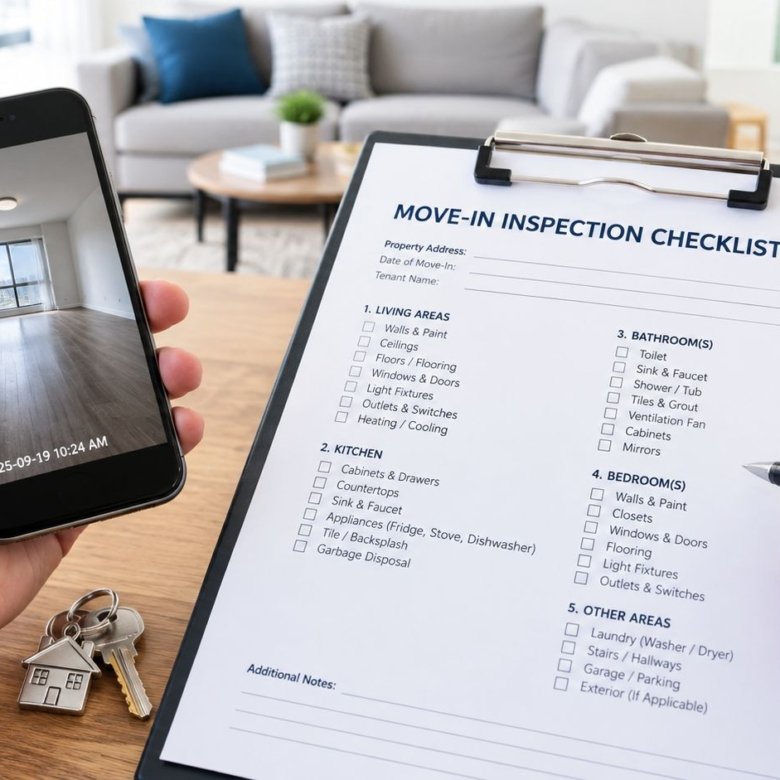

A Calgary rental owner often reaches the same fork in the road. The condo is ready, the photos are not taken yet, messages from prospects are starting to come in, and someone offers to “help with the leasing side” or “just collect rent for a while.” That sounds simple until the owner asks a key question. At what point does help become a regulated service?
That question matters most for landlords who live outside the city, own more than one unit, or don't want to manage every showing, payment, notice, and repair call themselves. In Alberta, the line between owner help and licensed property management isn't fuzzy just because the arrangement feels informal. The law looks at the task being performed, not the casual wording around it.
Many owners start by comparing time, convenience, and monthly management fees. A better starting point is compliance. If a person is advertising a rental, negotiating lease terms, collecting rent, or holding money for an owner, that owner needs to know whether a property management license is required for that activity. A mistake here can affect lease paperwork, deposit handling, notices, and the owner's control over the file.
Owners who are weighing local help can get broader context from this overview of Alberta property management services. The bigger issue is understanding what a licensed manager does, and what an unlicensed helper should not do.
Table of Contents
- Introduction Why Licensing Matters for Alberta Rental Owners
- What a Property Management Licence Means in Alberta
- Licence Types and When You Need One
- How to Qualify Education Experience and Eligibility
- How to Apply for Your Property Management Licence Step by Step
- Hiring a Licensed Manager What Calgary Owners Should Verify
- Next Steps for Compliant and Confident Rental Management
Introduction Why Licensing Matters for Alberta Rental Owners
A landlord in Calgary might live in Vancouver. Another might own one townhouse in Airdrie and work full time. A third might have moved out of Edmonton but kept the former home as a rental. Different situations, same problem. The property still needs advertising, screening, leasing, rent collection, and clean records.
Licensing matters because these everyday jobs aren't all equal. Some are ordinary owner tasks. Some become regulated real estate activity when done for someone else. Alberta places that activity under the Real Estate Council of Alberta, and the modern rules trace back to the Real Estate Act Rules timeline published by RECA, including provisions that came into force on July 1, 2006 and October 1, 2006.
Where owners usually get confused
The confusion rarely starts with lease signing. It usually starts earlier.
- A friend offers to post the ad. That sounds administrative, but advertising tied to leasing for an owner can fall inside the licensing line.
- A bookkeeper says they can collect rent. Once money connected to a lease is handled for another person, the compliance risk changes.
- A family member negotiates with applicants. The moment lease terms are discussed on the owner's behalf, the work may no longer be casual help.
- A remote owner delegates “everything except ownership.” That phrase has no legal value if the delegated tasks are licensed acts.
Practical rule: Owners should judge the arrangement by the task, not by the title a helper uses.
Why this protects the investment
Licensing is not paperwork for its own sake. It creates a supervised structure around trust handling, tenancy documents, and conduct. For owners, that means fewer grey areas when a deposit is received, a notice must be served properly, or a lease term changes at the last minute.
It also helps during quieter leasing periods. Alberta sources note that Calgary purpose-built vacancy rose from 1.4% in 2023 to 5.0% in 2025, with the city projecting 5.7% in 2026 according to Alberta legal commentary discussing market conditions and rent rules. When owners face more competition, leasing speed and clean compliance start working together.
What a Property Management Licence Means in Alberta
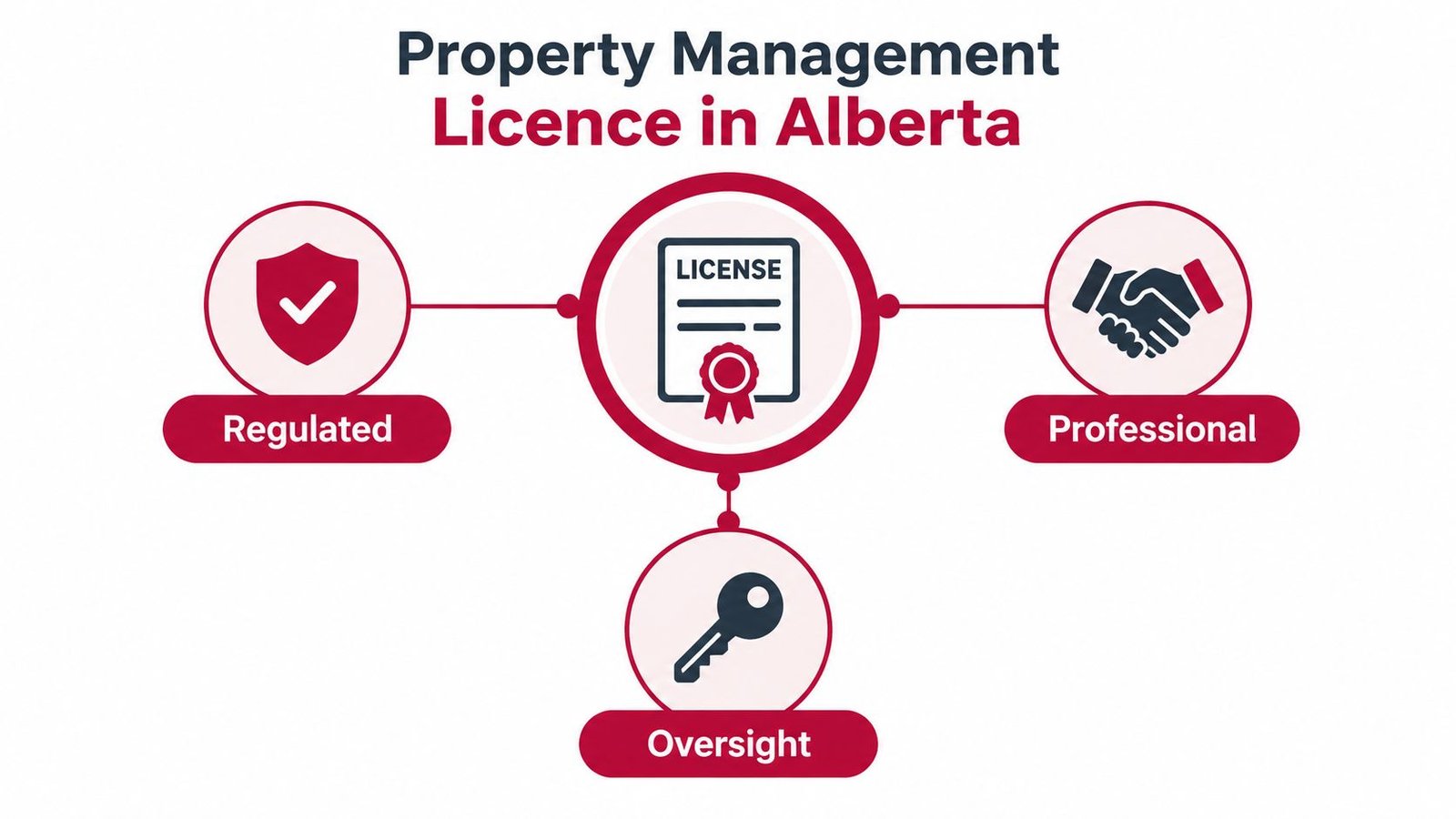
A property management licence in Alberta works a bit like a professional gate. Anyone can own a rental property. Not everyone can step through that gate and manage property for someone else.
That's the key idea.
When an owner hires a third party to act on the owner's behalf, Alberta treats many of those tasks as regulated real estate activity. The oversight sits with RECA. The purpose is practical. A licensed person is expected to work within rules, supervision, and records, rather than making up a process as situations arise.
A simple way to think about it
A useful analogy is hiring a pilot versus lending someone a car. An owner can manage a personal property without needing a licence. But once another person takes control of leasing and rent administration on that owner's behalf, Alberta doesn't treat that as casual assistance. It treats it as a professional activity with rules.
That's why owners searching for support should separate general admin help from regulated leasing work. Some firms also use remote support models, including virtual property management assistance, but owners still need to ask which tasks are purely administrative and which tasks require licensed Alberta oversight.
What the licence signals to an owner
A licence signals more than permission to work. It signals that the person is operating within a regulated framework.
Owners can read more about the actual day-to-day scope in this breakdown of what a property manager does. In plain terms, a licensed manager is not just answering calls and opening doors for viewings. The role often touches lease formation, money handling, notices, and documentation that can affect the owner's legal position.
Licensed oversight is easiest to appreciate when something goes wrong. A missed notice date, disputed deposit, or poorly documented lease term can turn a small issue into a larger one.
The self-management exception
Alberta does leave room for self-management. Owners don't need a licence to manage their own property. That exemption is important, but it's narrow. It belongs to the owner acting for the owner's own asset, not to a helper acting independently for compensation.
Once that distinction is clear, most hiring decisions become easier. The question is not whether the helper is “experienced.” The question is whether the helper is performing licensed acts for another person.
Licence Types and When You Need One
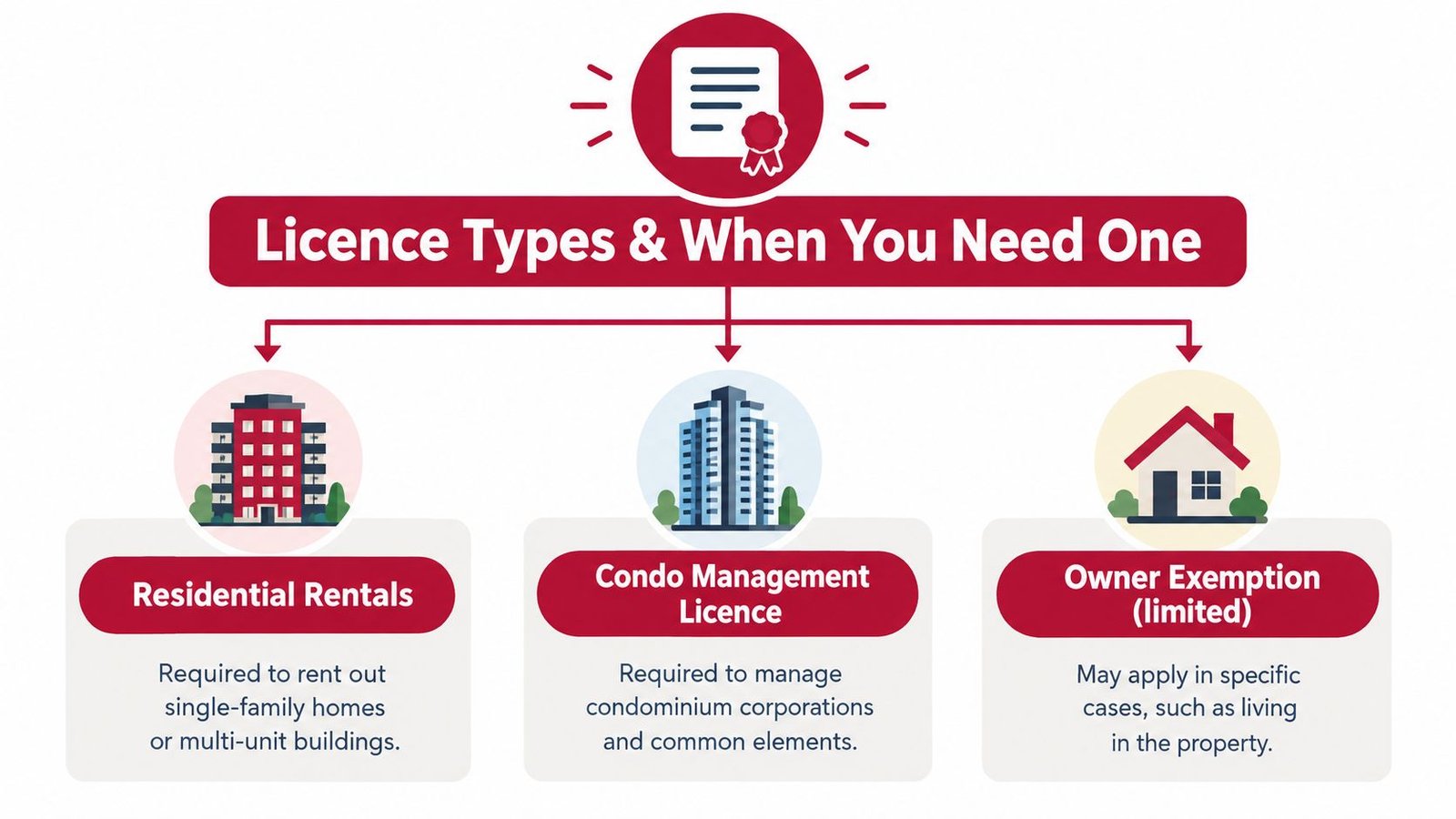
The licensing line in Alberta becomes clearer when tasks are grouped by role. Owners usually think in terms of buildings. Alberta law focuses on activities.
Residential property management for others
For standard rental housing, Alberta requires a licence when a person manages property on behalf of the owner and performs regulated tasks. According to Alberta occupational guidance on real estate broker or property manager certification, this includes leasing or offering to lease, negotiating leases, holding money connected to a lease, and advertising or negotiating to further those activities.
That means an owner cannot safely assume a helper is “just coordinating.” If that person is discussing lease terms, taking deposits, or handling rent on the owner's behalf, the line has likely been crossed.
Condominium management became its own licensed category
A second category matters to condo investors and condo boards. Alberta added a distinct condominium management licensing framework on December 1, 2021, and the eligibility process had opened on August 3, 2021, with licence applications expected to begin processing on October 12, 2021, as noted in a CCI Alberta resource on RECA condominium manager licensing.
This matters in Calgary, Edmonton, and Red Deer because many owners assume condo administration is somehow outside the normal property management structure. It isn't. Alberta now regulates both areas under the same provincial regulator, but with condominium management recognized as its own licensed group.
The owner exemption is real, but limited
Owners can manage their own rental property without holding a property management licence. That's the safe side of the boundary. Problems start when owners hand over key functions to someone else while still assuming the owner exemption covers the arrangement.
A few examples make the line easier to see:
- Likely inside the exemption: The owner answers inquiries personally, signs the lease personally, and collects rent personally.
- Likely outside the exemption: A paid helper advertises the unit, discusses terms with applicants, and takes rent for the owner.
- Grey in appearance but risky in practice: A relative or assistant “only helps with paperwork” but also relays lease offers or accepts funds.
The question is not whether a helper calls themselves a manager. The question is whether the helper is acting like one.
A practical test for remote owners
Remote landlords should use a simple screening test before delegating any task:
| Activity delegated by owner | Licensing concern |
|---|---|
| Advertising a rental unit | Can require licensure if done on behalf of the owner to further leasing |
| Negotiating lease terms | Regulated activity |
| Collecting rent or deposits | Regulated activity when done for another person |
| Coordinating repairs only | May be administrative, but risk rises if paired with leasing or money handling |
| Holding out as the property manager | Can trigger the licensing issue even before a lease is signed |
If the helper touches leasing, money, or negotiations for another person, owners should assume licensing needs to be checked first.
How to Qualify Education Experience and Eligibility
Alberta doesn't treat a property management licence as a casual registration. The path is built around screening, education, and brokerage supervision.
The sequence Alberta uses
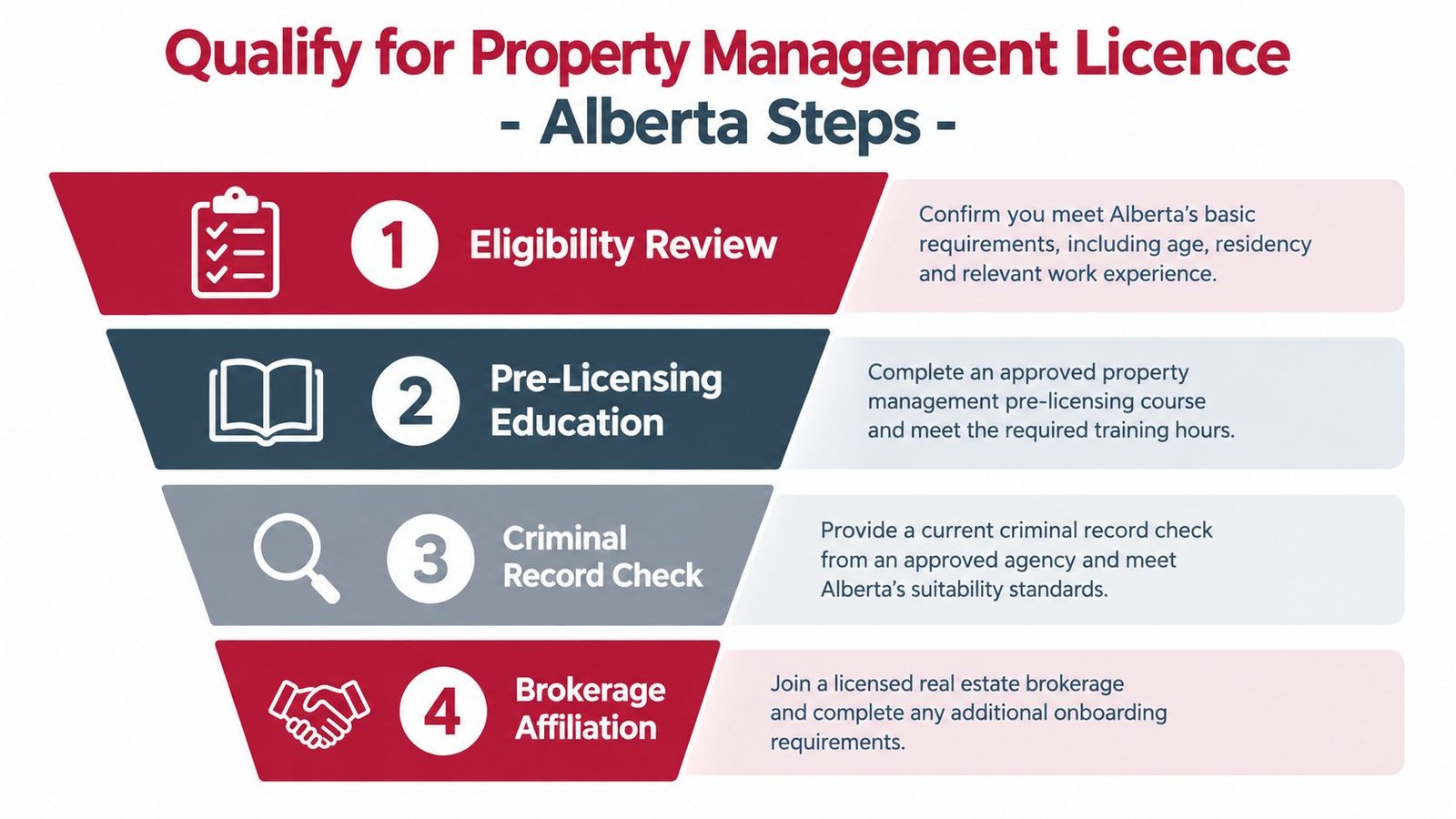
RECA's pathway for new applicants includes an eligibility review, pre-licensing education, a current criminal record check, and application through an Alberta brokerage, with character and suitability also assessed through the become a licensee process outlined by RECA.
For property management specifically, the educational sequence includes the Fundamentals of Real Estate course followed by the Practice of Property Management course before the person can move toward practice as a property management associate.
Why the course path matters to owners
This training path matters because property management is detail-heavy work. The risk isn't only finding a tenant. The risk sits in the paperwork and money trail around the tenancy.
A properly trained associate is expected to understand:
- Tenancy documentation: Leases, notices, and supporting records need to be handled consistently.
- Trust handling: Client funds and lease-related money require disciplined processes.
- Regulatory compliance: The person must know when an action is permitted, restricted, or outside their authority.
- Brokerage oversight: Work is not meant to happen in isolation.
Owner takeaway: A licensed manager should be able to explain process, authority, and documentation clearly. If they can't, the owner should keep asking questions.
Good character and brokerage affiliation are not side notes
Owners sometimes focus only on the course names. Alberta's framework goes further. The applicant must satisfy suitability checks and affiliate with a brokerage. That structure gives owners a second layer of accountability.
A brokerage is not just a logo on a website. It is the operating shell within which licensed activity is supervised. For landlords, that means there should be an actual business framework around record-keeping, authority, and oversight.
An owner looking at a candidate who says, “The licence is almost done, but the leasing can start now,” should pause. Alberta's design expects competency and formal brokerage alignment before the person starts handling the high-liability parts of a rental file.
How to Apply for Your Property Management Licence Step by Step
For aspiring managers, the application process is easiest to understand as a sequence of gates. One gate opens the next. Skipping ahead usually creates delays.
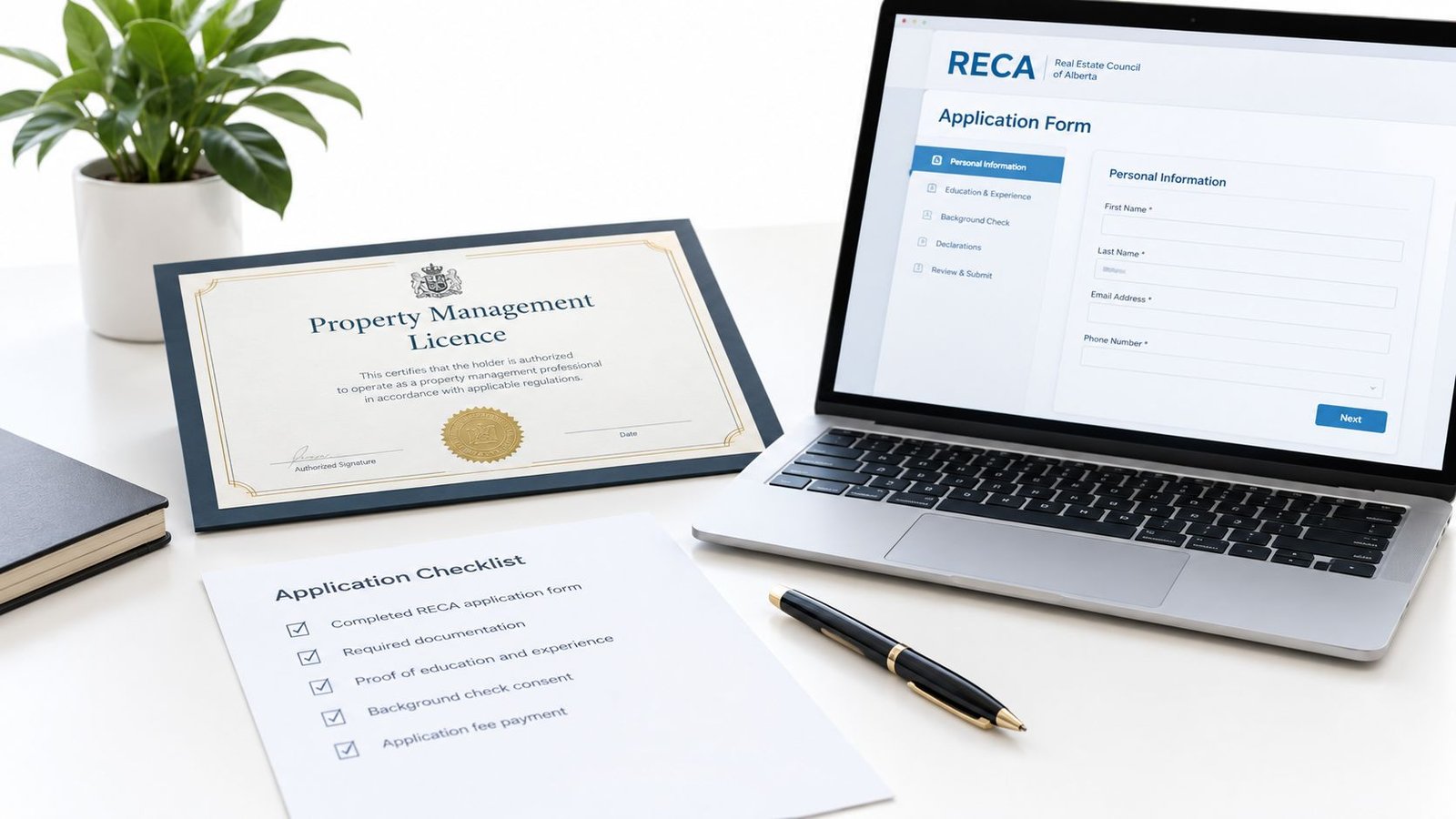
A practical application flow
The order generally works like this:
- Start with eligibility review. The applicant confirms basic readiness to enter the licensing stream.
- Complete the required pre-licensing education. For property management, that includes the real estate fundamentals component and the property management practice course.
- Prepare for and complete the required exam step. The education is not meant to be symbolic. It leads to assessed competence.
- Obtain a current criminal record check. This supports the suitability review.
- Join an Alberta brokerage. The licence application runs through brokerage affiliation rather than stand-alone practice.
- Submit the application package to RECA. The regulator reviews the material before the licence can be issued.
Where applicants often slow themselves down
Most delays come from missing documents, poor timing, or misunderstanding brokerage affiliation.
A few practical checks help:
- Check the education order carefully: Taking the wrong course first can waste time.
- Keep personal records current: Names, addresses, and background documents should match across the file.
- Don't treat brokerage affiliation as an afterthought: A person needs a brokerage relationship for the application pathway.
- Build a compliance mindset early: The licence is the start of record discipline, not the end of a school process.
Ongoing obligations after licensing
The application isn't the whole story. Once licensed, a manager still needs to follow the brokerage's processes for records, authority, and ongoing compliance. Owners hiring a manager should ask about these systems because they reveal how the work is carried out.
For example, a brokerage such as Dreamhouse Realty Ltd. operates within Alberta's licensed brokerage model for leasing, tenant placement, rent collection, inspections, and compliance support. That matters because the owner is not only hiring a person. The owner is hiring a supervised operating structure.
A useful rule for applicants and owners alike is simple. If the process sounds loose, the risk is usually high. Licensed property management in Alberta is meant to run on documented steps.
Hiring a Licensed Manager What Calgary Owners Should Verify
Hiring help is where theory meets risk. Calgary owners often receive offers from leasing assistants, admin contractors, real estate contacts, or “full-service” helpers whose authority is not fully clear.
The safest question is not “Can this person help?” It is “What exactly are they licensed and authorised to do?”
Owners comparing options can also review this checklist on what to look for in a property manager. Licensing should sit near the top of that list, not near the bottom.
What to verify before signing anything
Start with four checks.
- Licence status: Confirm the individual or company is properly licensed for the work they will perform.
- Brokerage authority: Ask which Alberta brokerage the person works under and who supervises the file.
- Task scope: Match the contract to the work. If the person will market, lease, collect rent, or hold funds, the paperwork should reflect licensed management.
- Transaction controls: Ask how inquiries, offers, deposits, rent, notices, and records are handled.
A provider who speaks vaguely about “helping out” but clearly plans to negotiate, advertise, or collect money is giving an owner a warning sign.
Licensed vs Unlicensed Help Quick Check for Owners
| Task or Risk Area | Licensed Brokerage Manager | Unlicensed Assistant or Informal Help |
|---|---|---|
| Advertising a rental | Works within regulated authority when acting for the owner | May create compliance risk if advertising is tied to leasing for another person |
| Negotiating lease terms | Can perform regulated negotiation under brokerage oversight | Should not negotiate lease terms on behalf of the owner |
| Collecting rent | Can collect and administer rent within licensed structure | Handling rent for another person may cross the licensing line |
| Holding deposits or lease money | Managed within a regulated business framework | Creates significant risk if handled outside licensed authority |
| Serving as owner representative | Documented through brokerage and management agreement | Often informal, unclear, and hard to verify |
| Record-keeping and notices | Usually tied to structured processes | Can become inconsistent or incomplete |
Questions that reveal the real setup
Owners don't need legal jargon. They need direct answers.
Useful hiring questions include:
- Who is the licensed person on the file?
- Which tasks are handled by licensed staff versus admin staff?
- Who communicates lease terms to applicants?
- Who receives and processes money from tenants?
- How are notices and tenancy records stored?
A solid provider won't struggle with these questions. Clear answers usually signal organised operations. Evasive answers usually signal the opposite.
Next Steps for Compliant and Confident Rental Management
Most Alberta owners don't need to become licensing experts. They do need to recognise the few moments when licensing changes the risk of a decision.
The first moment is delegation. If another person will advertise, negotiate, collect rent, or hold money on the owner's behalf, the owner should verify licensed authority before anything starts. The second moment is tenancy administration. Rent increases, notices, renewals, and money handling all depend on clean process.
Keep the compliance issues separate from the convenience issues
Convenience often drives the first decision. Compliance should shape the final one.
For example, Alberta's notice rules for rent increases are specific. For a month-to-month periodic tenancy, the landlord must provide at least three full tenancy months’ written notice. For a weekly tenancy, at least 12 full tenancy weeks are required. For other periodic tenancies, the landlord must provide at least 90 days’ notice, and the notice must be written, signed, dated, and include the effective date, as set out in Alberta's rent increase notice guidance.
A separate Alberta legal analysis also notes that rent can only be increased once every 365 days, and that fixed-term tenancies do not require rent-increase notice on renewal unless the lease says otherwise. That point appears in the earlier linked legal commentary on Alberta rent rules. For mobile home sites, Alberta uses a stricter rule. Rent cannot be increased until at least 365 days have passed since the last increase or tenancy start, and the landlord must give at least 180 calendar days’ written notice with the required details under Alberta's mobile home site renting rules.
A calm action plan for owners
A practical next step looks like this:
- Map the tasks first: List who will advertise, show, negotiate, collect, and document.
- Check authority second: If the task is regulated, confirm the person is licensed and tied to a brokerage.
- Review the paperwork third: The management agreement should match the workflow.
- Keep notice rules on a calendar: Rent changes and tenancy dates should never be handled casually.
- Escalate early when unsure: A short compliance check is easier than repairing a bad file later.
Good rental management is not just about finding a tenant. It is about running every step in a way that stands up when a dispute, delay, or vacancy appears.
For owners in Calgary and surrounding Alberta communities, the strongest position is a simple one. Delegate only to people who have the legal authority, training, and brokerage structure to perform the work properly.
Dreamhouse Realty Ltd. helps landlords with licensed leasing, rent collection, inspections, tenant placement, and Alberta compliance support for rentals in Calgary and nearby communities. Owners who want a practical review of whether their current setup crosses the licensing line can contact GURIQBAL CHAHAL, MBA, PMP, REAL ESTATE BROKER, Phone 403-966-6072, and visit Dreamhouse Realty Ltd. for a rental consultation.