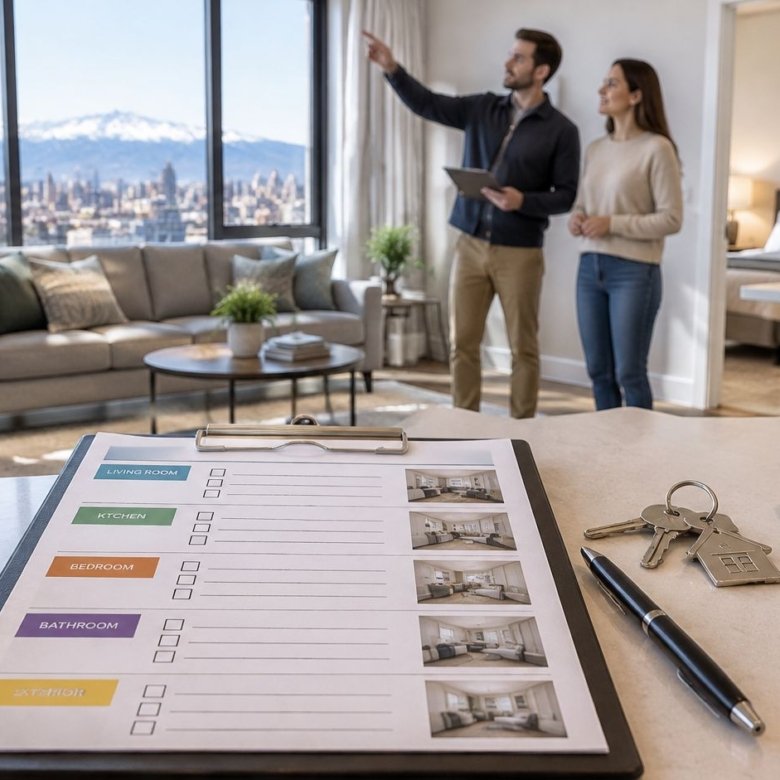
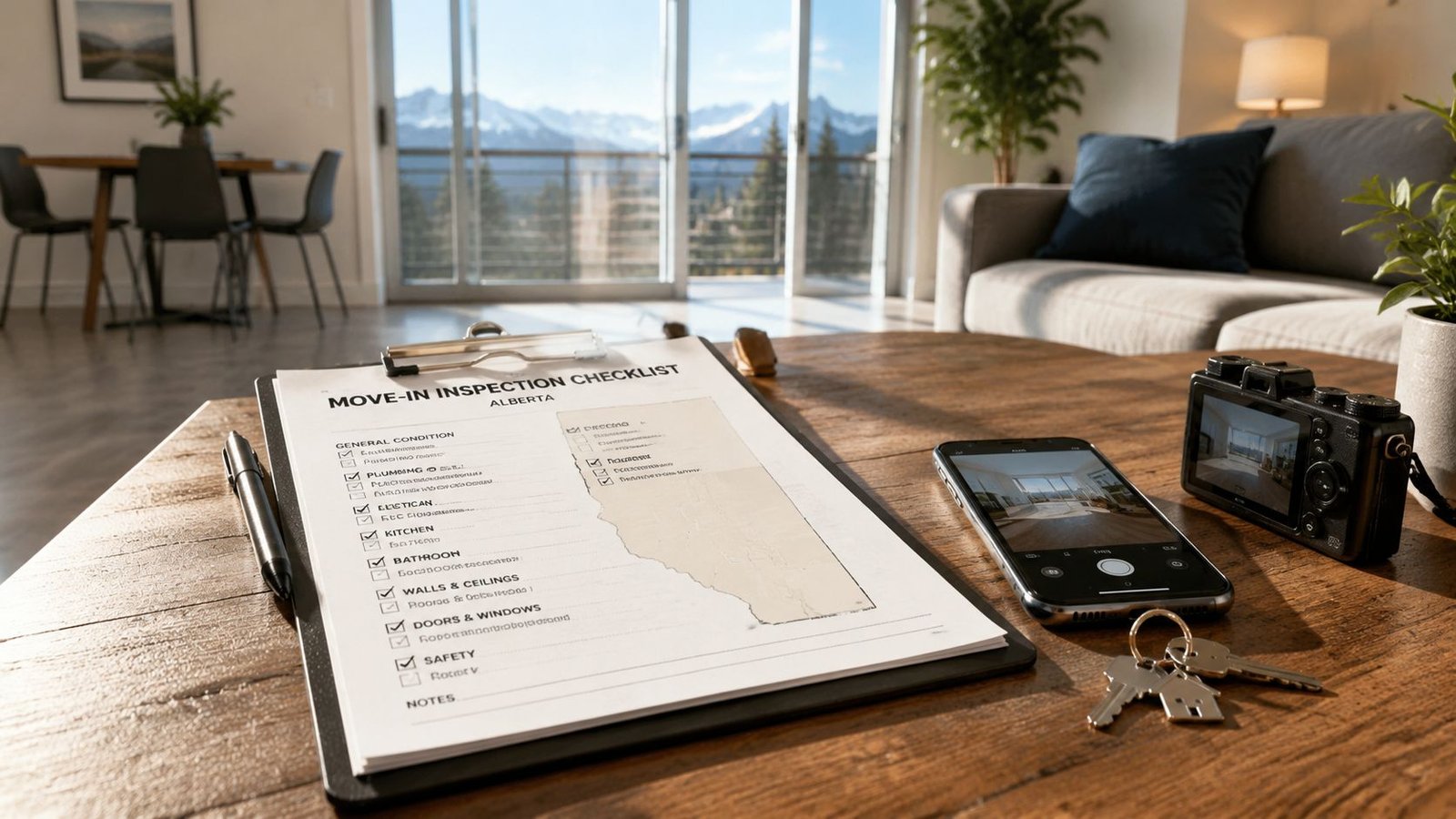
In Alberta, a proper move in inspection checklist should be signed before keys are handed over, and it should include photos, room-by-room notes, and meter readings. That baseline record is the strongest defence when a tenancy ends and the deposit conversation gets difficult.
A Calgary landlord can do everything right on paper, then discover at move-out that the tenant remembers a stain, a chipped counter, or a sticky lock completely differently. Without a clean baseline, the file turns into a credibility contest. With one, the landlord has a dated, signed record that shows what was already there, what worked, and what was handed over in working order.
Alberta's Residential Tenancies Act makes that documentation matter because a written inspection report sits at the centre of security-deposit disputes. In practical terms, the move-in form is not a courtesy walkthrough. It is a legal and operational record that protects the owner, the tenant, and the person managing the file. For Calgary, Edmonton, Red Deer, and smaller Alberta communities, the smartest approach is a printable checklist that can be used the same way every time, whether the landlord self-manages or is comparing property management partners.
Practical rule: if a condition was visible at possession, it belongs on the move-in record. If it wasn't written down or photographed, it becomes much harder to prove later.
1. Entry and Access Points
The front door sets the tone, but the risk sits in every access point that opens and closes through a tenancy. Front entries, back doors, patio doors, garage man doors, and side gates all need the same treatment. If a deadbolt sticks in February in Edmonton or a digital lock dies during a Red Deer cold snap, that problem will come back to the owner fast.
Start with the hardware, then move to the handover record. Test each lock twice, check that keys work, and note whether the door frame sits flush or catches when it closes. A Calgary rental with a worn deadbolt or a loose strike plate should be repaired before possession, not after the tenant has already moved boxes through the doorway.
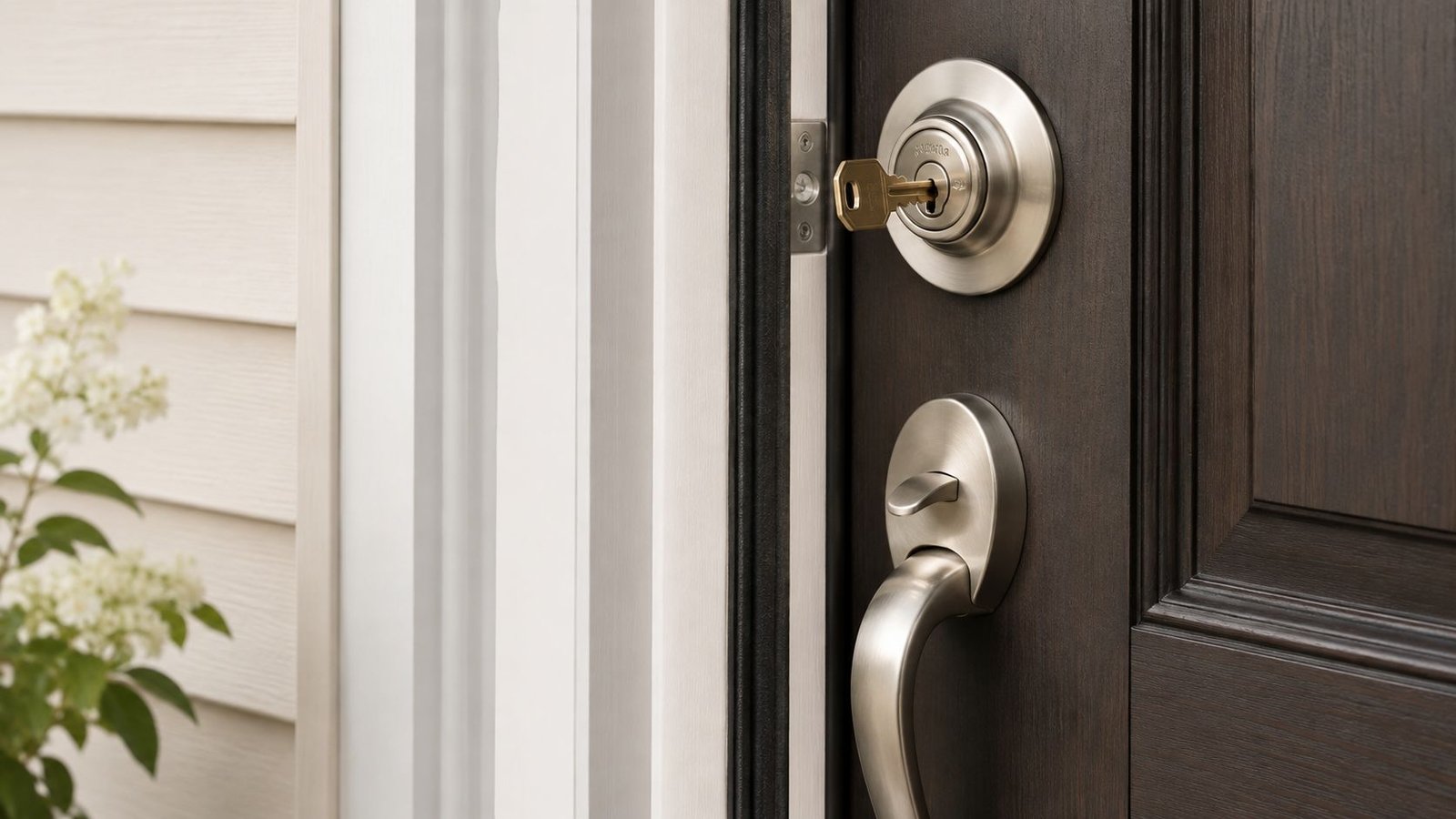
What to record at the door
A clean entry record usually includes the lock type, condition, key count, and any visible wear on handles or hinges. Photograph each lock from multiple angles, especially if the finish is scratched, the key cylinder is loose, or the key tag numbers need to be matched later. For digital systems, note battery status and reset the code to a tenant-specific setting before handover.
The key count should be signed off while everyone is still standing at the door. Missing keys are one of the easiest disputes to avoid and one of the easiest to lose without a written count.
In Edmonton multi-unit buildings, worn deadbolts and tired closers often show up before the tenant has even unpacked. That's exactly the sort of issue that a good move in inspection checklist catches early, because it documents the baseline and gives the owner a repair trail. If anything feels questionable, schedule re-keying or replacement before move-in, not after complaints start.
2. Kitchen and Appliances
Kitchen damage often starts as “existing wear” and ends as an argument over who caused what. Counters, cabinet faces, stove elements, oven racks, refrigerator seals, and dishwasher performance all need a written baseline. In Alberta rentals, the kitchen usually gets the most daily use, so vague notes don't hold up well.
A strong kitchen inspection is part visual, part functional. Open every cabinet, test every drawer, run the tap, and check the sink for slow drainage or odd noises. If the fridge came with the unit, the landlord needs a clear record of its condition at handover, not just a general note that “appliances look fine.”
Document the details that get disputed later
Photograph countertop chips from a close angle and again in context so the room layout is clear. Test every stove burner and note whether the unit is electric coil or gas ignition. If the dishwasher is included, run a cycle long enough to confirm it fills, washes, and drains properly.
The best files also include an appliance inventory sheet with model and serial numbers. That extra line of documentation helps when a part fails, when warranty claims come up, or when a tenant says the appliance was never there to begin with. It also helps separate actual wear from careless use, which matters a lot in Calgary condo rentals where kitchen finishes are often part of the lease value.
Practical rule: if the appliance came with the unit, it needs a working test and a photo. If the test failed at possession, the report should say so plainly.
Landlords who manage Edmonton properties well usually document refrigerator condition, seal quality, and temperature behaviour right at move-in, because later complaints tend to focus on the appliance that failed weeks after occupancy. That same logic applies in Red Deer and Calgary. Clear kitchen records make it much easier to decide whether something was pre-existing, worn out, or damaged during the tenancy.
3. Bathrooms and Plumbing
Bathrooms are where small problems become expensive quickly. A slow drain, a cracked bead of caulk, or a weak fan may look minor at possession, but it can turn into moisture damage, mould, and a nasty dispute later. Alberta's dry air doesn't make bathroom issues disappear, it often makes people underestimate them until the first winter condensation cycle starts.
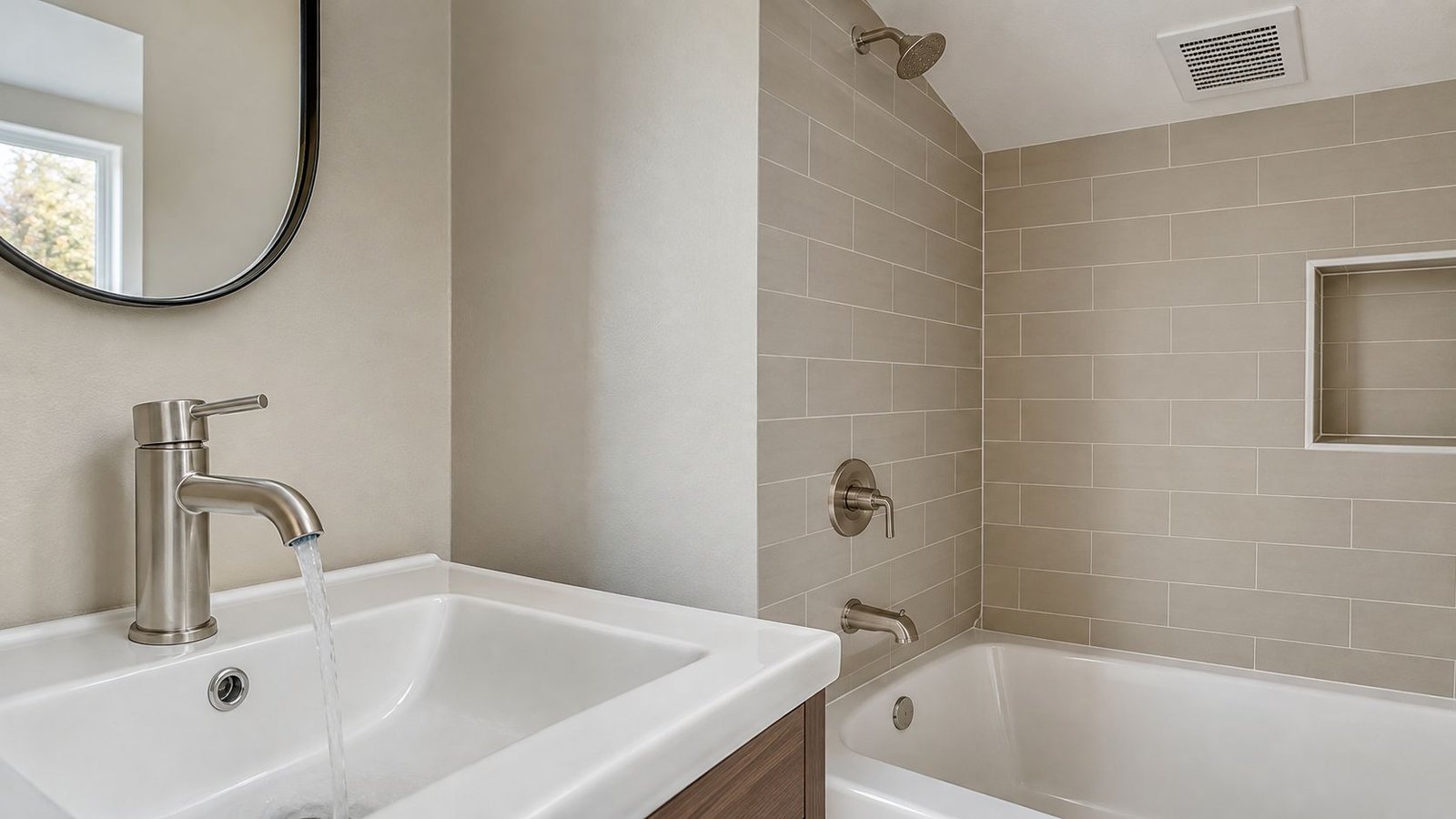
A solid bathroom record starts with water flow and ends with visible finish quality. Run the sink, flush the toilet, check the tub or shower pressure, and listen for gurgling in the drain line. Then look at grout, caulking, vanity interiors, and the floor around the toilet base for staining or soft spots.
What experienced landlords check first
The most useful notes are the ones that tell a future reader exactly what was present on day one. “Caulk worn around shower edge” is far better than “bathroom okay.” So is a photo of a fan that runs but sounds weak, or a vanity cabinet with water marks under the sink.
In Red Deer, bathroom exhaust problems can be a real moving target because tenants may not report a minor issue until steam has already been sitting in the room for months. That is where a careful move-in record pays off. It shows whether the condition was already present and whether the owner acted before the tenant moved in.
The earlier section on entry hardware matters here too, because bathroom doors and locks should work smoothly and close properly. If the unit has a visible water heater setting, note it. If hard water deposits are already present on fixtures, photograph them instead of relying on memory. That kind of detail turns a routine move in inspection checklist into a defensible tenancy record.
4. Living Areas and Flooring
Living rooms, dining areas, hallways, and other common spaces usually take the most visual abuse over time, so they need clean baseline photos. Scuffed baseboards, faded paint, and carpet wear are all normal things to document, but they can't be left to chance. The first move-in record should show the room as it was, not as anyone hoped it looked.
The best approach is simple. Use daylight where possible, then add flash if the room is dim. Photograph each space from corners and straight-on, so floor condition, wall marks, trim, and ceiling issues are all visible in the same file set. In Calgary rentals, especially single-family homes, these rooms often become the centre of move-out disputes because they show traffic patterns fast.
Make the room readable, not just pretty
A good photo set tells a story. A poor one just shows furniture placement. Close closet doors, keep the frame steady, and capture any smells, stains, pet wear, smoke residue, or moisture notes in writing. If a room has a faint water mark above a window, say so clearly and photograph it before it becomes a bigger repair conversation.
A Calgary property manager who documents pre-existing carpet stains at move-in can shut down a wrongful claim later because the photo trail proves the tenant didn't create the issue. The same applies to wall marks and finish wear in Edmonton townhomes, where older paint often hides previous patch work.
Use a separate condition rating for each room, even if the property is small. That keeps the file organised and makes it easier to compare move-in and move-out without searching through a wall of images. A move in inspection checklist works best when the living spaces are treated as individual evidence points, not just “main area, fine.”
5. Bedrooms and Storage
Bedrooms feel private, but they still need the same level of documentation as the rest of the unit. Tenants care about window function, closet layout, lighting, and whether the room feels dry and safe. Landlords care because bedroom wear is one of the easiest places for a disagreement to start, especially when the unit has several rooms and one of them was already damaged before possession.
Check each bedroom one by one. Open the closets, test the rods and shelves, and verify that doors and latches work smoothly. Photograph the window from the inside and note whether it opens cleanly, locks properly, and closes without sticking. In Alberta rentals, especially in older Calgary and Edmonton homes, that window check matters because it's not just about comfort, it's about documenting a functioning bedroom at move-in.
Storage details deserve their own photos
Closet interiors often get ignored because they look empty and harmless. That's a mistake. A detached shelf bracket, a bent rod, or a chipped closet base becomes a conflict if it isn't documented early.
For a bedroom with multiple features, capture wide and close shots. Photograph the room from the doorway, then take separate images of the window, closet, flooring, and any patched walls. If the door has a lock, test it and log the key count. If a bedroom smell suggests moisture or old smoke, write that down instead of trying to be polite about it.
Practical rule: bedrooms should be documented as if each one could be argued about later. Because in a move-out dispute, they often are.
Edmonton landlords who treat bedroom storage as a formal inspection category usually have fewer arguments over shelving and closet damage at the end of a tenancy. The paperwork is simple, but the effect is strong. That's exactly the kind of detail a good move in inspection checklist should capture before the first suitcase hits the floor.
6. Appliances and Systems Functionality
Not every important item is sitting in the kitchen. Furnaces, heat pumps, water heaters, washers, dryers, and other provided systems carry a lot of risk if they aren't tested at possession. Alberta's climate makes this one essential. A furnace that looks fine in September but fails at the first cold snap can turn into a habitability dispute very quickly.
The right inspection records both condition and function. Thermostats should respond properly, heating should start cleanly, and any strange noises should be noted. If the property includes laundry appliances, run them long enough to show fill, cycle, spin, and drainage. If a water heater is visible, record its setting and any visible age information on the nameplate.
Alberta owners should test for more than appearance
A unit can look spotless and still fail the move-in standard. That is why the person doing the walkthrough should check startup behaviour, not just surface condition. If the furnace is noisy, the water heater base is damp, or the washer shakes unusually, that goes in the report.
Calgary property managers often catch furnace issues during September move-ins because the system is tested before the weather turns. That kind of timing prevents later arguments about whether the unit was handed over in usable condition. It also protects the owner from having to explain why a non-working system was missed before occupancy.
If there is a gas connection, document that it looks secure and smell-free. If the home uses a smart thermostat, note the setup and leave tenant instructions in the file. The more mechanical the unit is, the more important it is to keep the paper trail tight. That is where a practical move in inspection checklist earns its keep.
7. Safety and Security Features
Smoke alarms, carbon monoxide detectors, exterior lights, and security hardware are not optional extras in a rental file. They are the kinds of items that can become liability issues if they are missing or non-functional at move-in. The record needs to show not just that the device was present, but that it was tested and explained.
Test the detectors. Record where they're located and whether they're hardwired or battery-powered. Check the fire extinguisher gauge if one is supplied, and make a note of the placement so the tenant can find it later. For homes with gas furnaces, carbon monoxide detector placement deserves particular attention because the file should show it was there and working.
The safety note that should never be skipped
A move-in walkthrough should include a brief tenant orientation. Show the tenant where the detectors are, where the emergency exits are, and how any security keypad resets work. If exterior lighting is part of the property, test the switches and photograph the fixtures at night or in low light if possible.
The internal screening step also matters to landlords deciding whether a property management partner is organised enough to handle compliance. A company that can document entry points, safety devices, and inspections in a clean file is also more likely to handle tenant screening and lease administration well. For owners comparing services, the tenant placement process should connect with credit check for tenants standards, because good screening and good inspection records usually travel together.
Edmonton landlords who manage older properties often find that safety documentation prevents confusion later when a tenant says a detector was never installed. If the move-in file shows the test, the location, and the handover explanation, the owner is in a much stronger position. That is the kind of detail a serious move in inspection checklist should never skip.
8. Utilities and Meter Documentation
Utility readings are one of the cleanest ways to avoid a billing fight later. Gas, water, and electricity meters should be photographed from straight on, with the reading and the time visible in the file. If the property uses sub-meters or shared billing arrangements, those details should also be written down clearly.
The practical value is straightforward. A baseline reading gives both sides a starting point, which matters if a bill looks unusual later or if there's a hidden leak. It also helps where utilities are split between landlord and tenant, because the lease can say one thing, but the meter record shows what was in place at possession.
Build a file that could survive a billing dispute
The strongest utility record includes the meter ID, the exact date and time, the photo, and a witness or second observer where possible. That keeps the record credible if a dispute reaches a formal review. If the owner or manager can do a basic leak test before move-in, that helps too. Record the baseline, avoid water use, and compare the reading later to see whether it changed.
Calgary landlords have used this kind of baseline when a tenant received an unexpectedly high bill and the later review pointed to a pre-existing leak instead of tenant overuse. The result was a cleaner conversation and less finger-pointing. The same method works across Alberta because the meter doesn't care who thinks they were careful.
If utilities are included in rent, the baseline still matters. It protects the owner from inflated claims and gives the file a factual anchor. For anyone building a serious move in inspection checklist, utility photos are not a small detail. They are the part of the file that often proves the building's condition before anyone starts using it.
9. Exterior and Building Structure
A Calgary landlord can miss a lot inside a spotless unit and still catch the risk on the outside. Roofline, siding, gutters, downspouts, decks, patios, fences, walkways, foundation walls, and parking areas all need a baseline record. In Alberta, where weather shifts fast and freeze-thaw stress shows up in the structure, that record can be the difference between a clean insurance discussion and a dispute after a storm.
Start at the curb and work around the property in a steady sequence. Photograph the exterior from ground level and from several angles, then note siding wear, visible cracks in the foundation, loose fence boards, and any drainage paths that are blocked or poorly graded. If the property has a garage, detached shed, or other outbuilding, include it in the same visual sequence so the file shows the full rental area, not just the house front.
Weather records matter more than people expect
A Red Deer property manager who documented roof condition and gutter debris at move-in had a much cleaner file when hail later damaged the area. The photos showed what was already there, which helped separate storm damage from pre-existing condition. That kind of record matters when the owner is dealing with insurers or later defending a move-out claim.
Test visible exterior lights if they are accessible. Check gate latches, fence alignment, and balcony or deck railing stability if it is safe to do so. Parking surface condition should also be noted, because cracked pavement, pooling water, or uneven transitions can become a complaint later if there is no baseline. A careful written note does more than capture appearance, it sets out what was present at possession.
A practical inspection file should also tie the exterior to the tenancy paperwork. If the lease or a rental lease agreement example assigns responsibility for yard care, snow removal, or exterior maintenance, the move-in photos should show the starting point clearly. That is the same discipline Alberta landlords use when reviewing property investment properties, because the outside of the building is often where wear, weather, and tenant use meet first. A careful move in inspection checklist makes the property easier to manage, insure, and defend.
10. Documentation and Photographic Evidence
The paperwork is the product. The walkthrough matters, but the signed file is what survives the move-out argument. Under Alberta's Residential Tenancies Act, the landlord's ability to withhold any part of the security deposit can hinge on whether the condition was properly documented at the start. That's why the move-in record should be treated like evidence, not a quick admin task.
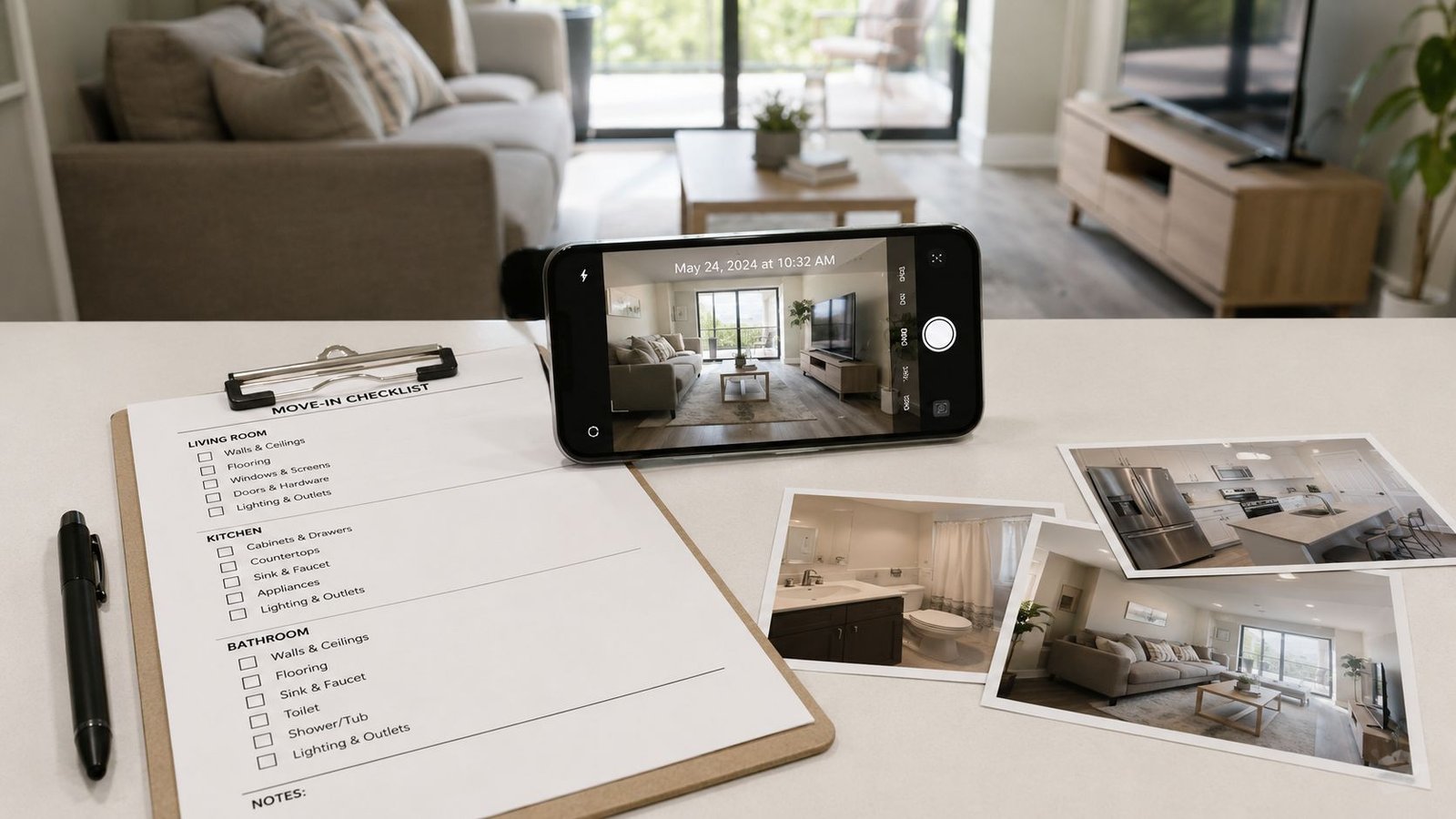
The cleanest approach uses wide shots, close-ups, timestamped images, and a room-by-room written assessment. A video walkthrough can help too, especially when it narrates what's being seen in real time. The file should show the tenant's signature, the date, the exact unit, and a clear list of observations that are specific enough to compare later.
What the best records always include
Use the same inspection order every time. Keep the photos in labelled folders by room, and store backups in cloud storage so the file can be accessed if needed later. Wide shots show overall condition. Close-ups capture chips, stains, and wear. Written notes fill the gaps that photos can't describe, such as odours or a soft-close drawer that doesn't close smoothly.
The most useful language is neutral and exact. “Scratch on left bedroom wall, present prior to occupancy” is much stronger than “wall a bit rough.” That style of wording is what makes a file hold up if the move-out conversation gets formal.
Practical rule: if the note could be misunderstood six months later, rewrite it while the unit is still empty.
This is also where an Alberta landlord can decide whether their process is strong enough to self-manage or whether it needs a licensed property manager. The internal lease record should line up with the move-in form, so the management file stays consistent from day one. A strong move in inspection checklist and a strong lease process should look like one system, not two separate tasks. See the lease-side coordination through rental lease agreement example when building that paperwork set.
Move-In Inspection: 10-Resource Checklist Comparison
| Item | Core features | Value & risk (brief) 💰 | Unique highlight ✨🏆 | Target audience 👥 | Quality ★ |
|---|---|---|---|---|---|
| Entry & Access Points | Front/back/patio/garage doors; locks; keys; electronic codes | Baseline security; reduces liability & lock disputes; avoids surprise rekeys 💰 | Key inventory + photo proof; code reset workflow ✨ | Landlords, tenants, on‑site managers 👥 | ★★★★ |
| Kitchen & Appliances | Fridge, stove, oven, dishwasher, microwave; counters & cabinets | Prevents appliance disputes; schedules proactive replacements; protects warranties 💰 | Appliance serial inventory + temp checks; photo baseline ✨ | Owners with furnished units; tenants expecting included appliances 👥 | ★★★★ |
| Bathrooms & Plumbing | Toilets, sinks, showers, caulking, exhaust, water heater | Prevents water/mold damage claims; identifies remediation needs early 💰 | Moisture/ventilation focus; caulk/grout photo evidence ✨ | All rental owners; properties in cold climates 👥 | ★★★★ |
| Living Areas & Flooring | Carpets, hardwood, tiles, walls, trim, lighting | Protects against exaggerated damage claims; sets wear‑and‑tear baseline 💰 | Room‑by‑room photo catalog; consistent lighting protocol ✨ | Long‑term rentals; multi‑room units 👥 | ★★★ |
| Bedrooms & Storage | Flooring, walls, windows, closets, egress verification | Ensures safety/code compliance; prevents storage/repair disputes 💰 | Egress measurement + closet inventory; per‑room sheets ✨ | Multi‑bed & family rentals; safety‑focused owners 👥 | ★★★★ |
| Appliances & Systems Functionality | HVAC, furnace, A/C, water heater, washer/dryer, thermostats | Prevents habitability claims; plans for costly system replacements 💰 | System serials + startup tests; smart‑system docs ✨ | Year‑round rentals in Alberta; investors with older systems 👥 | ★★★★★ |
| Safety & Security Features | Smoke/CO detectors, extinguishers, alarms, exterior lighting | Meets code; reduces liability in emergencies; insurance support 💰 | Test logs, code reset, tenant safety orientation ✨🏆 | All landlords; high‑risk/older properties 👥 | ★★★★★ |
| Utilities & Meters Documentation | Water/gas/electric meter reads, IDs, sub‑metering | Prevents billing disputes; detects pre‑existing leaks; budgeting aid 💰 | Timestamped meter photos + leak test protocol ✨ | Metered units; split‑billing properties; utility‑charged rentals 👥 | ★★★★ |
| Exterior & Building Structure | Roof, gutters, siding, foundation, decks, drainage | Protects against weather/insurance disputes; flags urgent repairs 💰 | Ground‑level roof & drainage baseline; seasonal notes ✨ | Single‑family & multi‑unit owners; properties in harsh climates 👥 | ★★★★ |
| Documentation & Photographic Evidence | Systematic photos, timestamps, signed forms, video walkthroughs | Irrefutable evidence for disputes; supports deposit claims & tribunals 💰 | Standardized photo order + cloud archive; video walkthroughs ✨🏆 | All property managers; investors needing audit trail 👥 | ★★★★★ |
Turn This Checklist Into a Working System for Your Alberta Rental
A good move-in record in Alberta is not just ten boxes checked off in a hurry. It is a complete condition file that starts at the door, moves through the kitchen, bathrooms, living areas, bedrooms, systems, safety devices, meters, exterior, and then ends with signatures and photos that can be compared at move-out. That is what turns a routine inspection into a real defence file.
For Calgary landlords, Edmonton investors, and Red Deer owners, the benefit is consistency. The same printable structure can be used for every tenant, every unit, and every handover, which makes the deposit conversation much easier later. It also forces better maintenance habits, because problems get found before keys change hands instead of after a complaint lands in the inbox.
Owners who self-manage can use this checklist to tighten their process right away. The practical steps are simple, but they matter: inspect when the unit is vacant, test what should work, photograph what might be disputed, and get the tenant's signature before possession. That approach creates a record that is much stronger than memory and much more useful than a casual walk-through.
For owners who don't have the time, live out of town, or want a local team to handle the details, that same workflow can be managed professionally from start to finish. A licensed Alberta property management team can coordinate tenant placement, inspections, compliance, maintenance follow-up, and record-keeping so the file stays clean when the tenancy ends. That matters most when the owner wants a system that holds up under the Residential Tenancies Act, not just a checklist that looks good on move-in day.
Dreamhouse Realty Ltd. builds that process into full-service rental management for Calgary, Edmonton, Red Deer, and surrounding Alberta communities. Contact GURIQBAL CHAHAL, MBA, PMP, REAL ESTATE BROKER at 403-966-6072 to talk through a property-by-property inspection system, or visit Dreamhouse Realty Ltd. to book a free rental consultation and see how a structured move in inspection checklist fits into ongoing tenant placement, compliance, and management.
Dreamhouse Realty Ltd. helps Alberta landlords turn a move in inspection checklist into a documented, repeatable system that protects deposits and reduces dispute risk. For owners who want local oversight, tenant placement, and inspection records handled by a licensed team, visit Dreamhouse Realty Ltd. to book a free rental consultation and get a management plan built around Calgary, Edmonton, Red Deer, and surrounding communities.