
A Calgary homeowner has just decided to lease her detached bungalow in Coventry Hills. The mortgage allows rental use, the house is vacant, and the online rent estimate looks attractive. Then the practical questions arrive: who will handle showings, how should the house be priced against nearby rentals, what must be documented at move-in, and which Alberta tenancy deadlines can't be missed?
Leasing a house is not the same as posting a condo advertisement and waiting for an application. A detached rental brings yard care, heating systems, basements, parking, exterior maintenance, inspection records, and more opportunities for unclear expectations. The workflow below gives Alberta landlords a direct order of operations, from market positioning through tenant onboarding, with compliance built into each stage.
Table of Contents
- What Leasing a House in Alberta Really Looks Like Today
- Why the 2026 Alberta Rental Market Changes Your Leasing Playbook
- Preparing the Property and Pricing It to Lease Quickly
- Screening Tenants Without Discouraging Good Applicants
- Drafting the Lease and Meeting Alberta's Compliance Deadlines
- Move-In Inspections and the First 30 Days of Tenancy
- A Landlord's Pre-Lease Checklist and When to Bring in a Property Manager
What Leasing a House in Alberta Really Looks Like Today
The Coventry Hills owner starts with financing, not advertising. She confirms that the mortgage permits rental use, checks insurance requirements, and estimates the carrying cost of an empty property. A sensible plan includes roughly one month of vacancy and a reserve for tenant turnover, without assuming that the first applicant will accept the first asking price.
Next comes the management decision. Self-management may work when the owner lives nearby, has daytime availability, and can respond quickly to maintenance requests. A property manager becomes more practical when the owner works full-time, lives outside Alberta, or doesn't want tenant communication and compliance tasks competing with family obligations.
A house creates a different operating workload
A condo landlord often coordinates inside-the-unit concerns while the building handles common areas. A house landlord must think about the furnace, hot-water system, roof, gutters, grading, fencing, snow, lawn care, basement access, utility arrangements, and the condition of every exterior area. The lease also needs clear treatment of occupants, guests, parking, maintenance reporting, and yard responsibilities.
The old assumption that any well-presented Calgary rental will lease immediately is unreliable. CMHC reported that Calgary's purpose-built rental apartment vacancy rate reached 4.8% in 2024, after a three-year decline, while Edmonton reached 3.1%. Across Canada, the average purpose-built rental apartment vacancy rate rose to 2.2% in 2024 from 1.5% in 2023. These figures concern apartment markets, not detached houses, but they show why house landlords need a sharper pricing and leasing process. (CMHC Rental Market Report)
Practical rule: A house should be managed as a small operating business, not as a passive asset with a “for rent” sign.
The correct sequence is straightforward: verify the property and financing, prepare the house, price it against comparable houses, market it professionally, screen consistently, execute a compliant lease, and document possession. That order reduces avoidable vacancy and gives the landlord a defensible record if a dispute develops.
Why the 2026 Alberta Rental Market Changes Your Leasing Playbook
Calgary landlords need to stop treating vacancy as a single citywide number. CMHC reported Calgary's total primary rental-market vacancy at 5.0% in 2025, while condo vacancy in the secondary rental market was 2.2%. CMHC also identifies 3% as a long-standing balance threshold, so the two figures describe materially different leasing environments. (CMHC Calgary housing market dashboard)
A detached house doesn't compete directly with every apartment. It competes with houses and townhomes offering similar bedrooms, parking, outdoor space, school access, basement arrangements, and utility terms. A landlord who prices a bungalow against a headline apartment average can either leave money on the table or create unnecessary vacancy.
The indicators landlords should read together
| Indicator | 2024 | 2025 | 2026 |
|---|---|---|---|
| Calgary purpose-built rental apartment vacancy | 4.8% | 5.0% | Not stated |
| Calgary total primary rental-market vacancy | Not stated | 5.0% | Not stated |
| Calgary condo secondary-market vacancy | Not stated | 2.2% | Not stated |
| City of Calgary vacancy | 4.6% | 5.1% | 5.7% projected |
| Calgary purpose-built vacancy forecast | Not stated | Not stated | 5.7% forecast |
The City of Calgary reported vacancy rising from 4.6% in 2024 to 5.1% in 2025, with 5.7% projected for 2026. The city's figures and CMHC's figures use different market definitions, so they shouldn't be blended as if they were identical. They point in the same operational direction, however, more choice for renters and more pressure on owners who delay pricing decisions. (City of Calgary housing trends)
In practice, tenants may compare several houses before applying. A well-qualified applicant can negotiate on rent, move-in timing, included services, or minor repairs. That means the landlord should publish a defensible price, respond quickly, and decide in advance which concession is preferable to prolonged vacancy. Leasing as if demand still guarantees immediate acceptance can extend vacancy and encourage rushed decisions later.
The strongest response isn't indiscriminate discounting. It's accurate positioning, excellent photographs, a clean house, fast showings, and a screening process that moves qualified applicants through without arbitrary delays.
Preparing the Property and Pricing It to Lease Quickly
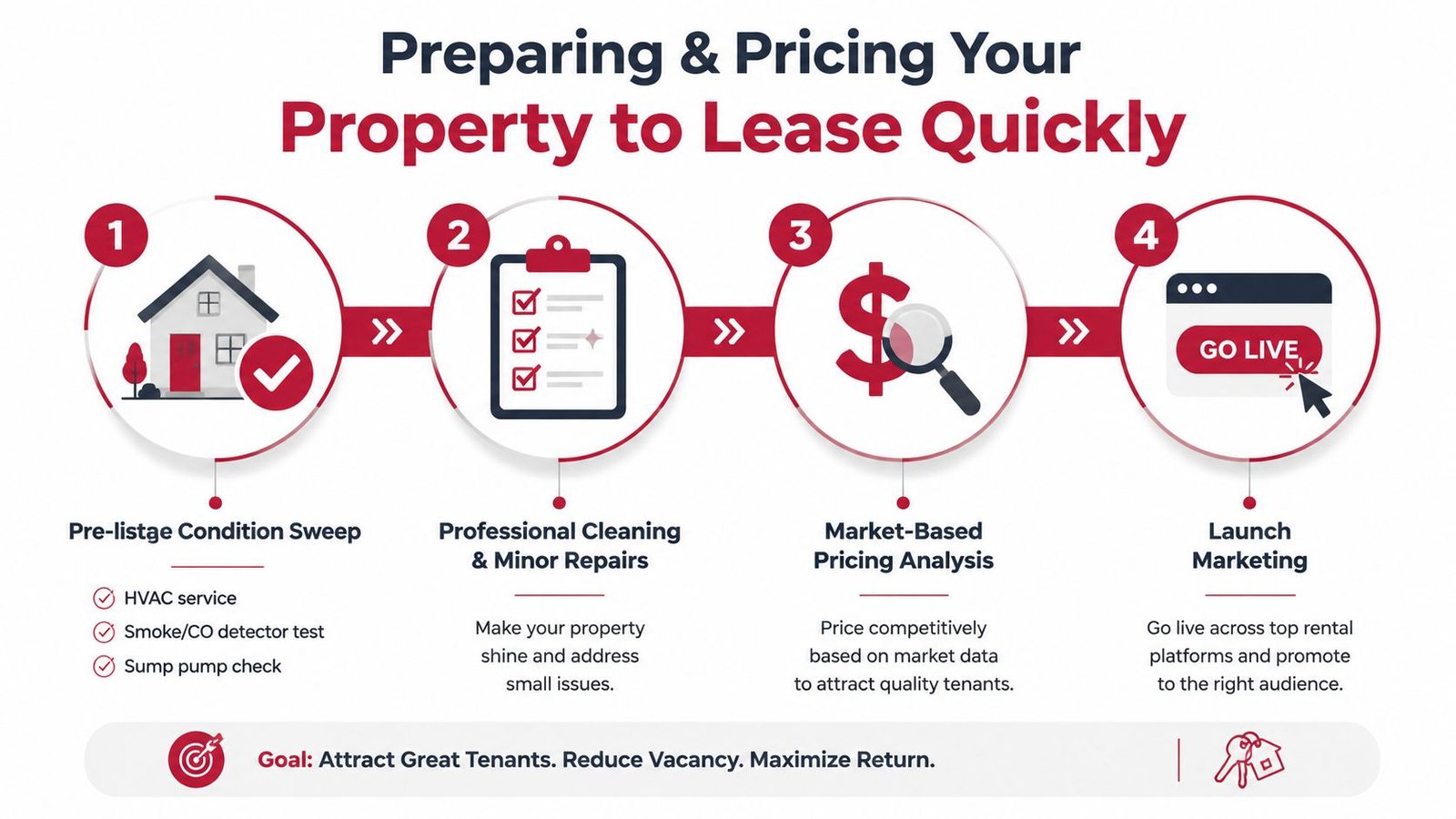
Preparation should happen as one connected pre-listing workflow. The first pass is a condition sweep, not a decorating exercise. A landlord should service the HVAC system, test smoke and carbon monoxide detectors, check the sump pump, review the roof and gutters, and inspect yard grading for Alberta's freeze-thaw conditions.
Make the house easy to trust
Repair visible defects before photography. Deep-clean kitchens, bathrooms, appliances, flooring, windows, and storage areas. Replace burned-out bulbs, remove excess furniture, touch up damaged walls, and make the entrance look cared for in both winter and summer. Good photographs can't compensate for stale odours, cluttered rooms, dirty grout, or an overgrown yard.
The listing should state what matters to a house tenant: parking, garage access, basement use, laundry, utilities, yard maintenance, pets, smoking rules, storage, and the availability of appliances. Ambiguity creates avoidable inquiries and attracts applicants whose expectations won't match the property.
Price against the right competitors
Pull at least five comparable Calgary-area house rentals. Adjust the comparison for square footage, garage, basement suite potential, school catchment, condition, outdoor space, and included utilities. The useful output isn't one magic number. It's a list-to-lease range, with a firm decision point for changing the price if qualified applications don't arrive.
A house should be compared first with similar houses in the same submarket, then with townhomes and apartments that offer a comparable tenant experience. That approach accounts for the gap between apartment vacancy and the lived reality of detached-house leasing.
Use channels that reach the intended tenant pool, including Rentals.ca, liv.rent, Kijiji, Realtor.ca, and MLS where appropriate. The showing system matters as much as the advertising. A lockbox should be used responsibly, access should be confirmed, group-showing scripts should explain the property consistently, and same-day applications should receive prompt instructions. Professional visual content can also help landlords get more lease inquiries by giving prospects a clearer sense of layout before they book a showing.
Screening Tenants Without Discouraging Good Applicants
A screening policy should be strict enough to protect the asset and clear enough that good applicants understand the process. The landlord should define the criteria before publishing the listing, then apply the same process to every applicant.
Three practical standards provide a starting point:
- Income verification: Confirm income of at least 2.5 times the monthly rent, using appropriate documentation and applicant consent.
- Credit review: Obtain a credit check and look for recent bankruptcies or unresolved judgments.
- Rental references: Contact positive references from at least two prior landlords, where the applicant has that rental history.
These thresholds are screening tools, not substitutes for judgement. An applicant who falls short on one metric may have a co-signer, stronger documentation, or an explanation that can be verified. The landlord should ask for relevant clarification instead of rejecting someone automatically.
Build a process applicants can follow
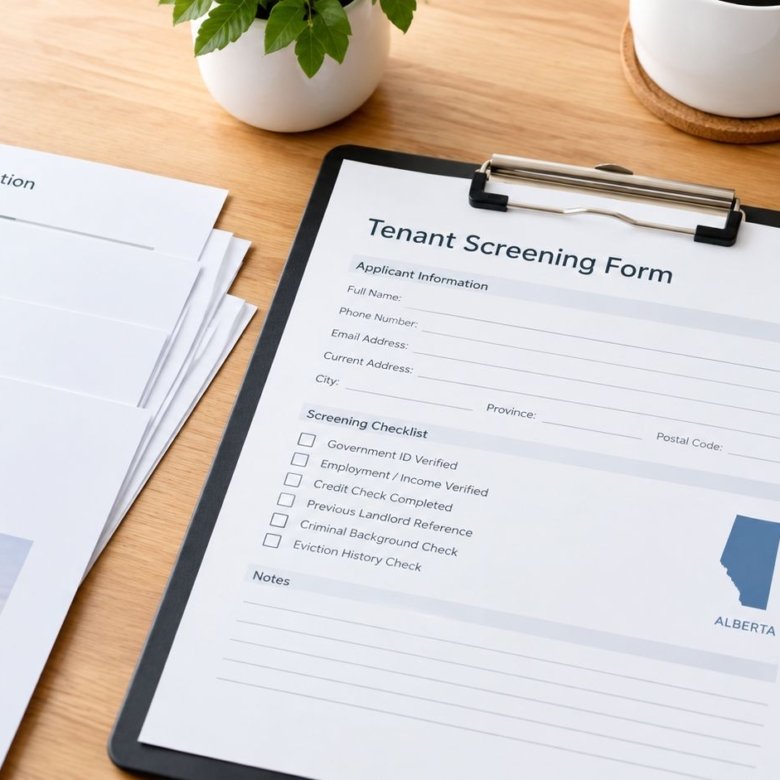
The application form should request consent for credit, income, and reference checks at the beginning. It should identify intended occupants, pets, vehicles, employment, current housing, and the applicant's preferred possession date. A complete form filters out casual inquiries before the landlord spends time arranging showings and chasing missing documents.
Communication affects applicant quality. Qualified prospects should receive a professional response with the next step, requested documents, viewing details, and an expected decision timeline. The landlord should avoid subjective language about family status, age, nationality, religion, disability, or other protected characteristics. Decisions need to rest on documented, lawful criteria.
Landlords who want a structured application process can use a credit-check resource for tenants and should obtain clear background consent by Digital Footprint Check before ordering checks. The records should show what was requested, what was received, and why the application met or failed the published criteria.
Screening principle: Speed matters, but undocumented speed is a liability. A complete file is more valuable than a quick acceptance.
The best tenant is not the first person who offers the asking rent. The better choice is the applicant whose finances, references, household details, and expectations fit the house and the lease.
Drafting the Lease and Meeting Alberta's Compliance Deadlines
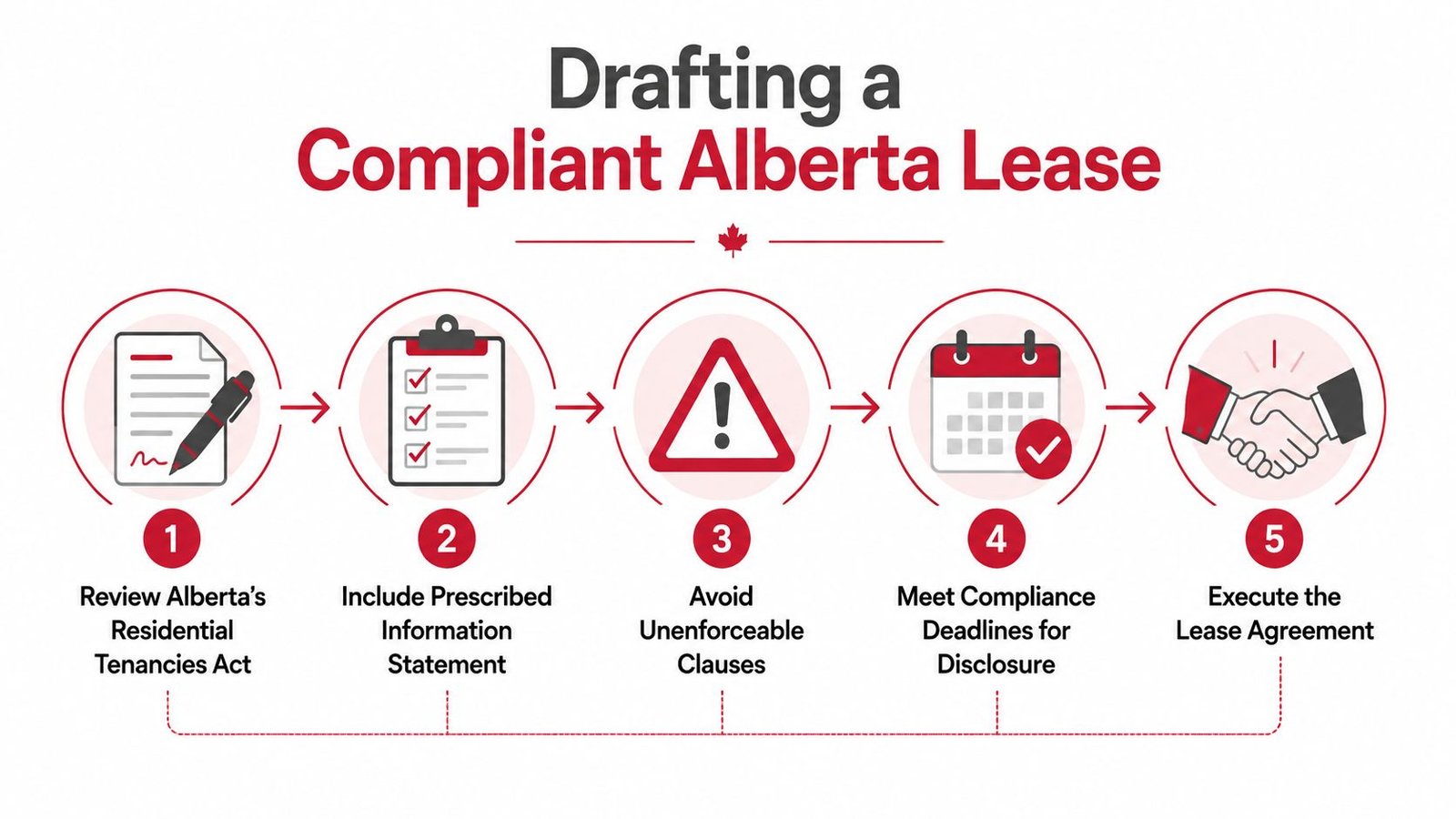
A private lease can't override Alberta's Residential Tenancies Act. The document should identify whether the tenancy is fixed-term or periodic, list the rent and included services, identify occupants, set out maintenance responsibilities, address pets and smoking, and include the prescribed information statement. Clauses that waive quiet enjoyment, impose illegal fees, or contradict the Act create risk rather than protection.
Lease execution should be treated as a compliance workflow. The landlord should coordinate signing, deposit collection, the move-in inspection, key delivery, and statutory notices rather than treating the signature as the finish line.
Get the notice of landlord right
Alberta requires the landlord to serve a signed notice of landlord within 7 days after the tenant takes possession. The notice must include the landlord's name, postal address, and physical location in Canada. The provincial landlord and tenant handbook supports using a same-day or next-day checklist so the notice isn't forgotten amid keys, deposits, and inspection paperwork.
The security deposit cannot exceed one month's rent. Alberta requires interest on security deposits, and the prescribed rate was 1.6% effective January 1, 2024. The provincial calculator lists the minimum annual interest rate as 0% for the 2026 period, so the landlord should verify the applicable rate for the relevant period and keep the calculation in the tenancy file. (RECA security deposit interest guidance)
Control rent changes and records
A landlord can't increase rent during a fixed-term tenancy. For fixed-term and periodic tenancies, at least 365 days must pass since the last increase or the start of the tenancy, whichever is later. For a periodic tenancy, the notice must be written, dated, signed by the landlord, and state the effective date. (Alberta tenancy guidance)
Electronic execution can keep documents organised, provided the parties can access and retain the signed records. A landlord considering digital lease signing for agents should still confirm that the completed lease, prescribed information, notices, deposit record, and inspection documents are stored together.
For a practical Alberta tenancy reference, landlords can also review this Alberta landlord and tenancy guide. A property manager or qualified legal professional should review unusual clauses, shared accommodation arrangements, suites, and any situation that doesn't fit a standard residential lease.
Move-In Inspections and the First 30 Days of Tenancy
The move-in inspection is the final opportunity to establish the property's condition before possession changes hands. The landlord and tenant should walk through the house together using the standard Form N11, record existing damage and cleaning issues, test important appliances, note operational quirks, and sign and date the completed form. Each party should receive a copy.
Photos should support the written record. The file should show flooring, walls, appliances, bathrooms, windows, doors, exterior areas, and any existing marks that could otherwise become disputed later. A photo without context is weaker than a dated inspection record that identifies the room and condition.
Give the tenant an operating manual
A short tenant handbook prevents repetitive questions and clarifies responsibilities. It should cover:
- Waste collection: Explain trash, recycling, organics, and collection-day expectations.
- Heating and filters: Identify the HVAC filter location, replacement responsibility, and emergency heating procedure.
- Contact routes: Separate routine maintenance, urgent repairs, utility issues, and after-hours emergencies.
- House systems: Include water shut-off information, appliance instructions, parking rules, and any alarm or sump-pump guidance.
A reliable rent-receiving system should be established before possession, preferably through direct deposit or a property management portal. Cash handling creates unnecessary reconciliation work and weakens the landlord's recordkeeping.
During the first 30 days, the landlord should watch for payment delays, unusual noise complaints, missed maintenance appointments, and repeated confusion about basic lease terms. These signs don't prove a tenancy problem, but they show where communication or documentation needs attention.
Remote owners should arrange a local inspection to verify occupancy and condition within the first week. The move-in inspection checklist can help organise the record, but it doesn't replace a careful walkthrough or prompt follow-up on defects. Early, professional communication sets boundaries before small operational issues become expensive disputes.
A Landlord's Pre-Lease Checklist and When to Bring in a Property Manager
A landlord should not move to the next phase until the current phase has a clear deliverable. That simple discipline prevents the common Calgary mistake of launching a weak listing before the house, pricing evidence, screening file, and lease package are ready.
The seven-phase pre-lease checklist
- Pricing research: Collect comparable house rentals, define the list-to-lease range, and set a review date for the asking price.
- Property preparation: Complete the condition sweep, repairs, cleaning, safety checks, photographs, and exterior work.
- Marketing and showings: Publish accurate copy across suitable channels, prepare access instructions, and use a consistent showing script.
- Tenant screening: Issue the application, obtain consent, verify income and credit, contact references, and document the decision.
- Lease drafting and signing: Confirm tenancy type, include required information, collect the deposit, and retain signed records.
- Move-in logistics: Complete the inspection, exchange keys, deliver operating information, and establish rent payments.
- Management decision: Decide whether ongoing communication, maintenance, inspections, records, and compliance belong with the owner or a local manager.
Self-management becomes less attractive when the portfolio exceeds two doors, the landlord lives outside Alberta, or the daily workload competes with employment and family responsibilities. A house can need attention during business hours, after a tenant's workday, or during severe weather. Distance also makes urgent access, inspection, contractor coordination, and occupancy verification harder.
A full-service Alberta property manager should be able to explain exactly what is included. Services may cover rental consultation and market analysis, listing preparation, showings, applicant screening, lease execution, rent collection, inspections, maintenance coordination, compliance records, tenant communication, and owner statements. Dreamhouse Realty Ltd. is one Calgary-area option that provides these functions for residential rental properties, including single-family homes, condos, townhomes, and small multifamily buildings.
Decision test: If the owner can't answer a tenant's urgent call, attend an inspection, document a notice, or coordinate a repair promptly, local management is no longer a luxury. It's an operating requirement.
The right manager won't remove the landlord's responsibility for ownership decisions, but can provide organised local execution. For owners in Calgary, Edmonton, Red Deer, and surrounding Alberta communities, that can mean fewer gaps between listing, lease signing, possession, maintenance, and reporting.
Dreamhouse Realty Ltd. offers Calgary-area landlords coordinated pricing, listing preparation, showings, tenant screening, Alberta-compliant lease execution, inspections, maintenance coordination, rent collection, and tenant communication. Owners leasing a house who want hands-on local oversight can visit Dreamhouse Realty Ltd. to discuss the property, expected timeline, and management needs with GURIQBAL CHAHAL, MBA, PMP, REAL ESTATE BROKER, at 403-966-6072.