

What does proof of ownership look like when a bank deposit confirms rental income but says nothing about who owns the property? For Alberta landlords, proof of title, authority to manage, and rental accounting are different records. A property manager, lender, insurer, or the Canada Revenue Agency may need a different document for each purpose.
These ownership statements examples cover the documents landlords encounter across Calgary, Edmonton, and Red Deer, from monthly financial reports to statutory declarations. Each sample identifies the lines worth checking before signing, approving a deduction, or handing records to an accountant.
The distinction matters: a polished owner statement doesn't replace a Certificate of Title, and a title search doesn't explain missing rent. Likewise, a tax summary can't establish whether a tenant's deposit was handled properly. The sample entries below are illustrative document structures, not completed legal forms. Completeness depends on the document's purpose, the underlying evidence, and any requirements set by the receiving institution.
Table of Contents
- 1. Monthly Owner Statement (Rental Income and Expense Summary)
- 2. Certificate of Title (Proof of Ownership from Alberta Land Titles)
- 3. Statement of Rental Income and Expenses for Canada Revenue Agency (Form T776)
- 4. Property Management Agreement Owner Authorization Statement
- 5. Security Deposit Holding Statement (Alberta Residential Tenancies Act)
- 6. Annual Owner Summary and Year-End Statement Package with Owner Portal Access
- 7. Statutory Declaration of Ownership for Lenders, Insurers, and Municipal Requests
- Comparing the 7 Ownership Statement Examples for Alberta Rentals
- Building Your Ownership Document File Next Steps for Alberta Landlords
1. Monthly Owner Statement (Rental Income and Expense Summary)
A monthly owner statement should explain what came in, what went out, and what remains payable. It links rental activity to an owner's account, but it isn't legal proof of registered ownership.
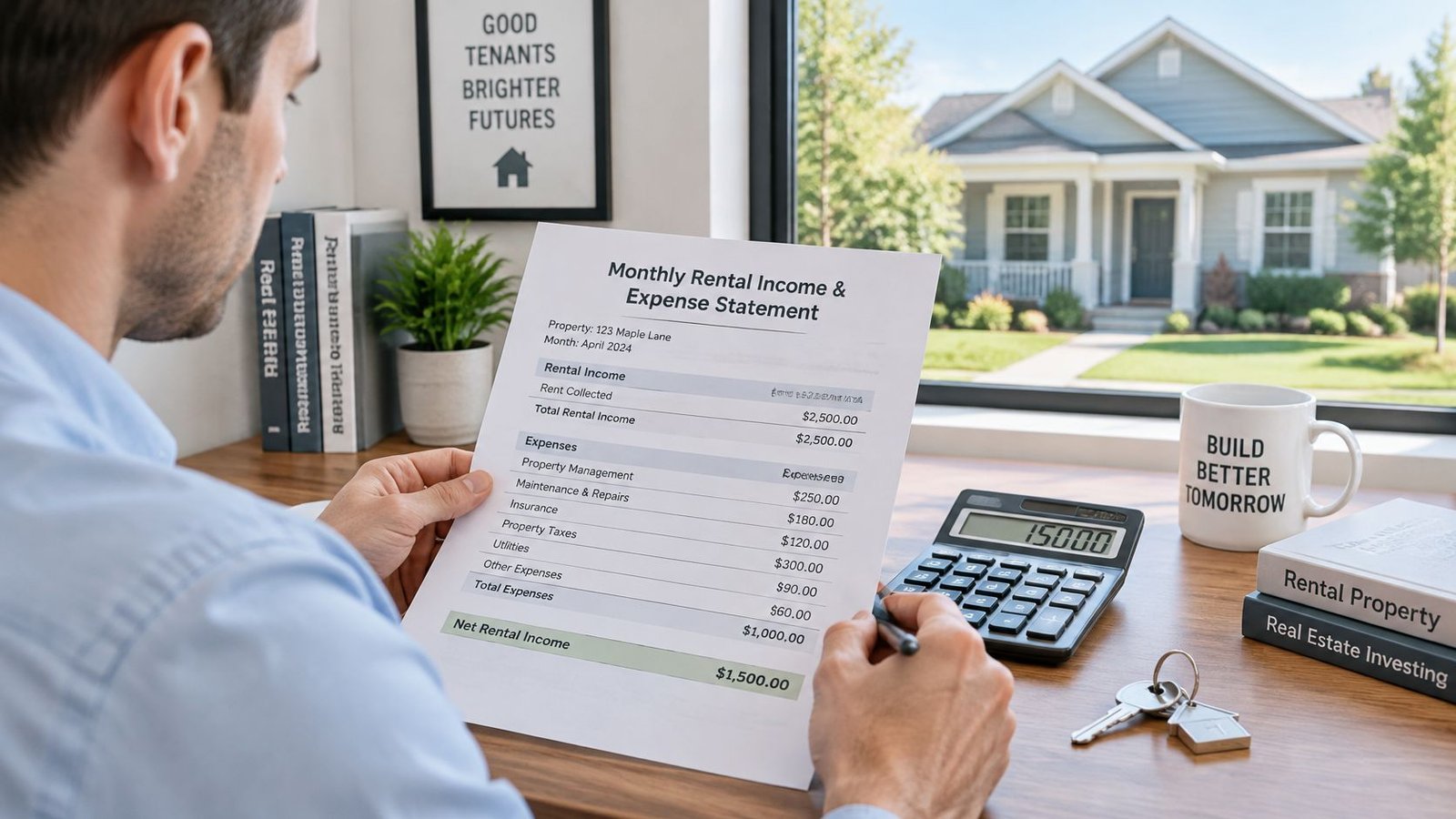
Annotated monthly statement
- Owner, property, unit, and reporting period: Identify whose funds the manager is reporting and which tenancy generated them.
- Opening balance and rent collected: Carry forward the previous closing balance and distinguish actual receipts from unpaid rent.
- Fees, repairs, and owner-paid utilities: Show separate entries, transaction dates, and invoice references rather than a combined expenses total.
- Deposit activity: Keep tenant security deposits separate from spendable rental income.
- Reserve, distribution, and closing balance: Explain funds retained, funds paid, and unresolved amounts.
For a Calgary duplex, repeated plumbing entries should lead to a comparison of work orders, not an automatic assumption that the vendor billed twice. For a remote Red Deer condo owner, the distribution line should reconcile with the bank deposit.
A rent payment ledger supplies the tenant-level detail behind the rent total. Owners can also compare account statement examples, while recognising that general account formats don't establish Alberta tenancy compliance.
CMHC's rental market reports reported that Calgary's purpose-built rental supply expanded 11% in 2025. Vacancy, incentives, and leasing costs therefore deserve visibility alongside cash received.
Practical rule: A positive owner payment doesn't establish strong performance if the statement leaves out arrears, vacancy, or deferred repairs.
2. Certificate of Title (Proof of Ownership from Alberta Land Titles)
Before a Calgary townhome enters management, the owner's name on the proposed agreement should be checked against a current Certificate of Title. An owner statement generated by accounting software isn't a substitute.
The Alberta Land Titles record identifies the registered owner and registered interests affecting the property. Its purpose differs from a rental financial statement: it establishes the title position rather than reporting operating results.

Lines that need verification
- Title identifier and legal description: Match the actual parcel, not merely the mailing address or listing description.
- Registered owner: Use the exact legal name when preparing the management agreement.
- Registered interests: Review mortgages, caveats, easements, and other entries. Obtain the underlying instrument when its effect isn't clear.
- Search details: Establish when the title information was retrieved, particularly following a purchase or ownership change.
- Signing authority: Where a corporation owns the property, verify who can sign for it separately.
For an Edmonton plex refinance, an unfamiliar caveat warrants investigation before documents are signed. Its presence alone doesn't explain its significance or establish that a transaction can't proceed.
A current search adds administrative work, but relying on a purchase-era copy can leave later registrations unnoticed. Store the title with acquisition, financing, and insurance records, and have a lawyer interpret uncertain interests.
Title check: The registered owner and the authorised signatory may be different people. Both identities need a documented explanation.
3. Statement of Rental Income and Expenses for Canada Revenue Agency (Form T776)
Form T776, Statement of Real Estate Rentals, concerns tax reporting, not proof of title or permission to manage. An annual property-management summary can support its preparation, but it shouldn't be mistaken for a completed tax return.
For an individual Alberta landlord, the useful handoff is an organised income-and-expense package with supporting records. Corporate owners should have their accountant determine the appropriate corporate reporting rather than treating T776 as a universal corporate filing form.

Annotated tax-preparation summary
- Owner and property identification: Match the taxpayer, rental address, and ownership arrangement.
- Rental income: Reconcile receipts with the ledger and explain adjustments rather than copying owner distributions.
- Expense categories: Separate management fees, insurance, property taxes, repairs, and other costs for tax review.
- Financing information: Distinguish mortgage interest from principal repayment.
- Capital-work schedule: Flag improvements separately from routine repairs and provide the invoices.
- Supporting records: Preserve statements, receipts, and ownership information under the applicable CRA retention requirements.
Say an Alberta landlord owns Calgary condos while another owner lives in Ontario and rents an Edmonton house. Both need property-specific records, but their ownership arrangements and tax circumstances may require different treatment.
The manager should flag uncertain classifications rather than promise deductibility. Cash paid isn't automatically a current expense, and money distributed to an owner isn't the same as taxable profit. A Canadian tax professional should review capital cost allowance, co-ownership allocations, and unusual expenditures before filing.
4. Property Management Agreement Owner Authorization Statement
A manager's authority should be readable without guessing. The owner authorization section should explain which decisions the manager can make independently and which remain with the owner.
For a Calgary rental, a written maintenance limit can prevent routine repairs from stalling. An Edmonton investor may instead need a specific restriction on lease length or rent concessions.
Annotated authorization wording
- Owner identification and capacity: Identify the registered owner and explain the signatory's authority where relevant.
- Appointment of manager: State the property covered and the activities delegated.
- Leasing powers: Address advertising, applicant approval, lease execution, renewals, and concessions.
- Spending authority: Distinguish routine expenditure limits from emergency action and owner-approved capital work.
- Tenant funds: Explain deposit handling, accounting responsibilities, and access to supporting records.
- Termination and handover: Define notice, outstanding payments, and delivery of records when management ends.
A property management agreement should connect these permissions to reporting obligations. Authority to spend without an obligation to document the expenditure leaves owners with weak oversight.
Service Alberta's security-deposit guidance explains that an agent acting for an owner can fall within the Residential Tenancies Act definition of landlord. Delegating work therefore doesn't make accurate records less important.
Dreamhouse Realty Ltd.’s service agreements establish the specific terms, fees, responsibilities, and obligations for each engagement. Owners should reconcile the authorization wording with those terms before signing.
Broader authority can speed up operations, but it should come with clearer approval records, reporting, and escalation procedures.
5. Security Deposit Holding Statement (Alberta Residential Tenancies Act)
A security deposit isn't ordinary rental income. Its statement should trace the tenant's money from receipt through interest calculation and final disposition.
Under Alberta's starting-a-tenancy guidance, landlords must place security deposits in an interest-bearing account within two banking days. The applicable interest rate must be checked for the relevant period rather than copied from an old template.
Annotated deposit record
- Tenant, property, and tenancy: Connect the deposit to the correct lease and unit.
- Receipt and deposit dates: Record when the funds arrived and when they entered the account.
- Amount and financial institution: Identify the principal and where it is held.
- Interest calculation: Identify the applicable rate, calculation period, and interest paid or payable.
- Proposed deductions: Describe each claim and connect it to inspection evidence and invoices.
- Final disposition: Show amounts returned, applied, or still awaiting final accounting.
The Alberta Residential Tenancies Act handbook requires move-in and move-out inspections within one week before or after possession begins or ends, and retention of inspection reports for at least three years after the tenancy ends. It also explains that required written inspection reports are generally necessary for damage deductions.
For a Red Deer carpet-cleaning dispute, photographs alone shouldn't replace the inspection reports. The statement should explain the condition, the claimed responsibility, and the invoice supporting the deduction.
An Alberta landlord and tenancy reference can help organise the file, but the landlord must verify current deposit limits, accounting deadlines, and deduction requirements before acting.
6. Annual Owner Summary and Year-End Statement Package with Owner Portal Access
An annual package should make comparison easier without erasing the detail behind unusual expenses. A year-end total labelled maintenance isn't enough to decide whether an Edmonton plex needs a boiler replacement.
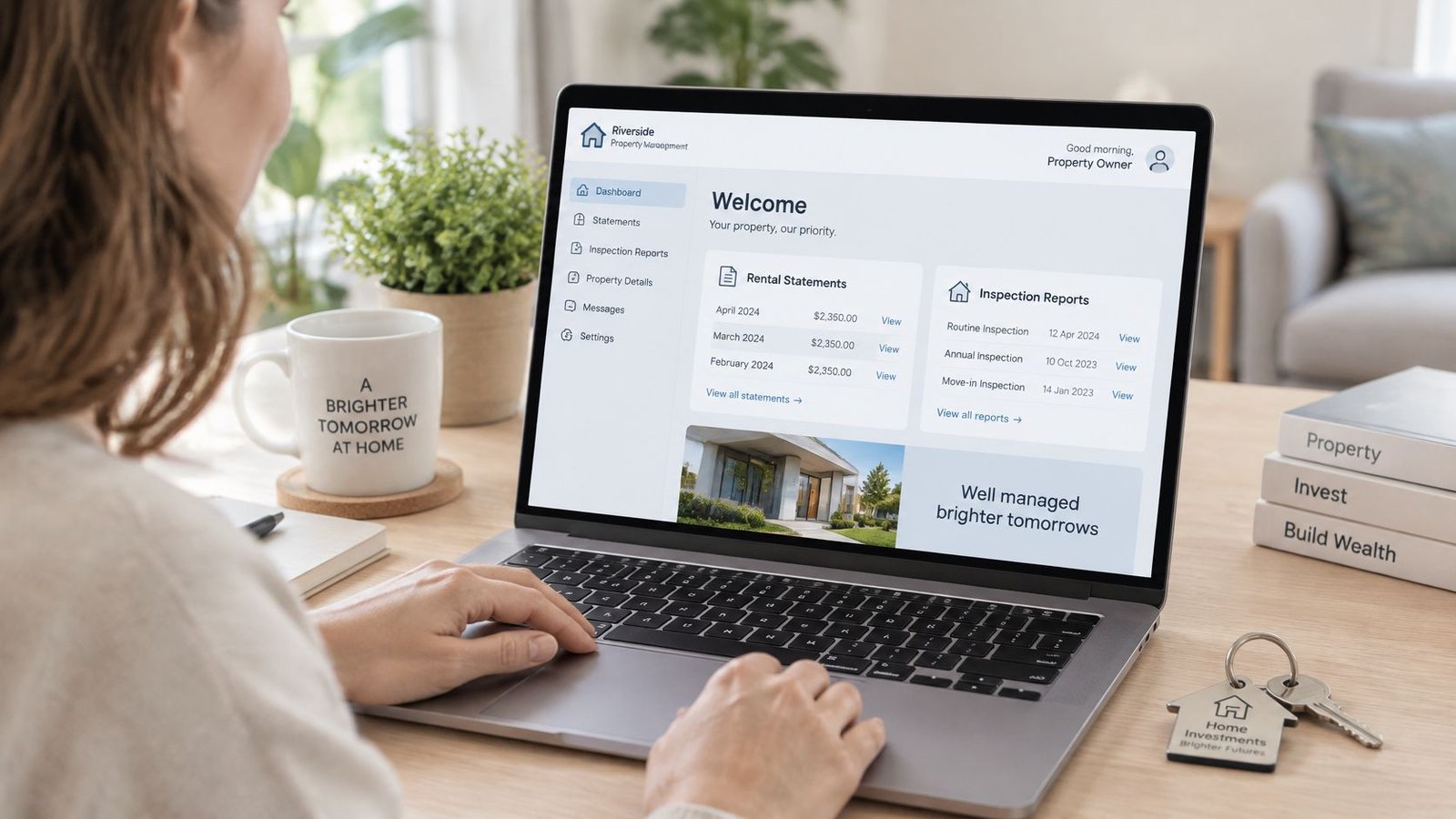
Annotated annual package
- Property and asset category: Identify whether the report concerns a condominium, house, townhome, or purpose-built rental.
- Annual financial reconciliation: Tie income, expenses, reserves, and distributions to the monthly statements.
- Leasing results: Include vacancy periods, approved incentives, achieved rent, and turnover costs.
- Condition and capital planning: Connect recurring repairs to inspections and proposed replacement work.
- Tax-support attachments: Include invoices and separately identified capital expenditures.
- Portal access record: Identify authorised users, permissions, and documents available for download.
CMHC's Calgary housing-market dashboard reported 2025 vacancy of 5.0% for primary-market apartments, compared with 2.2% for secondary-market condominium rentals. Comparing unlike properties against a single vacancy assumption can mislead an owner.
An Ontario-based owner can review Calgary lease documents remotely, while a Red Deer owner might grant a bookkeeper view-only access. Neither arrangement removes the need for independent copies of important records.
Enable multi-factor authentication, remove users who no longer need access, and confirm which records require a separate request. Convenient portal access and durable record retention are different needs; downloaded year-end packages should remain available after management changes.
7. Statutory Declaration of Ownership for Lenders, Insurers, and Municipal Requests
A statutory declaration serves a specific recipient's verification process. It shouldn't be used as a homemade replacement for title records or signed merely because a generic form looks official.
A Calgary condo owner dealing with an insurer after water damage may be asked to confirm ownership-related facts formally. A lender refinancing a corporation-held townhome may require a declaration that identifies both the company and the person authorised to speak for it.
Annotated declaration structure
- Declarant's identity: Identify the individual making the declaration and the capacity in which that person acts.
- Property identification: Match the legal description and address to current property records.
- Ownership facts: State only facts the declarant can accurately confirm.
- Purpose and requested statements: Follow the recipient's wording without adding unsupported assurances.
- Referenced documents: Identify any title record or corporate authorization relied upon.
- Execution section: Complete the declaration before the appropriate commissioner for oaths or notary, following the required process.
A lawyer should review uncertain ownership arrangements, corporate authority, or trust-related wording. The receiving organisation should also confirm whether it requires an original, certified copy, or another delivery format.
The SendItFax guide to Android faxing addresses a possible transmission method, not the legal sufficiency of an ownership declaration. A faxed signature image doesn't cure an improperly completed document.
Delivery and validity are separate questions. Retain the properly executed record and confirmation of what was sent, while protecting identity and financial information.
Comparing the 7 Ownership Statement Examples for Alberta Rentals
| Item | Document Type | Who Requests It | Best Used For | Alberta Context |
|---|---|---|---|---|
| Monthly Owner Statement (Rental Income and Expense Summary) | Monthly rental income and expense report | Property owners and landlords | Tracking cash flow, expenses, arrears, and disbursements | Supports Alberta rental recordkeeping and CRA reporting |
| Certificate of Title (Proof of Ownership from Alberta Land Titles) | Official land title record | Property managers, lenders, lawyers, and brokers | Verifying registered ownership and interests | Issued through Alberta's Land Titles system |
| Statement of Rental Income and Expenses for Canada Revenue Agency (Form T776) | CRA rental income tax form | CRA and property owners filing tax returns | Reporting rental income, expenses, and net income or loss | Used by Alberta landlords for Canadian tax reporting |
| Property Management Agreement Owner Authorization Statement | Authorization section of a management agreement | Property managers and real estate brokerages | Defining management authority, spending limits, and approvals | Must align with Alberta tenancy requirements |
| Security Deposit Holding Statement (Alberta Residential Tenancies Act) | Tenant deposit accounting record | Landlords, property managers, and tenants | Documenting deposit receipt, holding, and deductions | Supports compliance with Alberta's Residential Tenancies Act |
| Annual Owner Summary and Year-End Statement Package with Owner Portal Access | Annual property performance and records package | Property owners, accountants, and authorized portal users | Tax preparation, budgeting, and reviewing property records | Consolidates reporting for Alberta rental properties |
| Statutory Declaration of Ownership for Lenders, Insurers, and Municipal Requests | Sworn ownership declaration | Lenders, insurers, municipalities, and other third parties | Providing formal ownership details for claims, permits, or refinancing | Sworn before an Alberta commissioner for oaths or notary |
Building Your Ownership Document File Next Steps for Alberta Landlords
What should an Alberta rental file let an owner verify? It should connect ownership, authority, transactions, and supporting records so an accountant, lawyer, or replacement manager can understand the property's history.
Keep property identifiers and owner details consistent across the title, management agreement, tenant ledger, monthly reports, deposit records, inspection evidence, and annual tax-support package. Each document serves a different purpose, so the right file is a set of records that support the decisions and obligations involved.
Turn the documents into an approval process
- Before signing: Check owner names, property descriptions, delegated authority, and spending controls against the agreement.
- During management: Reconcile distributions, investigate unexplained charges, and keep written approvals.
- At turnover: Link inspection findings with repair invoices and deposit accounting.
- At year-end: Reconcile annual totals, identify capital work, and resolve missing records before tax preparation.
- When management changes: Obtain usable copies of financial records, leases, inspections, and outstanding-item notes.
BoloSign's guide to real estate documents provides broader document-management context. For an Alberta rental, check that each record supports the specific decision or obligation it is meant to document.
Records do not have to sit in one system. They do need clear names, controlled access, and a reliable retrieval process. Remote owners should be able to establish what happened from the records, rather than relying on an informal explanation.
Dreamhouse Realty Ltd. provides detailed financial reporting, and rental income is deposited directly into the owner's account. Its compliance work includes accurate documentation and routine property inspections. Owners and tenants have direct access to the people who know the property.
For management options in Calgary, Edmonton, or Red Deer, compare the reporting package with the service agreement. A useful sample shows exceptions and unresolved items, not only a month when rent arrived as expected. Review how records connect to Alberta tenancy requirements and what the owner must approve or retain.
To book a free rental evaluation or discuss ownership records and management, visit Dreamhouse Realty Ltd. to schedule a rental evaluation.