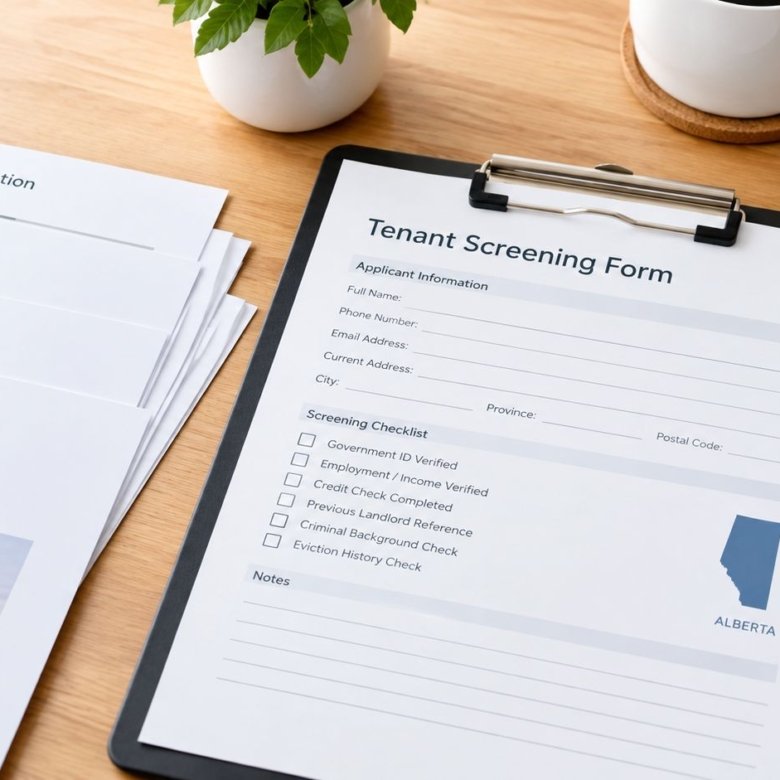
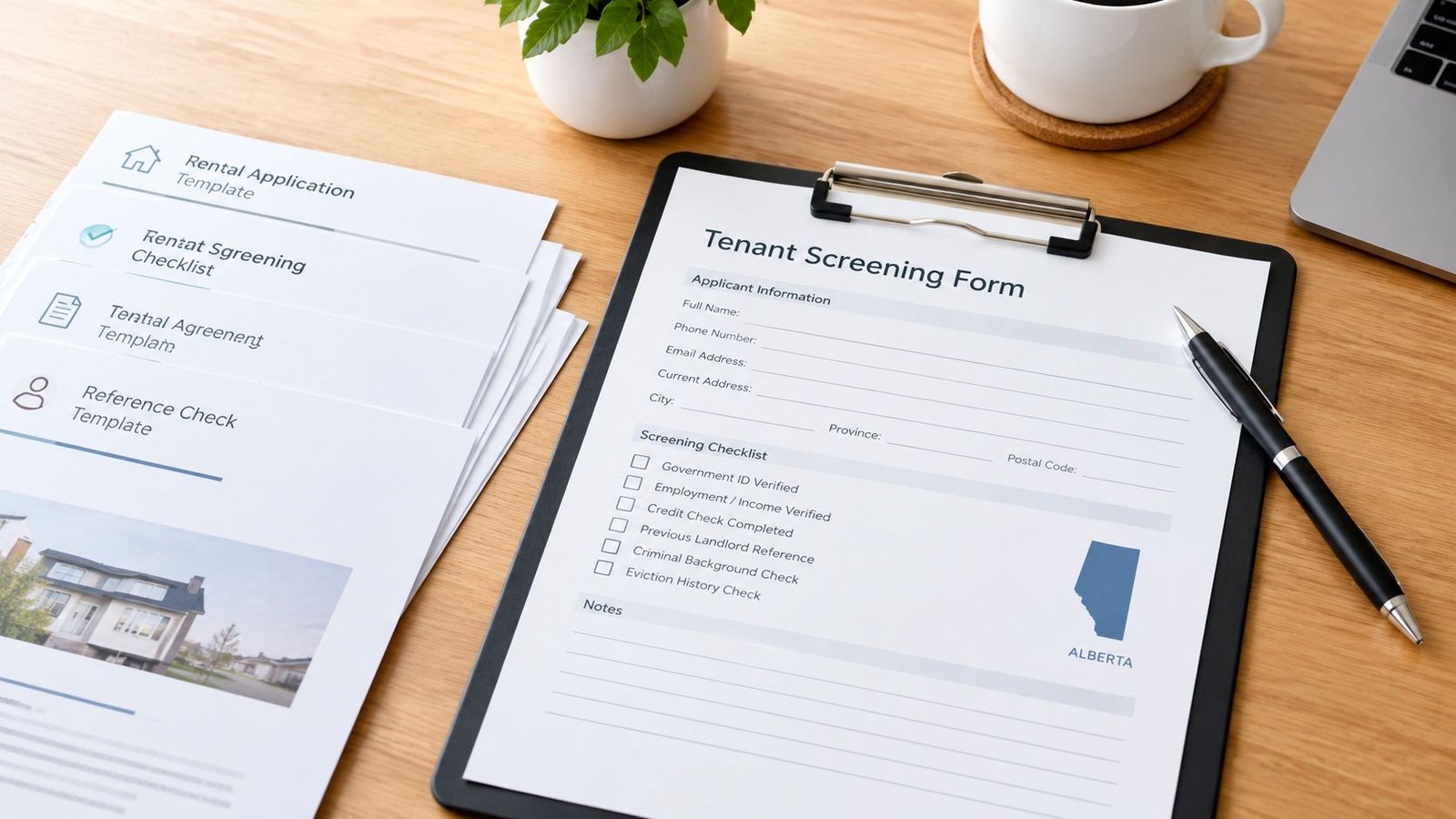
A Calgary landlord has finished showings, received application details by email, and now has to compare applicants whose documents don't match. One applicant supplied rental references, another sent income documents, and another completed a generic form that asks questions the landlord shouldn't use in an Alberta tenancy decision. The missing piece isn't another downloadable PDF. It's a repeatable screening process.
A screening process should be more than one form. Landlords need consistent application intake, clear authorization for checks, reasonable verification requirements, a fair comparison method, and secure records explaining the final decision. Alberta's privacy guidance allows collection of information reasonably required for the rental decision, identifies contact information, payment-capacity evidence and landlord references as permissible examples, and requires landlords to explain the collection purpose and provide a privacy contact. See the Alberta privacy commissioner's guidance for landlords and tenants.
Practical rule: Collect information because it supports a defined rental decision, not because a template happens to include a field.
The resources below serve different roles, from Alberta association forms to screening providers and integrated management systems. A custom intake built with a form backend for developers is another possible starting point, but landlords still need to arrange consent, verification, access controls and decision records separately. For properties in Calgary, Edmonton, Red Deer and surrounding communities, Canadian coverage and Alberta-appropriate questions matter more than the appearance of the form.
Table of Contents
- 1. SingleKey
- 2. FrontLobby
- 3. Calgary Residential Rental Association (CRRA)
- 4. Alberta Residential Landlord Association (ARLA)
- 5. The Great Renter
- 6. TVS Tenant Verification Service
- 7. Certn
- 8. Property Vista
- 9. LawDepot
- 10. Baselane
- Tenant Screening Forms: Top 10 Resource Comparison
- Build a Repeatable Alberta Screening Workflow
1. SingleKey

SingleKey fits landlords who want application intake and screening together, rather than a form followed by separate email requests. Its Canadian offering includes a free rental application, prescreening links, applicant invitations, credit and background checks, and identity and income verification. Alberta-ready resources and lease templates make it relevant to small landlords and brokerages.
The practical advantage is the handoff. Instead of asking an applicant to complete a PDF and then repeat information elsewhere, the landlord can invite the applicant into a workflow that collects consent and supports verification. This also provides an alternative to receiving sensitive documents through ordinary email.
Where the Combined Workflow Helps
- Application intake: A standard application and prescreening link can keep initial questions consistent.
- Verification: Credit, identity, income and reference checks can support review beyond the applicant's own statements.
- Optional protection: Rent Guarantee is a separate consideration, not a replacement for appropriate screening.
The trade-off is less flexibility for landlords who need a heavily customized process. Applicants may also find extensive information requests invasive, creating a risk that they abandon the application.
Landlords should explain the purpose of each requested check before sending the invitation and confirm which information is necessary. Dreamhouse's guidance on tenant screening in Alberta provides local context for connecting the application, verification and selection stages without treating a platform's default settings as the landlord's entire policy.
2. FrontLobby
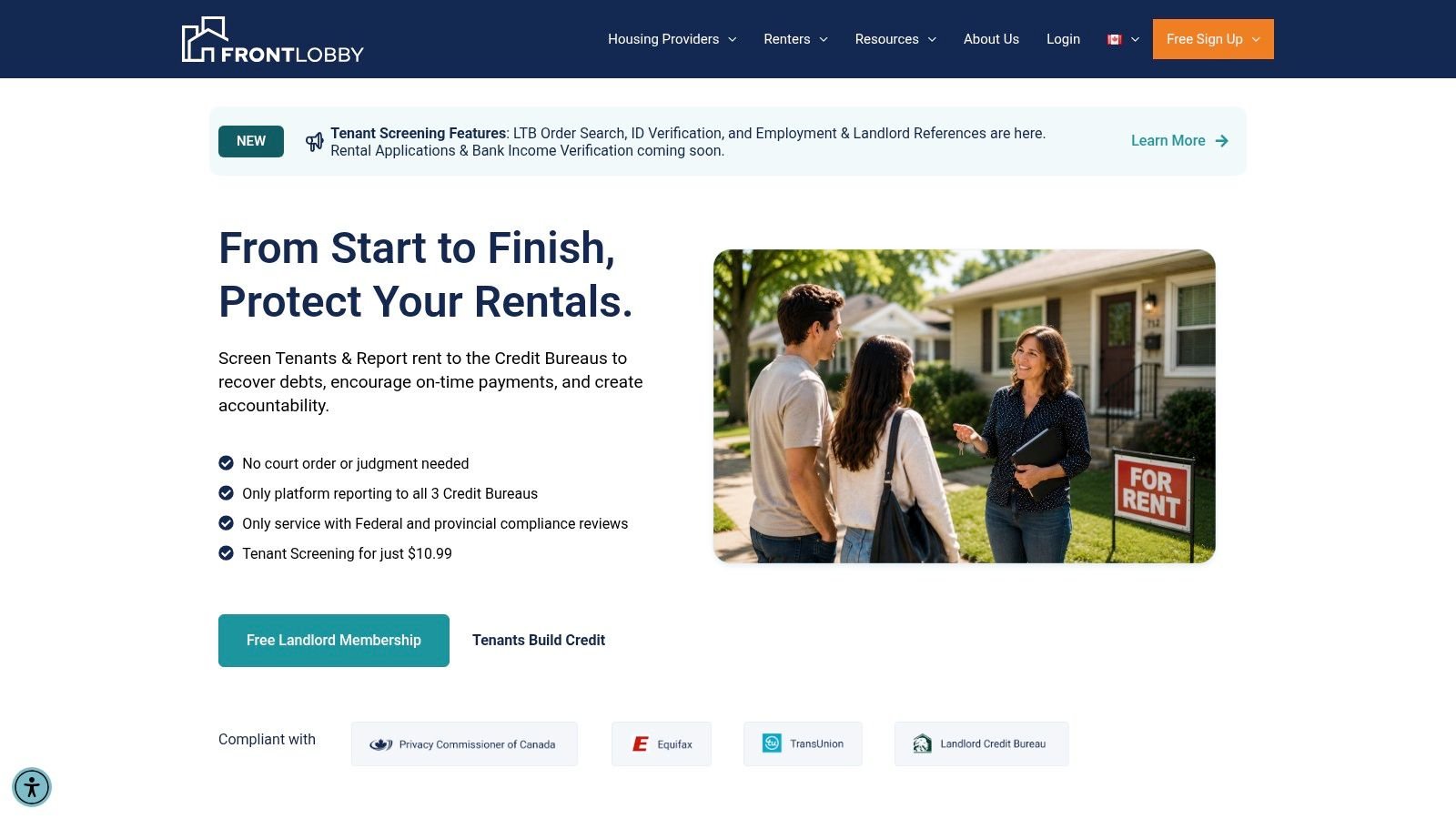
Consent is the key workflow issue when a landlord already has an application but needs credit screening. FrontLobby provides credit and background screening alongside consent language for applications and leases. Its Equifax long-form reports can include credit history, tradelines and collections, while optional rent and debt reporting extends its usefulness beyond applicant selection.
Alberta government guidance says a credit-report request requires a direct business requirement and express, verifiable consent, with written, email or audio-recorded consent identified as acceptable examples. The same guidance permits reasonable proof of ability to pay while cautioning against inquiries into income source; see Alberta's guidance on verifying tenant information.
A detailed credit report supports a rental decision. It doesn't replace consent, clarification of discrepancies or a documented selection policy.
Keep Screening and Rent Reporting Distinct
A landlord reviewing a vacant Edmonton condominium might use FrontLobby after collecting an application and authorization. If the applicant becomes a tenant, the landlord can consider rent reporting through a separate onboarding conversation.
On-time rent reporting requires tenant opt-in. Permission for applicant screening shouldn't be treated as interchangeable with participation in a later reporting service.
FrontLobby's depth is useful for landlords who want detailed credit information, but the platform may involve a learning curve. Before adoption, landlords should understand the report fields, consent process and post-move-in reporting options rather than relying on a summary alone.
3. Calgary Residential Rental Association (CRRA)
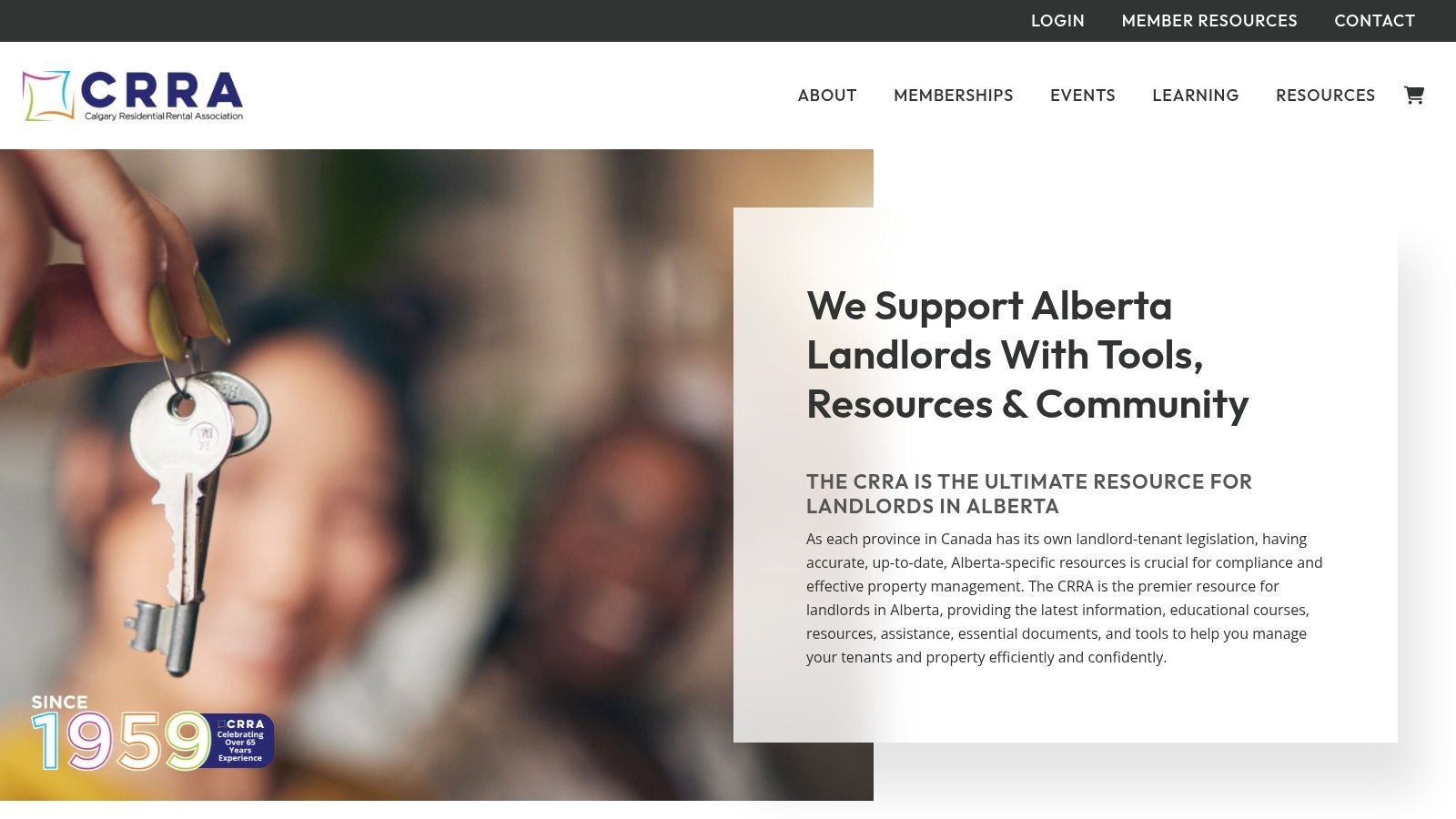
A landlord who wants a Calgary-oriented application document rather than another software account should consider the Calgary Residential Rental Association. CRRA offers standardized tenant application forms, digital form options and resources related to Alberta rental practices and Residential Tenancies Act compliance. Its role is primarily consistent intake, with a separate provider handling screening where needed.
That distinction matters. A completed association form organizes what the applicant supplies, but it doesn't itself verify identity or produce a credit report. Landlords still need a process for authorization, reference calls and reviewing supporting evidence.
A Local Form Still Needs a Local Policy
Alberta's Human Rights Commission identifies rental history and references as information landlords can usually request, while warning against screening based on personal characteristics. Its examples of potentially discriminatory practices include rent-to-income ratios, selective credit requests based on race, and questions revealing family status, marital status, religion or ancestry; see its rental housing discrimination guidance.
- Best fit: Calgary landlords seeking an organized, standardized application component.
- Useful pairing: An independent credit-check provider and a consistent reference-review process.
- Access limitation: Some forms may require membership or purchase.
The practical benefit is familiarity with Alberta leasing documentation. The limitation is that landlords must connect the form to the rest of the workflow themselves. Required fields, consent records and decision notes should remain consistent even when different staff members handle showings and application review.
4. Alberta Residential Landlord Association (ARLA)
Paper documents can still suit an Alberta landlord's operating style. The Alberta Residential Landlord Association offers a printed Application for Tenancy (F1), lease (F2) and inspection form (F3), along with form combination packs, landlord education and Alberta tenancy updates. Member discounts are available on standardized forms.
ARLA is useful when the landlord prefers signed documents and wants related leasing paperwork from a regional association. An application can be collected during the leasing process, followed by separately authorized screening and, after approval, lease and inspection documentation.
Paper-First Doesn't Mean Process-Free
The main limitation is separation between documents and verification. ARLA's forms aren't an integrated online application, credit-check and identity-verification workflow, so a digital screening service remains a separate choice.
A practical setup should address:
- Document handling: Completed applications need controlled storage rather than open folders or unattended desks.
- Screening handoff: The landlord should confirm that authorization covers the checks being ordered.
- Application tracking: Notes should identify outstanding information, completed checks and the decision without relying on memory.
For an owner managing a Red Deer townhouse remotely, paper-first administration may create unnecessary handoffs unless a local manager controls the records. For a hands-on landlord who prefers physical signatures, the format may be comfortable.
The strongest reason to choose ARLA is Alberta-focused documentation and education, not an expectation that purchasing a form completes the screening process.
5. The Great Renter
The Great Renter suits smaller portfolios where screening is occasional and a subscription isn't the preferred arrangement. It offers a free Alberta-specific rental application template, included privacy notice and consent wording, and pay-per-screen QuickScreen checks powered by Certn. Its screening offering includes Equifax-based credit data, with province-by-province guidance on application questions.
The template gives landlords a starting point for intake while leaving them responsible for the surrounding process. They must still send the application, manage incomplete submissions, order appropriate checks and record the decision.
Payment Capacity Without Income-Source Bias
Alberta protects rental applicants on 15 grounds, including source of income, family status, disability, age, gender identity and other personal characteristics, as outlined in the Alberta Human Rights Commission's tenancy information sheet. Landlords may ask about income amount but cannot refuse an applicant because the income comes from a lawful source such as supports, subsidies or AISH.
This is particularly important when adapting any tenant screening form. A requirement for employment-only evidence can create problems if the landlord doesn't accept reasonable alternatives demonstrating payment capacity.
The Great Renter's practical strengths are provincial guidance, included consent wording and screening without a subscription commitment. Its limitation is the absence of the broader portfolio-management functions offered by integrated suites. Landlords should choose it for document-plus-screening needs, not expect it to replace leasing administration or ongoing property management.
6. TVS Tenant Verification Service

Document control and screening support are central to TVS Tenant Verification Service. Its membership-based service provides rental application and consent templates, credit and background checks, identity-verification policies and workflow guidance. A criminal-check consent form through Xpera is also part of its document offering.
TVS can suit landlords and realtors who screen regularly but prefer to manage their own application document. Its established Canadian track record may appeal to owners seeking a document-first service rather than a fully integrated leasing platform.
Keep Verification Roles Clear
- Application form: Collects the applicant's statements and relevant rental details.
- Authorization documents: Establish permission for the particular checks being requested.
- Screening service: Supplies information for review, rather than making the landlord's complete decision.
For a brokerage coordinating applications across different properties, this separation can preserve control over intake. It also means staff must know which authorization applies to which check and where the completed record belongs.
A landlord exploring custom automation can review Identitycheck integration details as a separate technical resource. That shouldn't be treated as evidence of a TVS integration or a replacement for TVS's own verification requirements.
Membership is required, and per-screen pricing is less transparent than some newer alternatives. Before joining, landlords should confirm the available checks, total charges, applicant steps and support arrangements. Criminal-check availability also shouldn't be interpreted as automatic justification for requesting that check in every rental application.
7. Certn

A landlord can keep an existing application and add a verification layer instead of replacing the whole process. Certn is a Canadian background-screening platform offering Canadian credit checks, OneID identity verification, and employment or income verification. Its consent flow, dashboard and API options support application tracking and more customized workflows.
This makes Certn relevant where the landlord already has a suitable Alberta form but needs stronger verification. Identity checking can help address document-fraud risk, although an identity result doesn't establish that every income statement or rental reference is accurate.
Verification boundary: A successful identity check supports confidence about the applicant's identity. It doesn't establish payment capacity or explain rental history.
Stronger Fit for an Established Digital Process
Certn's dashboard can support landlords handling screening directly, while an API may suit a brokerage connecting intake and verification systems. That flexibility brings implementation work: someone must configure requests, manage access and ensure applicant records stay connected.
Public per-check pricing isn't listed on the documentation site, and arrangements may involve sales or partners. Landlords should confirm costs, Canadian report coverage and the applicant experience before committing.
Dreamhouse's guidance on a tenant screening background check helps distinguish verification from the broader selection process. More checks aren't automatically better; the landlord should select relevant checks, obtain appropriate authorization and document how the findings relate to legitimate tenancy criteria.
8. Property Vista
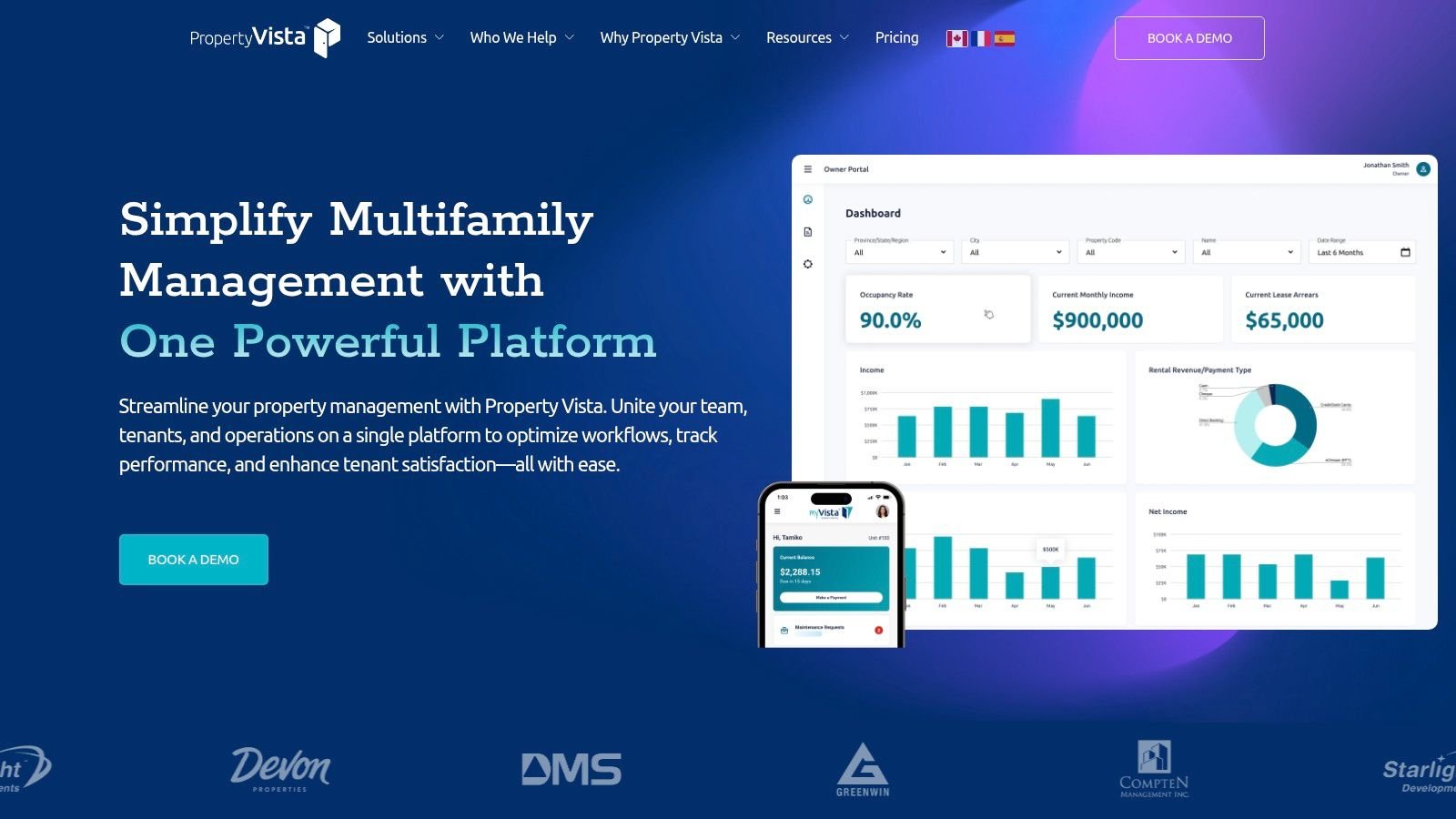
When application tracking, lease signing and resident onboarding all need attention, a standalone form may be too narrow. Property Vista is a Canadian property-management platform with online application invitations, configurable leasing policies and Equifax-driven background screening. Its workflow can extend through approval, lease signing and resident onboarding, with a resident portal for payments and ongoing administration.
The strongest fit is a landlord or manager who needs connected leasing operations. Staff can work within a shared process rather than transferring applicant information between a form, screening account and separate lease file.
Scoring Needs Human Oversight
Property Vista includes screening scores and recommendations, but landlords should review the underlying information and policy settings. An automated recommendation shouldn't become an unexplained reason for approval or rejection.
- Policy configuration: Criteria should reflect lawful Alberta tenancy considerations.
- Applicant comparison: Staff should use the same review method and document relevant exceptions.
- Record continuity: Approved applicants can move into lease and resident workflows without creating disconnected files.
A manager handling homes in Calgary and Edmonton may value that continuity. An owner seeking only an occasional tenant screening form may find the broader suite more than necessary.
Pricing isn't public and is typically quoted according to portfolio size and selected features. The practical comparison should include implementation effort, staff training and record access, not just screening availability. Integration helps only when the underlying policy is appropriate and staff understand how to apply it.
9. LawDepot

LawDepot supplies a document, not a screening operation. Its Canadian rental application tools use a guided interview to create a customizable residential application that landlords can adapt for Alberta properties. PDF and Word exports, printing and electronic-signing options support different document workflows.
That makes LawDepot useful when an owner wants consistent intake without adopting property-management software. A landlord can prepare the application, choose an independent screening provider and retain control over the document format.
Customization Requires Restraint
The ability to add fields shouldn't become a reason to collect more personal information. Landlords should review each question against its purpose and remove unnecessary details rather than expanding a template into a general personal questionnaire.
- Document flexibility: Word export supports editing, while PDF supports a consistent distribution format.
- Provider choice: Screening can be arranged separately with a suitable Canadian service.
- Administrative responsibility: Consent storage, report handling and decision records remain the landlord's tasks.
Dreamhouse's overview of a credit check for tenants provides context for that separate verification stage. The application captures statements; the screening process evaluates relevant supporting information.
LawDepot's pricing uses a subscription or per-document model, with details shown at checkout. Landlords should confirm the purchasing arrangement and review the finished form before circulation. The main limitation isn't the export format. It's the work required to connect intake, consent, checks and applicant comparison outside the document itself.
10. Baselane

Baselane deserves a coverage-first assessment, not automatic inclusion in an Alberta screening process. It offers a free downloadable rental application and an online invitation-and-screening workflow, with applicant consent collection. Its advertised screening options include credit, background, eviction and income checks, identity verification and optional add-ons, with applicant-pay or landlord-pay arrangements.
The workflow may appeal to landlords who also want rent-collection or banking tools. However, landlords shouldn't assume that advertised features, report coverage or related financial services are available or suitable for Canadian properties.
Confirm Alberta Suitability Before Collecting Information
The useful comparison is between the workflow concept and the actual service available for an Alberta address. Before sending an applicant invitation, the landlord should obtain clear answers about:
- Canadian coverage: Which checks are available for Canadian applicants and properties?
- Form suitability: Can questions and authorization wording be aligned with Alberta requirements?
- Record handling: How are consent, sensitive documents and screening results accessed and retained?
- Payment arrangements: What charges apply, and are the proposed arrangements appropriate locally?
Some materials use jurisdiction-specific language that doesn't belong in an Alberta application. Canadian report coverage therefore needs confirmation before use.
Baselane offers guides for reviewing screening reports, but those guides don't establish local compliance. A straightforward interface isn't enough if the underlying form, checks or services don't fit the property's jurisdiction. Until coverage is confirmed, Alberta-specific forms and established Canadian screening options are the more practical starting point.
Tenant Screening Forms: Top 10 Resource Comparison
| Service | Core Features | Best For | Standout Value | Pricing |
|---|---|---|---|---|
| SingleKey | Application intake; credit, identity, income, and reference checks | 👥 Canadian landlords and brokerages wanting an all-in-one screening flow | ✨ Free application and prescreen links; optional Rent Guarantee | 💰 Application form is free; screening and add-ons may cost extra |
| FrontLobby | Credit and background checks; consent tools; optional rent reporting | 👥 Landlords seeking detailed credit reports and post-move-in reporting | 🏆 Equifax reports with credit history details | 💰 Pricing not specified |
| Calgary Residential Rental Association (CRRA) | Calgary-oriented application forms and Alberta rental resources | 👥 Calgary-area landlords who want a standardized application | ✨ Can pair with a separate screening provider | 💰 Some forms may require membership or purchase |
| Alberta Residential Landlord Association (ARLA) | Application, lease, and inspection forms; landlord education | 👥 Alberta landlords preferring paper forms | 🏆 Alberta-focused document set, including RTA updates | 💰 Forms or packs may cost extra; member discounts available |
| The Great Renter | Alberta application template; consent wording; pay-per-screen checks | 👥 Smaller landlords avoiding a screening subscription | ✨ Free template and per-applicant QuickScreen option | 💰 Template is free; screening is pay-per-use |
| TVS Tenant Verification Service | Screening, application and consent templates, workflow guidance | 👥 Landlords and REALTORS screening regularly | 🏆 Established Canadian service with a document-first approach | 💰 Membership required; per-screen pricing less transparent |
| Certn | Credit, identity, employment, and income checks; dashboard and API | 👥 Landlords adding screening to an existing application process | ✨ Flexible screening workflow with identity verification | 💰 Public per-check pricing not listed; sales or partner pricing may apply |
| Property Vista | Online applications, screening, lease signing, and resident onboarding | 👥 Property managers seeking an end-to-end leasing platform | 🏆 Connects application through onboarding with a resident portal | 💰 Quote-based; varies by portfolio and features |
| LawDepot | Customizable application builder; PDF/Word export; e-signing options | 👥 Landlords who need a flexible form, not a screening platform | ✨ Supports digital and paper workflows | 💰 Subscription or per-document pricing; shown at checkout |
| Baselane | Online applications and screening; credit, background, eviction, and income checks | 👥 Landlords wanting screening alongside rent-collection or banking tools | ✨ Applicant-pay or landlord-pay screening options | 💰 Free template; screening costs may be paid by applicant or landlord |
Build a Repeatable Alberta Screening Workflow
The most useful tenant screening form is the one connected to a clear, documented process. Association forms and document generators support consistent intake; screening providers support verification; integrated systems connect those tasks to leasing and resident administration. Landlords should select resources according to the missing workflow function rather than adopting overlapping tools.
Start with a relevant Alberta application and explain what information is needed. Obtain clear authorization before ordering checks, define reasonable income and identity requirements, and provide a way to clarify incomplete or conflicting information. As noted earlier, financial-capacity evidence and income-source questions aren't interchangeable.
Connect the Decision to the Evidence
A scoring checklist should help staff apply the same legitimate rental criteria to every applicant. It can record whether required information is complete, whether references were verified, whether payment-capacity evidence was reviewed and whether discrepancies remain unresolved. It shouldn't rank applicants by personal characteristics or substitute an automatic score for an informed decision.
An auditable decision record explains what was reviewed, what required clarification and why the applicant met or didn't meet the rental criteria.
Consent, reports, reference notes and the final decision should be stored securely with access limited to people handling the application. Landlords should establish a retention and disposal policy rather than keeping sensitive records indefinitely. Post-approval administrative details should also be separated from information needed to decide whether to rent.
For owners replacing scattered spreadsheets, the operational spreadsheet replacement requirements provide a separate planning resource. The practical questions remain specific: who can access a record, how staff track missing documents, whether consent can be retrieved, and how the final decision is recorded.
Choose Local Oversight Alongside the Tools
Before adopting a provider, landlords should confirm Canadian coverage, Alberta-appropriate forms, consent arrangements and the work required from applicants. A service suitable for a Calgary condominium should also be evaluated against the owner's operating needs, especially when the owner lives outside Alberta or cannot manage showings and follow-up locally.
Dreamhouse Realty Ltd. provides residential property management, tenant placement, compliance oversight and local support across Calgary, Edmonton, Red Deer and surrounding Alberta communities. Its services connect applicant screening with lease preparation, move-in documentation and ongoing rental administration, giving owners a managed alternative to assembling and supervising separate tools.
Dreamhouse Realty Ltd. offers tenant placement and residential property management that connect credit, income, reference and rental-history screening with Alberta leasing documentation. Owners seeking a managed screening process can visit Dreamhouse Realty Ltd. to arrange a rental consultation and discuss their property's needs. Contact GURIQBAL CHAHAL, MBA, PMP, REAL ESTATE BROKER, Phone 403-966-6072.