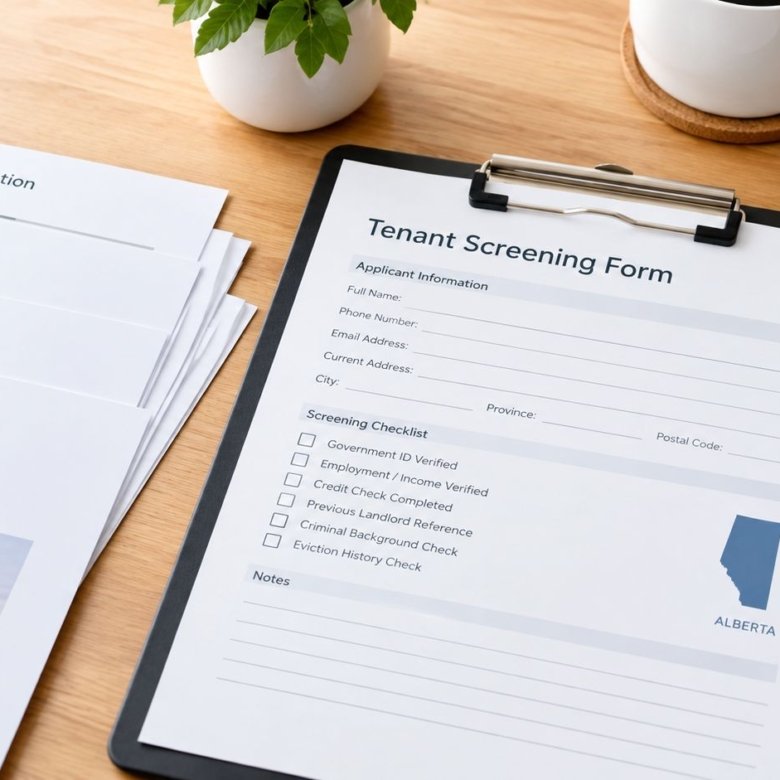

A Calgary investor closes on a townhouse condo that looks straightforward on paper. Then the document package lands, and the genuine questions start, who maintains the roof, who approves tenant use of the parking stall, what happens if the reserve fund is thin, and why the monthly fee matters as much as the mortgage payment. That is the practical side of freehold strata, and for Alberta landlords, it's the difference between buying a rental unit and buying a unit wrapped in a governance system that reaches into cash flow, repairs, and leasing rules.
Table of Contents
- What Freehold Strata Means for Alberta Rental Owners
- Freehold Strata Versus Other Ownership Models
- Understanding Your Rights and Corporation Responsibilities
- Evaluating a Freehold Strata Investment Before Purchase
- Alberta Strata Rental Requirements and Compliance
- Protecting Your Freehold Strata Rental Investment
What Freehold Strata Means for Alberta Rental Owners
A freehold strata in Alberta generally means an owner holds title to a defined unit inside a condominium or strata corporation, while shared areas are managed collectively. That unit can be a condominium apartment, townhouse, or another registered space, and the shared property can include hallways, roofs, landscaping, parking structures, and recreational facilities. The owner can usually sell, mortgage, rent, or transfer the unit, but always subject to the condominium documents, bylaws, fees, and restrictions.
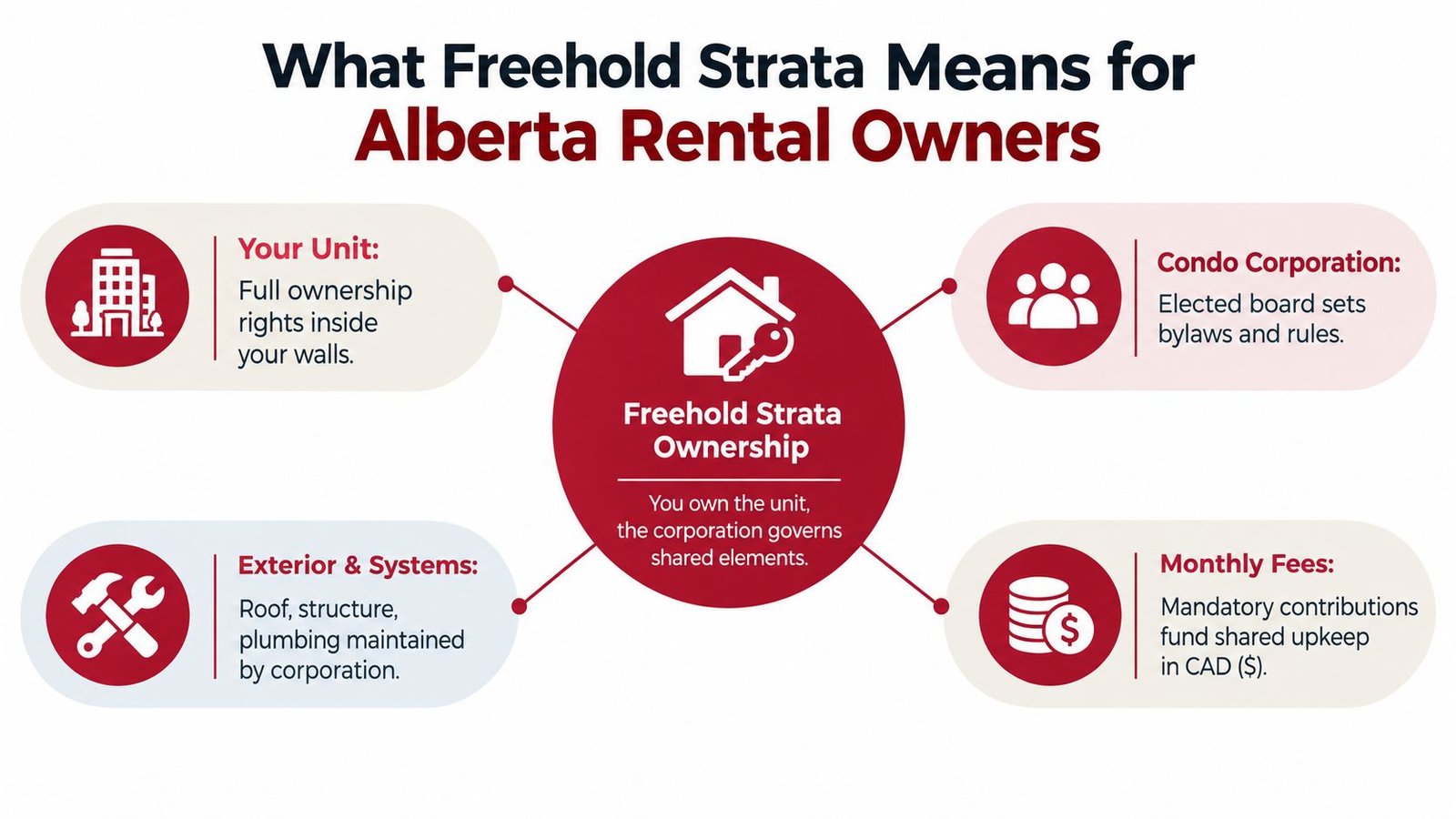
The practical part catches many first-time landlords off guard. A buyer can own the unit itself and still have to follow rules on leasing, occupants, pets, parking, renovations, and use of common property. Monthly condominium contributions usually fund operating costs, insurance, repairs, administration, and reserve planning, so the investment is never just the interior four walls.
The ownership split that matters in real life
A freehold strata owner owns the real property, not a temporary right to occupy it. That difference matters because the title is not dependent on a landlord's underlying ownership in the way a leasehold interest would be.
Practical rule: if the title search says the unit is freehold strata, the next question is never “Do I own it?” It's “What else comes with that title?”
For landlords, the better question is whether the corporation's rules fit the rental plan. A unit can be rentable and still carry restrictions that change how a tenancy runs day to day.
The concept sits right at the centre of Alberta's urban rental market. In Calgary, Edmonton, and Red Deer, condominiums represented a meaningful share of occupied dwellings in 2021, which is why title structure and condo governance matter to owners who want steady rental operations Statistics Canada. A useful companion read on cost structure is strata fees definition, because fees and governance go together in every rent-ready decision.
Freehold Strata Versus Other Ownership Models
A landlord comparing ownership models needs to separate legal title from marketing language. Freehold sounds simple, but the registered documents decide who controls what, who pays for what, and which repairs stay with the owner versus the corporation. A freehold condominium may even include an entire detached house or townhouse, including exterior walls, roof, and lawn, while the corporation keeps responsibility for defined common property.
The decisive documents are the registered condominium plan, unit factors, bylaws, and any exclusive-use designations. The label “freehold” by itself doesn't tell a landlord whether exterior changes need approval, whether parking is assigned, or whether a special levy could land later. For a rental owner, that distinction is more important than the sales brochure language.
Side by side, the differences are operational
| Ownership Type | What You Own | Corporation Control | Landlord Implications |
|---|---|---|---|
| Freehold strata | A titled unit, and in some plans the land and improvements attached to it | Shared property, bylaws, fees, and common systems | More control than an apartment condo, but not independent of strata rules |
| Leasehold condominium | A time-limited right of occupation rather than permanent title | The landlord or underlying title holder retains core ownership interest | Higher attention to expiry, renewal, and financing terms |
| Bare-land condominium | The titled lot and improvements, within a condominium framework | Roads, drainage, landscaping, and other common assets may still sit with the corporation | Often feels close to a house, but still carries corporation costs and rules |
| Freehold detached home | The whole property, subject mainly to municipal rules and title covenants | No condominium corporation | Maximum autonomy, but full responsibility for every repair and replacement |
For a landlord weighing whether a leasehold structure makes sense, checking your lease extension premium is the kind of exercise that shows why title duration changes the finance conversation. Alberta owners don't need the same exact analysis in every case, but the mindset is useful, always read beyond the listing description.
A related comparison on unit type and ownership can also be useful through condos versus homes. The main takeaway is simple, owning the building doesn't always mean owning the right to do whatever you want with it.
Understanding Your Rights and Corporation Responsibilities
Freehold strata ownership combines exclusive rights to the unit with shared financial and legal responsibility for common elements. That's the core structure, and it's why owners who treat the condo fee as a simple overhead line usually get caught later by repair cycles, insurance questions, or board decisions they didn't expect.
Monthly condominium contributions typically fund operating costs, insurance, repairs, administration, and reserve planning. Common property includes areas outside the unit identified in the condominium plan, such as corridors, elevators, mechanical systems, grounds, and shared amenities. The owner's unit factor determines the proportional share of those costs, so the billing formula is tied to the plan, not just the size of the unit.
What the corporation handles, and what it doesn't
The corporation generally manages shared assets and the building framework around them. The owner handles the investment decision, the tenant relationship, and the interior performance of the rental unit.
A low condo fee can be attractive, but if the reserve planning is weak, the owner may simply be trading monthly cost for future assessment risk.
Insurance also depends on the property type. For building units, the corporation insures the complex's structure while owners fund the corporation through recurring contributions. Bare-land units work differently, because insurance arrangements focus on common property and specified perils. That matters for landlords because the owner may still need unit-owner insurance, landlord liability coverage, loss-of-rent protection, and coverage for improvements or exclusions not handled by the corporation.
The practical issue is control. A landlord may own the home, but the corporation can still shape exterior changes, landscaping, parking, and building systems through its documents. For a deeper look at how those rules become enforceable in practice, unenforceable strata bylaws is a useful companion topic, because not every rule a board prefers is a valid rule.
Evaluating a Freehold Strata Investment Before Purchase
A freehold strata purchase should be underwritten like a business decision, not a lifestyle upgrade. The monthly fee matters, but it's only one line in the operating model. The test is whether the corporation's financial and technical documents show a building that's being maintained, funded, and governed in a way that supports stable rental income.
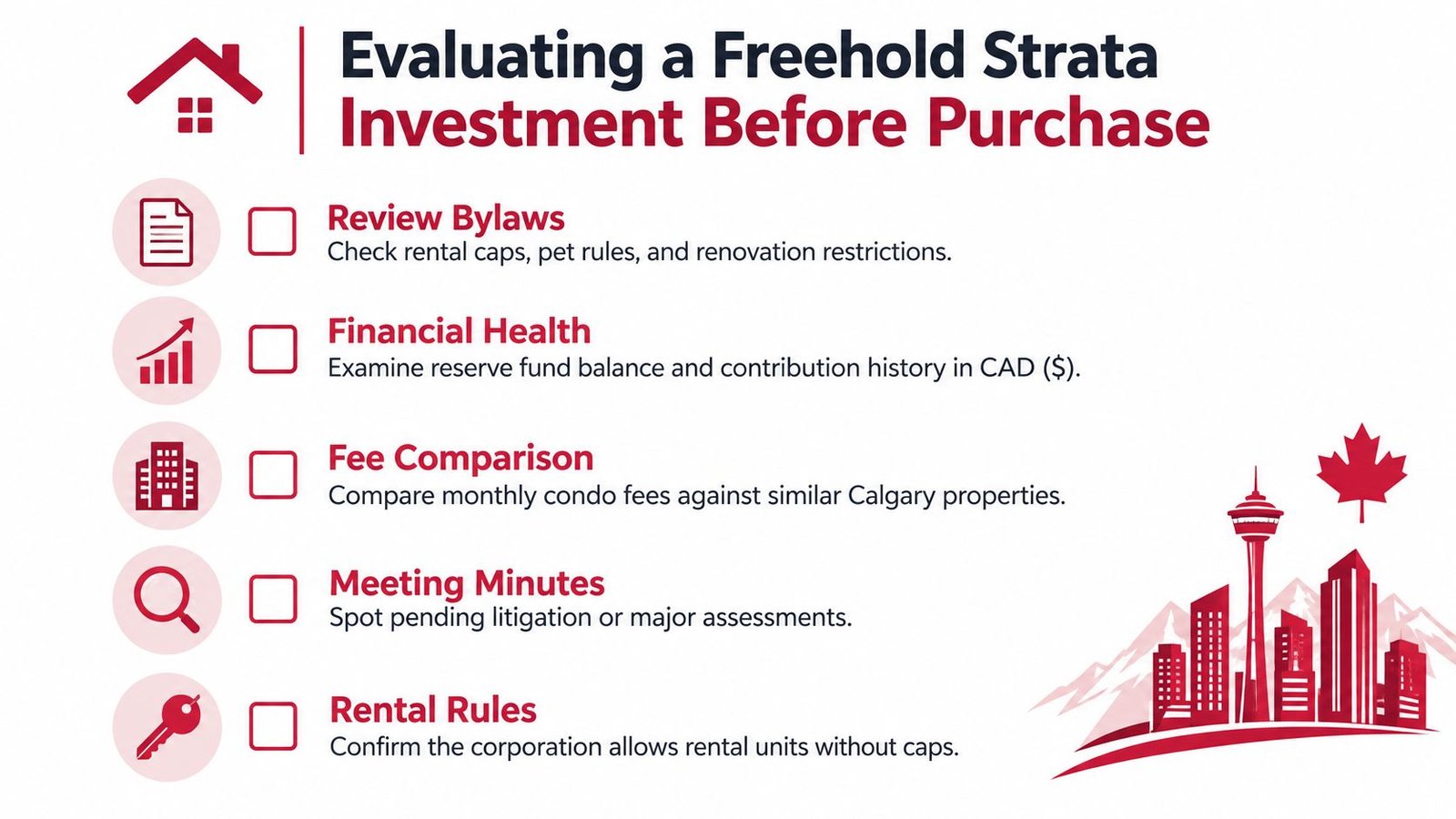
Reserve-fund studies are required at five-year intervals, and they're one of the most important due-diligence documents for a landlord. Alberta guidance makes clear that a reserve fund exists for major repairs and replacements, and if projected capital needs exceed available reserves, a special levy can follow. That's how deferred envelope work, roofing, mechanical replacement, or site repairs turn into sudden owner cost.
What to review before the offer becomes firm
- Bylaws and rules: Confirm whether leasing, pets, renovations, occupancy, and parking are restricted.
- Reserve-fund study and plan: Compare recommended contributions with actual budgets and see whether major items are already building toward replacement.
- Board minutes: Look for discussion of upcoming projects, disputes, or repeated maintenance complaints.
- Insurance documents: Check deductibles, exclusions, and who insures which parts of the building.
- Recent maintenance history: Weak maintenance records usually show up later in cash flow, not in the listing photos.
CMHC specifically recommends reviewing the corporation's financial and technical audits before purchase because corporation-level deficiencies can create future owner costs even when the individually owned dwelling appears well kept CMHC Alberta condominium buyer guidance. That advice matters even more for landlords, because a reserve shortfall can hit operating returns exactly when a tenant turnover or repair already strains cash flow.
Alberta Strata Rental Requirements and Compliance
An Alberta landlord renting out a condominium unit has a formal notice obligation. The owner must give the condominium corporation written notice of the intention to rent and an address where the owner can be served. That's not a courtesy step, it's part of the rental workflow, and it belongs in the same file as the lease and move-in inspection.
The corporation may require a tenant-related deposit of no more than $1,000 or one month's rent, whichever is greater, and the landlord can't make the tenant pay that condominium deposit. The corporation can use the deposit to repair or replace condominium property, common property, or exclusive-use property damaged by the tenant. When the tenancy ends, the owner must notify the corporation in writing within 20 days, and the corporation then has 20 days after that notice to return the deposit, less permitted deductions.
Compliance that belongs in the calendar
- Track the rent notice: Send written notice before or as required by the corporation's process.
- Save the service address: Keep the address where the owner can be served in the unit file.
- Log the deposit amount: Record whether the corporation required the tenant-related deposit.
- Calendar move-out notice: Build the 20-day notice into the vacate workflow.
- Follow the return deadline: Watch the corporation's 20-day response window after tenancy ends.
These rules are operational, not theoretical. A landlord who runs leasing, inspections, and move-outs through a checklist will usually avoid missed deadlines and deposit disputes.
Alberta's condominium governance has also changed recently, with amendments to the Condominium Property Act coming into force on February 15, 2026, and the Condominium Dispute Resolution Tribunal funded partly through a $9-per-unit annual tribunal service fee beginning in 2026 Alberta condominium ownership guide. For a practical owner workflow, the Restore Heroes landlord guide is a decent reminder that lease administration and property risk management work best when every step is documented.
Protecting Your Freehold Strata Rental Investment
A freehold strata rental can be a solid Alberta investment, but only when the owner treats the title structure as part of the business model. The label gives more control than a conventional apartment condominium, yet it does not remove corporation-level risk, reserve-fund exposure, or the need to follow rental procedures exactly. The owner who understands that difference usually makes better purchase, leasing, and budgeting decisions.
The best rental outcomes usually come from owners who stay close to the documents. That means reading bylaws before purchase, checking reserve planning before closing, and keeping insurance and tenancy records aligned with corporation rules. It also means remembering that the corporation's decisions can affect repair timing, tenant experience, and future resale value.
What strong ownership discipline looks like
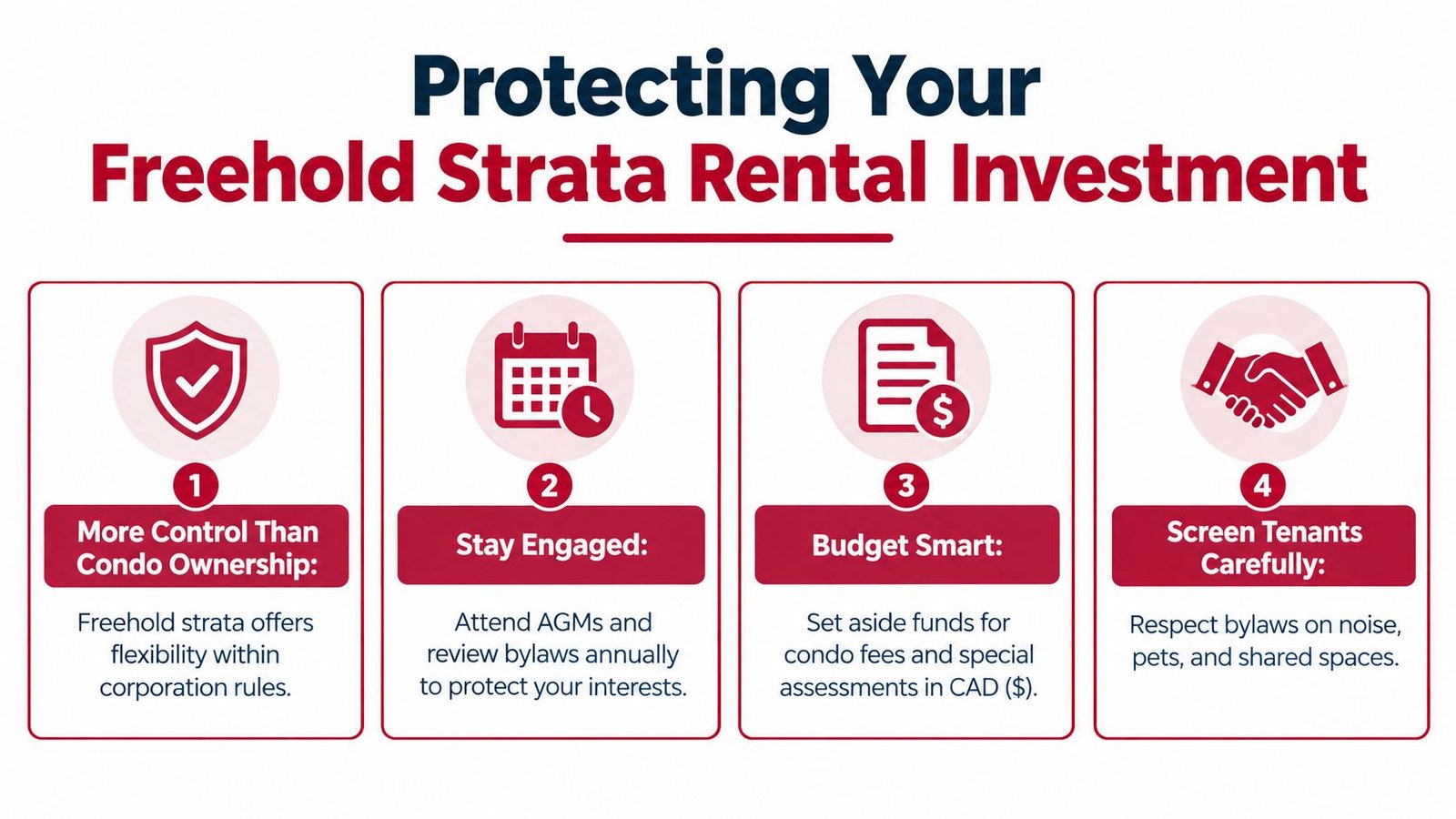
- Stay engaged: Attend AGMs when possible and review bylaw changes before they affect leasing or use.
- Budget for surprises: Set aside funds for condo fees, special assessments, and turnover costs.
- Screen tenants for fit: A tenant who respects noise, parking, and shared-space rules protects the investment.
- Keep documents organised: The lease, corporation notices, inspection reports, and insurance papers should all live in one place.
The biggest mistake is to treat “freehold” as a synonym for independence. In Alberta, the ownership is real, but the obligations are shared. That's why landlords who buy these units as rentals should think in terms of governance, not just square footage.
For Calgary-area owners who want disciplined support with strata rentals, tenant placement, and day-to-day compliance, Dreamhouse Realty Ltd. offers local property management built around Alberta rental realities. Visit Dreamhouse Realty Ltd. to connect with GURIQBAL CHAHAL, MBA, PMP, REAL ESTATE BROKER, Phone 403-966-6072, and get help protecting your freehold strata rental investment with practical, owner-focused management.