
An Alberta owner can manage a Calgary townhouse, lease documents, inspections, and tenant communications with a familiar provincial process. Then a Kelowna condo becomes vacant, a strata manager asks for Form K, and the owner realises that the Alberta checklist never included it. The form isn't part of Alberta's residential tenancy framework, and a generic lease clause doesn't replace it.
For an owner living in Calgary, Edmonton, or another Alberta city, a British Columbia strata rental adds a cross-provincial documentation task. The important question isn't only whether the tenant signs. The owner must also show which unit the tenancy relates to, which bylaws and rules were supplied, when the tenancy began, and whether the signed notice reached the strata corporation on time.
Table of Contents
- Why an Alberta Owner Should Care About BC Strata Form K
- What BC Strata Form K Is
- Required Fields and What Each One Means
- How Form K Differs From Form B and Your Lease
- The Two-Week Deadline and the 90-Day Risk Window
- Completing Form K Step by Step on a Real BC Strata Lot
- Owner Checklist and Common Form K Questions
Why an Alberta Owner Should Care About BC Strata Form K
A common cross-provincial mistake looks harmless at first. An owner in Calgary rents out a condo in Kelowna, the lease is signed, keys are handed over, and the tenant moves in. Then the strata manager asks for Form K and proof the tenant received the current bylaws and rules. The Alberta lease file may look complete, but for a British Columbia strata rental, it can still be missing the document that ties the tenancy to the building's rulebook.
That is why Alberta owners should care.
Form K is a prescribed British Columbia notice under section 146 of the Strata Property Act, formally called the Notice of Tenant's Responsibilities (the prescribed Form K and related regulation). It works like a receipt and routing slip in the same file. It shows which tenancy belongs to which strata lot, and it helps establish that the tenant was given the strata corporation's bylaws and rules. Your residential lease creates the landlord-tenant deal. Form K creates the evidence trail that connects that deal to the strata corporation.
That distinction matters most when you own from another province. Alberta owners often rely on a familiar leasing checklist, signed lease, deposit records, inspection reports, and key receipts. In a BC strata, you also need a document trail that shows the tenant was properly brought under the strata's operating rules. If the file is missing that step, the problem is not just administrative. It can affect how the strata, the owner, and the tenant deal with complaints, rule breaches, parking issues, elevator bookings, pets, and use of common property.
A simple way to handle it is to treat Form K as part of possession day paperwork, not as an afterthought requested by the strata manager later. Put it in the same lease package as the current bylaws and rules, get it signed, and keep a dated copy in the tenancy file.
The quality of those bylaws matters too. If a building is relying on restrictions that may not hold up, owners should understand why unenforceable strata bylaws create problems. For Alberta owners, Form K is not just a signature page. It is the paper trail that shows the right rules were delivered to the right tenant for the right BC strata lot, on time.
What BC Strata Form K Is
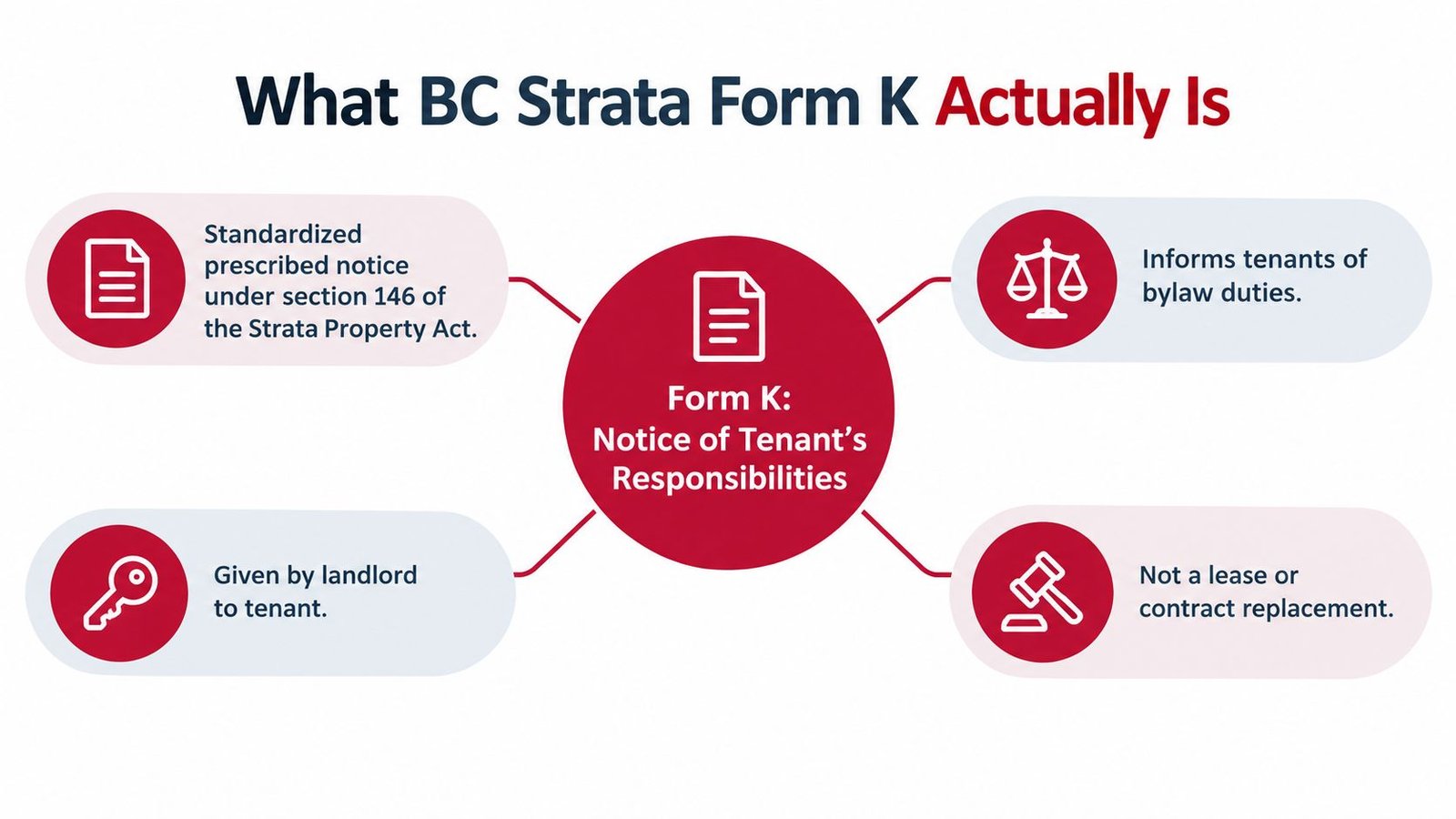
For an Alberta owner, BC Strata Form K is the prescribed Notice of Tenant's Responsibilities. It is the standard notice used under section 146 of British Columbia's Strata Property Act, not a custom letter and not a substitute for the residential lease. Its job is narrower and more practical. It creates a record showing which tenant was given which strata rules for which unit, and when that happened.
That is why this form belongs in your lease file, not in a miscellaneous strata email folder.
The form works like a signed handoff sheet. Your lease sets the rental deal between landlord and tenant. Form K ties that tenancy to the strata corporation's bylaws and rules, so there is a paper trail showing the tenant was put on notice for that specific strata lot.
What the notice connects
A completed form links the strata lot, strata plan registration number, street address, tenant names, and tenancy commencement date to the correct strata corporation and its governing rules (British Columbia's prescribed strata forms and regulations). If you manage properties in Alberta, this is the BC-specific step that often causes confusion. The street address tells people where the unit is. The strata identifiers tie the notice to the legal unit and building records.
The owner also has to give the tenant the current bylaws and rules. The obligation does not stop with the move-in package. Form K states that the tenant must comply with bylaws and rules “in force from time to time,” which means later amendments can still apply. In practice, that makes the form part of an ongoing evidence trail, not just a one-time signature page.
What can follow a breach
The notice also makes clear that a tenant may be responsible if the tenant, an occupant, or a visitor breaks a bylaw or rule.
- Fines: the strata corporation may use its enforcement process.
- Amenity restrictions: access to facilities may be denied.
- Remediation costs: the tenant may be responsible for costs incurred to remedy the contravention.
For an out-of-province owner, the practical point is simple. A signed Form K gives you a dated compliance record that supports the tenancy file if complaints, rule breaches, or cost recovery issues come up later.
Required Fields and What Each One Means
Each line on Form K stops a specific filing mistake. For an Alberta owner with a BC strata rental, it helps to read the form like a chain of labels on a box going into storage. If one label is wrong, the box can still exist, but it may end up on the wrong shelf, under the wrong name, or with no clear move-in date. That matters when the strata is tracing complaints, bylaw updates, or later cost recovery.
The property identifiers
The strata plan registration number points to the correct strata corporation. That is the building-level identifier. If a management company handles several similar properties on the same street, this is the field that keeps your tenant notice from being attached to the wrong corporation file.
The strata lot number is narrower. It identifies the legal unit inside that plan. Owners from Alberta often rely first on the civic address because that is what appears on leases, utility accounts, and courier deliveries. In a BC strata file, the lot number does a different job. It connects the tenant notice to the legal unit shown in the strata records. Check it against your purchase documents and prior strata correspondence before the form is signed.
The full property address is still important. It is the everyday identifier that tenants, onsite staff, trades, and strata managers recognize quickly. In practice, this is your cross-check field. If the address on the lease, the address in your rent ledger, and the address on Form K do not line up, fix that before the file goes out.
The tenancy details
The tenant names should mirror the tenancy agreement. A lot of avoidable file confusion starts here. If the lease names two adults but Form K names one, you have a gap in the paper trail around who received the bylaws and rules. If another adult occupant will live there, confirm how the strata wants that person shown and whether another signature belongs in the file.
The tenancy commencement date starts the clock. It gives the file a clear reference point for the delivery deadline and for any later question about what rules were in place when the tenancy began.
Finally, the signature block is your evidence seal. Keep the signed form with the exact bylaws and rules delivered, plus proof of delivery and any emails with the strata manager. An unsigned form, an undated scan, or a signature saved without the accompanying rules leaves the record incomplete and weakens your file if a dispute shows up later.
How Form K Differs From Form B and Your Lease
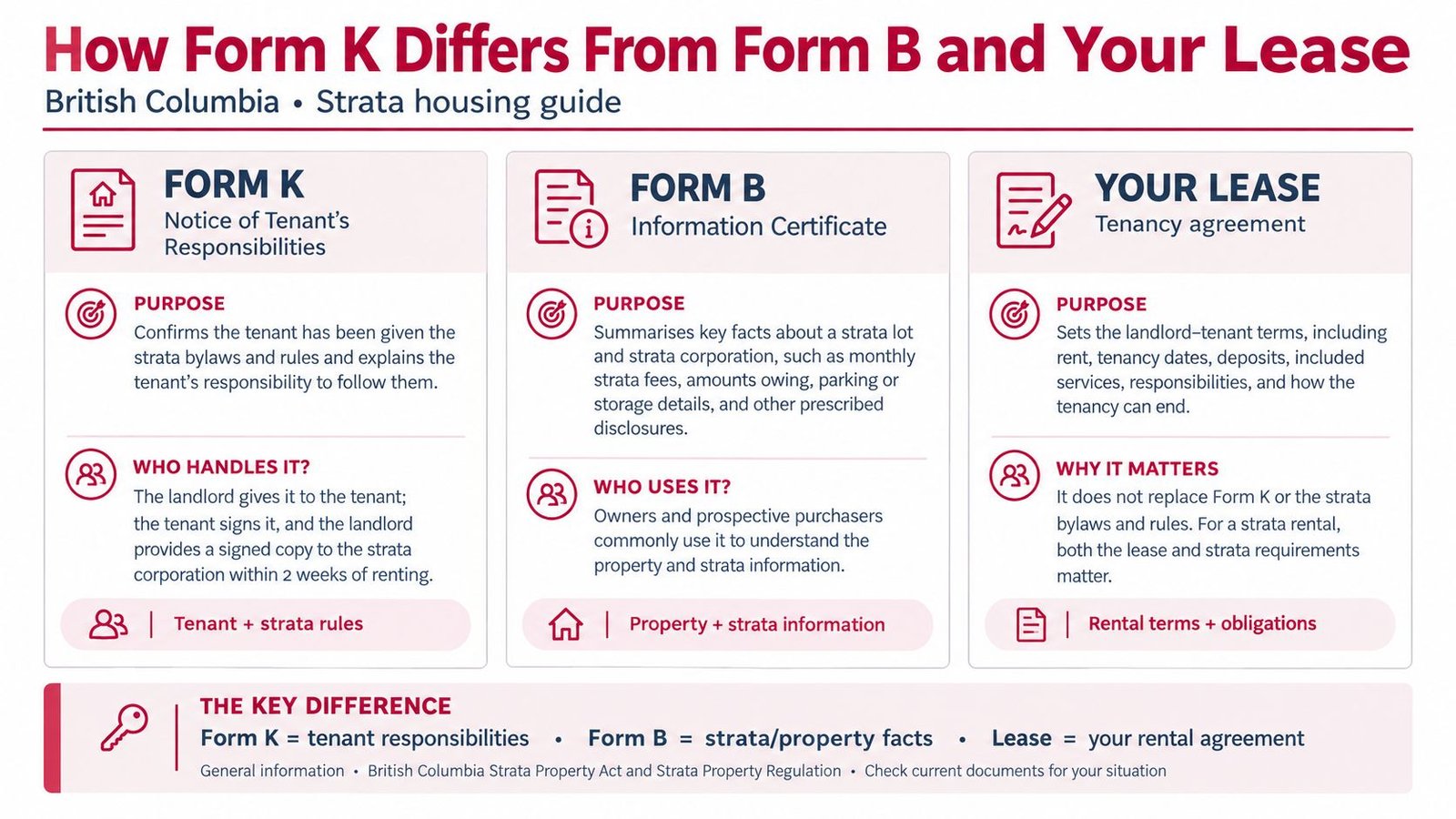
Owners often group every strata document under “paperwork,” but these documents answer different questions. Form B is a buyer-facing information certificate under section 59 of the Strata Property Act. It concerns the strata lot and the corporation's information at the time of a purchase, not the tenant's acknowledgement of day-to-day building obligations.
The lease has a different role again. It sets out the private contract between landlord and tenant, including rent, possession, and agreed tenancy terms. A pet addendum adds another layer for a specific issue. None of those documents performs the same notice function as Form K.
Form K vs Form B vs the Lease
| Document | Audience | Purpose | Timing |
|---|---|---|---|
| Form K | Tenant, landlord, and strata corporation | Records tenant responsibilities under the strata bylaws and rules | Connected to the start of a tenancy and later rule updates |
| Form B | Buyer or prospective buyer | Provides strata information for purchase due diligence | Used in the buying process |
| Lease | Landlord and tenant | Establishes the private rental agreement | Negotiated and signed before occupancy |
| Pet addendum | Landlord and tenant | Records pet-related terms agreed by the parties | Used when the tenancy includes pet provisions |
A buyer reviewing a British Columbia condo may find Jacky Levi's explanation of the Form B information certificate useful for understanding the purchase-side document. That review doesn't remove the need for a tenant-side Form K once the unit is rented.
The documents work together rather than duplicate one another. The lease governs the landlord-tenant contract. Form K connects the tenant to the strata rulebook. Form B informs a buyer about the corporation and the unit during a transaction. A pet addendum addresses a specific lease issue, but it doesn't replace the current strata bylaws and rules.
For Alberta owners, the distinction is similar to separating the provincial tenancy agreement from a building's condominium requirements. A properly drafted Alberta residential lease agreement may be useful for an Alberta property, but it can't stand in for a British Columbia prescribed notice.
The Two-Week Deadline and the 90-Day Risk Window
A missed Form K deadline usually does not look dramatic on day one. The tenant has keys, the rent is set up, and everyone assumes the file is complete. Then the strata manager asks for the signed notice, or the tenant later says they never received the current bylaws and rules. At that point, what looked like a simple signature page becomes an evidence problem tied to a two week clock.
For an Alberta owner, the easiest way to read this is as a compliance trail with two handoffs. First, give the tenant the current bylaws, rules, and Form K before the rental starts. Second, get the form signed and deliver that signed Form K to the strata corporation within two weeks after the tenancy begins. Those are separate actions. One proves the tenant was told the building rules. The other proves the strata was formally notified.
That distinction matters in the file.
A clean leasing record usually shows four checkpoints:
- Before occupancy: the tenant receives the current bylaws, current rules, and Form K.
- At tenancy start: the form matches the lease file, including the unit details, tenant names, and commencement date.
- Within two weeks: the signed Form K is sent to the strata corporation.
- After delivery: the owner keeps the signed form, the exact bylaws and rules provided, and proof of delivery.
Treat it like serving notice in any regulated tenancy matter. Saying a document was probably shared is weak. A dated email, portal receipt, courier confirmation, or saved management note is stronger because it shows who received what and when.
The risk window sits behind that paperwork. If the landlord does not provide the bylaws and rules, or does not deliver the signed Form K to the strata corporation, the tenant may end the tenancy within 90 days after learning about that failure. The landlord may then have to cover reasonable moving costs, up to a maximum of one month's rent. For an owner balancing Alberta and BC files, that is not a technical defect. It is direct financial exposure.
The deadline should be tied to the tenancy commencement date, not the day a manager notices the form is missing.
There is one more layer. Form K continues to matter after move in because strata bylaws and rules can change. A good administrator keeps the original package, tracks later amendments, and records when updated rules were sent to the tenant. That habit is familiar to owners who already rely on an Alberta Residential Tenancy Act handbook. In BC strata rentals, you need that same discipline plus a building specific paper trail.
Completing Form K Step by Step on a Real BC Strata Lot
A Calgary investor owns a Vancouver-area condo and has accepted a tenant for a new tenancy. The owner isn't physically present, so the file must work for the tenant, the leasing representative, and the strata manager without relying on informal conversations.
The administrator begins by requesting the current bylaws and rules and confirming the strata plan registration number and strata lot number. The property address is checked against the lease and strata records. Tenant names and the tenancy commencement date are entered exactly as they appear in the signed tenancy documents.

What a clean file contains
Before keys are handed over, the tenant receives the current rules, bylaws, and completed Form K. The administrator records the delivery date and retains the actual version supplied, rather than saving only a later version downloaded from a portal.
The tenant signs the form. The administrator then sends the signed document to the strata manager and saves the email, portal confirmation, or courier record showing delivery. The owner's electronic file should contain:
- The completed Form K: Every property and tenancy field is legible and consistent.
- The supplied bylaws and rules: The file preserves the version given to the tenant.
- The tenant signature: The signed notice is stored with the lease package.
- The strata delivery record: The file shows when and how the strata corporation received the form.
- The calendar record: The commencement date triggers the two-week task and later follow-up.
A sloppy file might contain a signed scan with no delivery confirmation, a generic rules package from another unit, or an email saying “please find attached” without the attachment. Those small administrative weaknesses become difficult to explain when a strata manager asks for proof months later.
A rule amendment creates a fresh administrative event. If the strata corporation changes a pet rule during the tenancy, the manager should save the amended document, record when it was received, and provide the updated requirement to the tenant. A single move-in signature shouldn't be treated as a permanent substitute for current-rule records.
For owners coordinating building work or reviewing how a strata corporation manages major projects, a practical strata repiping project example can provide useful context about why clear communication and organised records matter beyond leasing paperwork.
Owner Checklist and Common Form K Questions
An Alberta owner can treat Form K like a lease-file checklist with legal consequences attached. If a strata manager asks for proof later, you want one folder that reads like a clear timeline, who rented the unit, what rules they received, when they signed, and when the strata got the notice. That record matters more than a bare signature page.
Use this move-in checklist before the tenancy starts:
- Unit identity: Match the strata plan number, strata lot, and civic address to the lease and strata records.
- Current documents: Pull the bylaws and rules in effect for that unit and building.
- Form completion: Enter each tenant name and the tenancy start date exactly as shown in the lease.
- Signatures: Get the required tenant signature and note any additional occupants in the file.
- Strata delivery: Send the signed Form K to the strata corporation within two weeks of the tenancy starting.
- Evidence: Keep the bylaws package, signed form, and delivery confirmation together.
- Ongoing review: Track bylaw and rule amendments and provide updates to the tenant.
Does a family-member tenancy need Form K? Review the tenancy against the strata process instead of assuming the relationship changes the paperwork. Must every occupant sign? The named tenant signs the notice, and other occupants should still be documented consistently. What about a replacement tenant? Open a fresh Form K file, the same way you would start a new lease file after a tenant swap. Who keeps the form if a property manager acts for the owner? The manager may handle collection and delivery, but the owner should still retain a complete copy in the rental file. What if rules change mid-tenancy? Save the amendment and record when the tenant received the update.