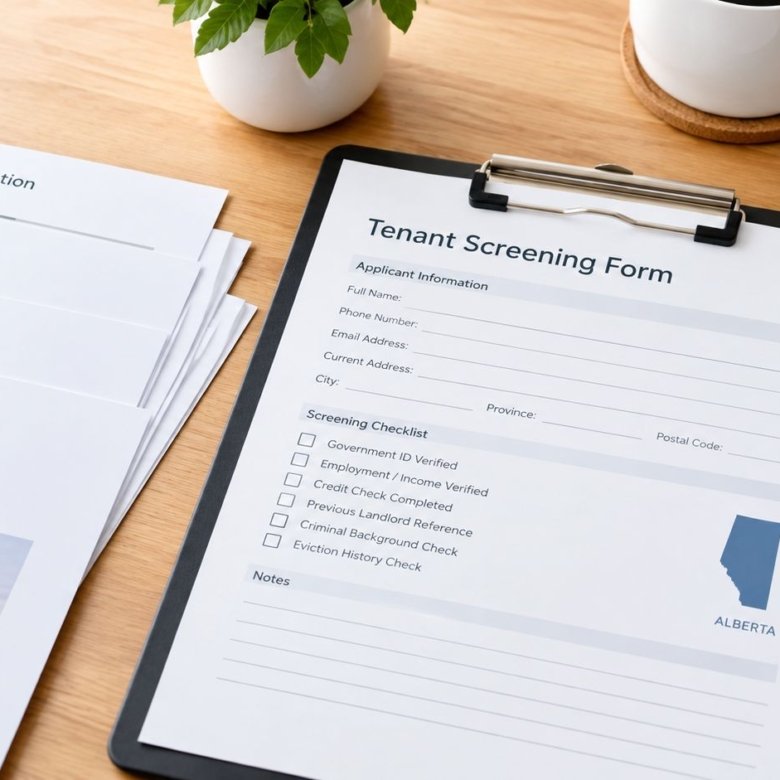

A Calgary landlord has a vacant detached house, two applications arriving at different income levels, and a decision to make. One applicant looks ideal but wants a lower rent. The other accepts the asking price but has weaker rental references. Meanwhile, a nearby condo has been sitting longer than expected, even though the owner believes the citywide market is strong. Those decisions show why long term rentals in Alberta can't be managed with one rent figure or one screening approach.
For most owners, the practical answer is a carefully managed fixed-term tenancy, supported by accurate pricing, consistent screening, documented inspections, and a clear compliance calendar. The right strategy depends on whether the property is a detached home, condo, townhome, duplex, or small multifamily building, and whether the owner lives nearby or manages from another province.
Table of Contents
- What Long Term Rentals Mean for Alberta Landlords
- Long Term vs Short Term Rentals in Alberta
- Pricing by Property Type in Calgary and Edmonton
- Alberta Compliance Essentials for Long Term Rentals
- Marketing, Showings, and Tenant Screening
- Day to Day Operations That Protect Cash Flow
- A Simple Framework for Your Long Term Rental
What Long Term Rentals Mean for Alberta Landlords
A Calgary owner deciding between a long-term tenant and short-term flexibility usually isn't choosing between passive income and easy money. The primary choice involves vacancy exposure, furnishing costs, tenant communication, municipal rules, maintenance response, and how much attention the property can receive. A remote owner with one suburban home may value predictable occupancy more than the possibility of changing rates frequently.
In Alberta practice, a long term rental most commonly means a fixed-term residential tenancy lasting 12 months. The agreement should identify the parties, premises, rent, payment arrangements, responsibilities, and tenancy dates. If the fixed term expires and both parties continue without creating a new fixed-term agreement, the tenancy may continue on a periodic basis, subject to Alberta's tenancy rules and the agreement's terms.
Who this operating model suits
This approach fits individual landlords, out-of-province owners, and investors with small portfolios in Calgary, Edmonton, Red Deer, Airdrie, Chestermere, Okotoks, and surrounding communities. It also suits owners of:
- Detached houses: Often attractive to households seeking space, parking, and stability.
- Condos: Require attention to condominium rules, building procedures, and corporation notices.
- Townhomes and duplexes: Need pricing that reflects shared walls, outdoor space, and neighbourhood competition.
- Small multifamily properties: Require repeatable leasing, inspection, arrears, and maintenance processes.
Long-term success doesn't come from maximising the advertised rent in isolation. A high asking price may increase days on market, while an underpriced lease can create avoidable revenue loss over the tenancy. The better question is whether the rent, property condition, tenant profile, lease term, and operating plan support the owner's cash-flow requirements.
Practical rule: Price the property the tenant is actually viewing, not the citywide average appearing in a headline.
A well-run long-term tenancy has a defined rhythm. The owner or manager markets the home, handles inquiries, verifies applicants, completes move-in documentation, collects rent, coordinates repairs, reviews the property, and starts renewal discussions before the lease end. That rhythm is the foundation for owners who want stable occupancy without treating the property as a full-time second job.
Long Term vs Short Term Rentals in Alberta
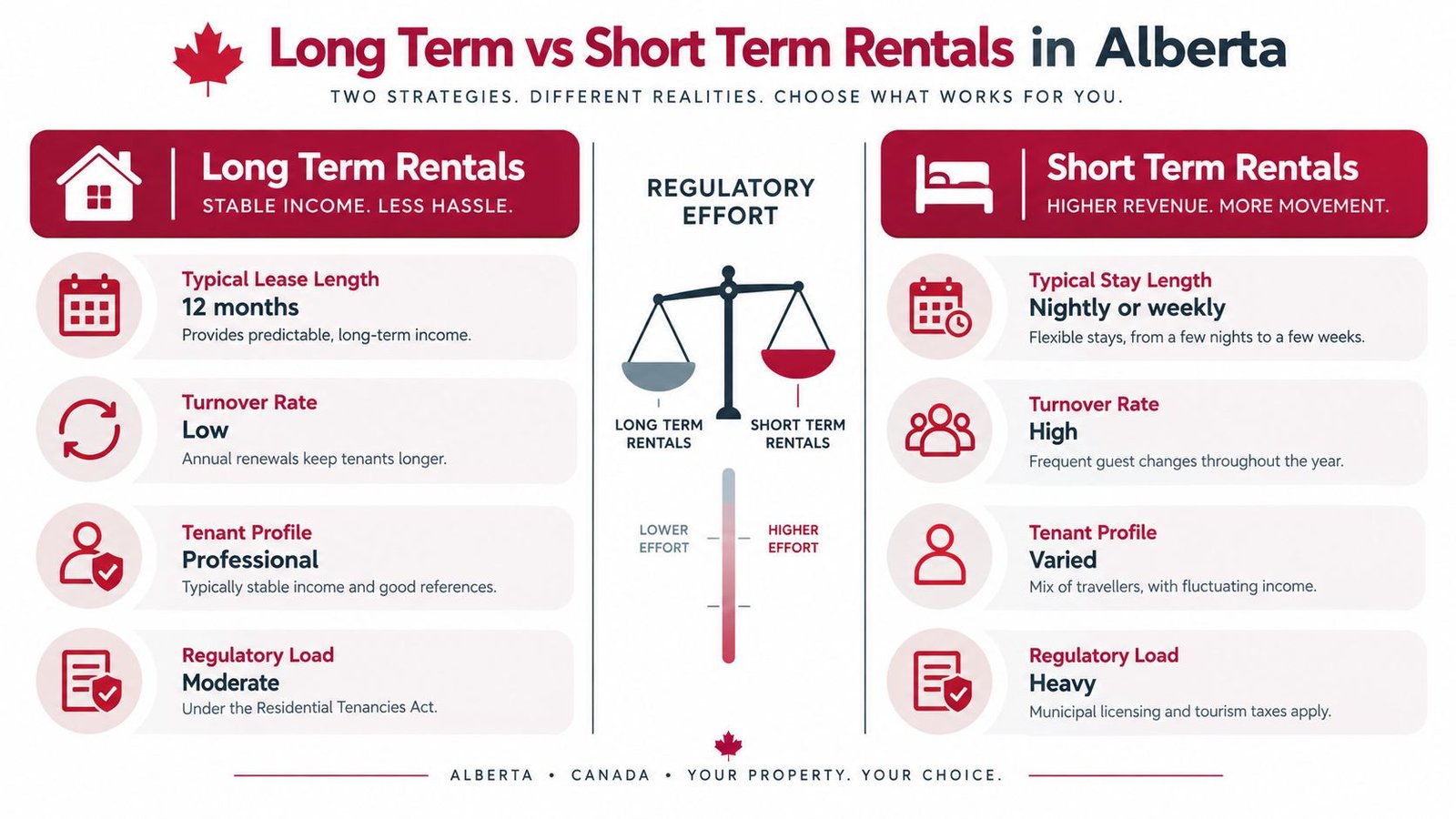
Long-term and short-term rentals solve different operating problems. A typical long-term arrangement uses a 12-month lease, lower turnover, and a tenant who treats the property as a home. A short-term arrangement relies on nightly or weekly stays, frequent guest changes, active booking management, cleaning coordination, and more variable revenue.
| Operating issue | Long term rentals | Short term rentals |
|---|---|---|
| Lease rhythm | A fixed-term agreement commonly runs for 12 months, with renewal or periodic continuation | Guests may arrive and leave repeatedly throughout the month |
| Tenant profile | Households seeking stable accommodation, often with employment and rental-history documentation | Varied guests, with demand influenced by events, travel, and seasonal conditions |
| Cash-flow pattern | More predictable scheduled rent, subject to vacancy, arrears, and permitted adjustments | Greater revenue variability, with booking gaps and changing nightly rates |
| Regulatory work | Residential Tenancies Act obligations, notices, inspections, deposits, and local requirements | Tenancy rules may combine with municipal licensing, building restrictions, and tourism-related obligations |
| Daily workload | Rent collection, maintenance, inspections, communication, and occasional turnover | Booking response, guest messages, cleaning, linen, repairs, access coordination, and reviews |
A remote owner with one detached Calgary home will often favour a fixed-term tenancy because each additional turnover creates work that must be coordinated from a distance. Marketing still matters, but the owner generally isn't arranging repeated cleaning and guest access between stays. That structure can make budgeting and contractor scheduling easier.
A downtown condo near an event district may justify a closer look at short-term use, but the owner must assess building rules, municipal requirements, furnishing, cleaning, guest communication, and revenue volatility. A higher possible gross figure doesn't automatically produce better net income after the extra labour and costs.
Match the model to the owner
The long-term model tends to fit owners who value:
- Predictable obligations: The owner knows the tenancy terms and can plan maintenance around an occupied home.
- Lower turnover frequency: Fewer move-ins and move-outs reduce repeated marketing and make-ready work.
- Remote oversight: A local manager can handle tenant communication and vendors under a defined process.
- Stable tenant relationships: Consistent communication can support renewals and reduce avoidable disputes.
Short-term use may fit owners prepared for a more active operating model and willing to manage stronger fluctuations in demand. Neither option removes responsibility. Long-term rentals exchange frequent guest turnover for tenancy administration, while short-term rentals exchange longer occupancy for constant coordination.
Pricing by Property Type in Calgary and Edmonton
Calgary isn't one rental market. In 2025, the City of Calgary reported 5.1% vacancy, up from 4.6% in 2024, with a projection of 5.7% in 2026. The same city data showed sharply different year-over-year rent movement by property type: multi-residential rents fell 9.6%, “other” units fell 8.0%, townhome and duplex rents rose 1.0%, and detached-home rents rose 16.5%. These figures are reported in the City of Calgary housing trends data.
That spread makes a citywide average a weak pricing tool. A detached house with a yard, parking, and family-oriented layout competes against different homes than a downtown condo or a unit in a large apartment building. A small plex also has a different tenant proposition, especially when tenants compare utilities, laundry, parking, storage, and maintenance response.
Use the right comparable set
A practical pricing review should start with:
- Property type: Detached, condo, townhome, duplex, or plex.
- Rent band: The home's actual competitive range, not a citywide midpoint.
- Tenant profile: Families, professionals, students, roommates, or households with pets.
- Included services: Utilities, parking, appliances, outdoor maintenance, and furnishings.
- Presentation quality: Photography, cleanliness, repairs, lighting, and showing access.
- Lease-up evidence: Inquiry quality, showing attendance, application volume, and objections.
Edmonton provides a useful contrast. CMHC reported a 3.8% purpose-built vacancy rate in 2025, while average same-sample two-bedroom rents increased 6.7% during 2025, compared with 3.8% growth in the preceding year. The CMHC Edmonton rental-market report also makes clear that purpose-built data shouldn't be treated as an exact valuation for every condo, townhouse, single-family home, or small multifamily property.
A detached Calgary owner may test a stronger rent when comparable homes are attracting qualified inquiries quickly. A condo owner facing newer competition may need better presentation, a modest concession, or a rent adjustment rather than waiting indefinitely. A small plex may hold its price if the building offers practical advantages that tenants can't easily find elsewhere.
For owners comparing asset types, condos versus homes can help frame the differences in tenant appeal, operating demands, and pricing logic. The decision should be based on expected net performance. A slightly lower rent that secures a suitable tenant promptly may outperform a higher asking price followed by prolonged vacancy, repeated showings, and additional make-ready costs.
Alberta Compliance Essentials for Long Term Rentals
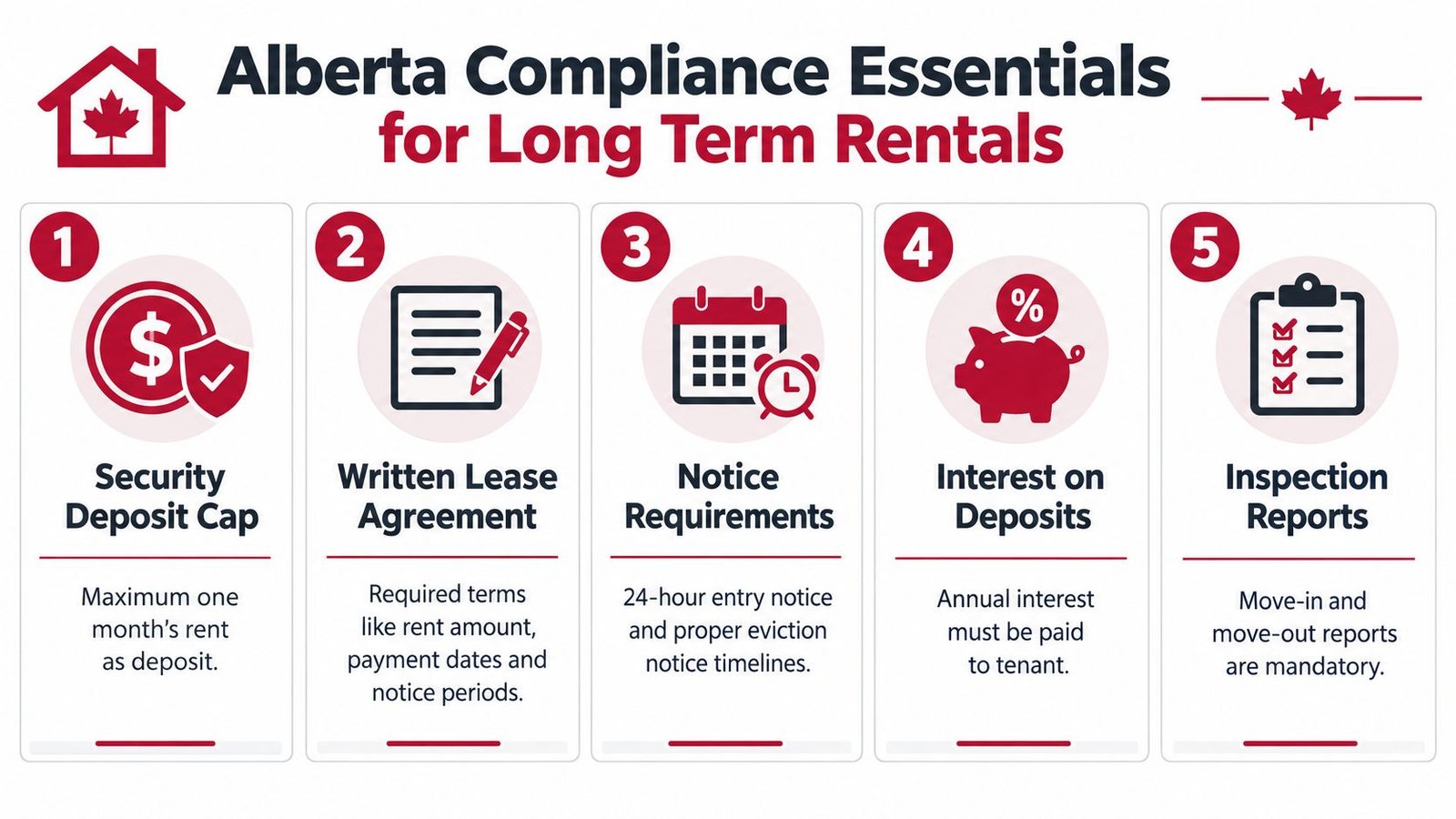
Alberta landlords need a workflow that treats compliance as an operating task, not a document filed away after the lease is signed. The Residential Tenancies Act and related provincial requirements affect deposits, notices, inspections, records, and move-out accounting.
Handle security deposits correctly
A residential security deposit can't exceed one month's rent when the tenancy begins, and the landlord can't increase it later just because rent rises. The landlord must place the deposit in an interest-bearing account at an Alberta bank, treasury branch, credit union, or trust company within two banking days. Deposit records must be retained for at least three years after the tenancy ends. The Alberta landlord information resource outlines these requirements.
The move-in file should contain the signed agreement, deposit record, condition report, photographs, and relevant communications. That file gives the owner a defensible baseline when deciding whether damage exceeds ordinary wear and tear.
Track the deadlines
A usable compliance calendar should include:
- Landlord identification: Provide written notice identifying the landlord within seven days after move-in, or post it visibly in the building's common area.
- Move-out accounting: Provide the deposit, a statement of account, or an estimated statement of account within 10 days after the tenant gives up possession.
- Deduction evidence: Don't deduct for ordinary wear and tear. Support deductions with the tenancy agreement, inspection reports, photographs, and invoices.
- Record retention: Keep deposit records and supporting documents for the required period, even after the tenant has left.
Condo owners have another layer to manage. A condominium corporation may request a deposit from the unit owner of no more than $1,000 or one month's rent, whichever is greater, when the unit is rented. The owner must also provide written notice to the condominium corporation within 20 days after the tenancy ends. These obligations are separate from the tenant's security deposit and should appear as separate tasks in the owner's file.
Documentation matters: Inspection photographs, signed condition reports, vendor invoices, and timely statements make legitimate deductions easier to explain and defend.
The Alberta guidance on landlord and tenant rights and common landlord and tenant problems should be checked when a dispute arises or a property's circumstances don't fit a standard workflow. A property manager's value is often visible in the ordinary details: correct dates, complete files, consistent notices, and a move-out statement issued on time.
Marketing, Showings, and Tenant Screening
Marketing and screening work as one funnel. A listing attracts the right audience only when the photographs, description, price, and showing process accurately represent the home. If the listing promises a property that the applicant doesn't see, the result is wasted time and weaker trust before the application is even submitted.

Build the front end properly
Professional photographs should show the actual condition, layout, parking, storage, outdoor space, and notable limitations. The copy should identify the likely tenant profile without using language that improperly excludes protected groups. Multi-channel advertising expands reach, but fast inquiry handling matters just as much as placement.
Useful listing practices include:
- Describe the property: State included utilities, parking, laundry, pet terms, and move-in conditions clearly.
- Coordinate showings efficiently: Offer organised appointment windows and confirm access requirements before the applicant arrives.
- Use video selectively: A well-produced walkthrough can help remote applicants understand layout and condition. Owners evaluating video marketing for landlords should use it to supplement, not replace, accurate photographs and an in-person or live virtual showing.
- Record inquiry patterns: Repeated questions about price, parking, utilities, or repairs may signal a listing issue or a market-positioning problem.
Screening should then follow the same written process for every applicant. The four practical pillars are credit, income, rental history, and references. Income documents should be current and verifiable. Rental history should include contactable prior landlords where available. References should be relevant and checked consistently rather than selected only when an application already feels promising.
A standard application form, documented permission for credit checks, and written qualification criteria reduce improvisation. Criteria should focus on the applicant's ability to meet the tenancy obligations and care for the property, while complying with Alberta human rights requirements.
For a more detailed workflow, see tenant screening in Alberta. A thorough process doesn't mean every applicant receives the same outcome. It means each application is assessed against the same documented standards, decisions are recorded, and applicants receive clear communication.
When supply gives applicants more choice, owners may compete through condition, response speed, lease clarity, and respectful communication rather than lowering standards. The result should be a tenant who can meet the agreement and is likely to maintain a stable relationship with the property.
Day to Day Operations That Protect Cash Flow
A long-term rental becomes profitable through repeated ordinary actions. Rent collection, arrears follow-up, maintenance coordination, inspection records, and owner reporting determine whether the property produces a clean operating picture or a series of small surprises.
Keep the operating rhythm visible
Rent should be tracked against the lease schedule, with automated reminders and a defined response process for missed payments. A missed payment shouldn't sit unnoticed while the owner assumes the tenant will resolve it. Arrears communication should be prompt, factual, and documented.
Owner disbursements also need consistency. Direct deposits accompanied by clear statements allow the owner to connect rent received with management fees, repairs, utilities, and other authorised expenses. Owners seeking a structured process can review online rent collection as part of a broader management workflow.
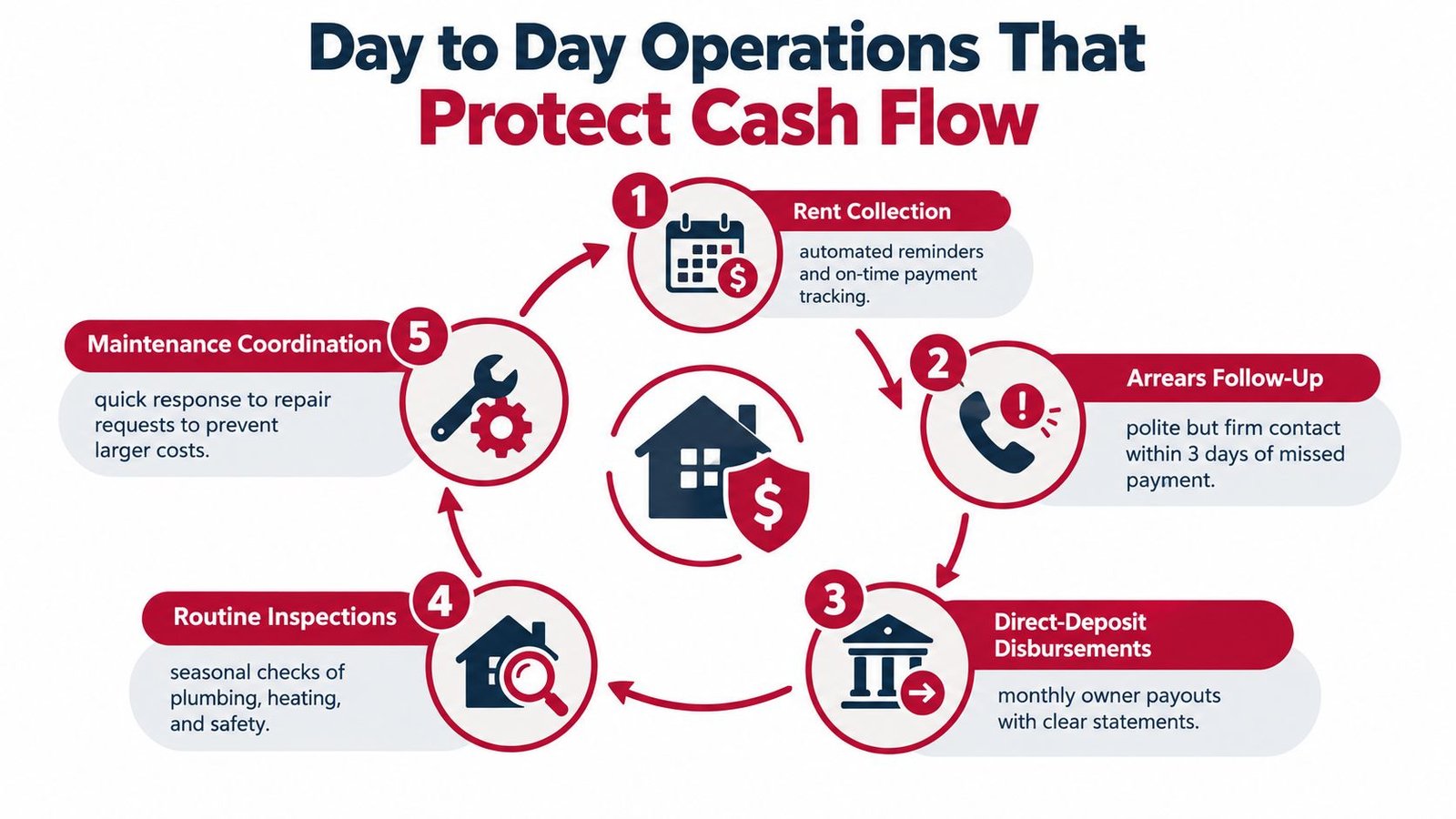
Routine inspections should focus on the property's condition, plumbing, heating, safety concerns, leaks, ventilation, appliances, and tenant-reported issues. The report should distinguish normal ageing from damage and should include dated photographs where appropriate. Maintenance requests need a triage process, vendor assignment, approval limits, completion confirmation, and invoice storage.
Start renewals before the last minute
A renewal discussion should begin several months before lease expiry. The owner or manager reviews comparable properties, the tenant's payment and communication history, unresolved maintenance issues, and the legally permitted rent adjustment before proposing terms.
California rent rules don't apply in Alberta, so Alberta owners need a process grounded in Alberta's Residential Tenancies Act, the written agreement, and applicable notice requirements. A renewal strategy that ignores local law can turn a simple rent conversation into a dispute.
When the tenant leaves, the condition record becomes central to the deposit accounting. Owners who need broader risk documentation can also review how to file a landlord claim as a general claims-process resource, while confirming that any insurance decision follows the relevant Alberta policy and insurer requirements.
Operating insight: A renewal is usually the result of the previous year's maintenance response, communication quality, and documentation, not a conversation that starts a few weeks before expiry.
A property manager who manages these tasks through consistent records gives the owner better visibility. The owner can see what was collected, what was spent, what remains open, and what needs a decision before the next leasing cycle.
A Simple Framework for Your Long Term Rental
A practical decision starts with the property, not the advertised rent.
- Classify the asset. Identify whether it's a detached home, condo, townhome, duplex, or small multifamily property.
- Define the tenant fit. Match space, parking, location, rules, and price to a realistic household profile.
- Use relevant comparables. Compare against similar properties in the same rent band, not an average pulled from a different asset type.
- Document screening. Apply consistent checks for income, credit, rental history, and references.
- Run a compliance calendar. Track deposits, notices, inspections, statements, and condo obligations.
- Plan the renewal early. Review market position, property condition, tenant performance, and lawful lease options before expiry.
Long term rentals remain the default for many Alberta residential owners because they can provide scheduled rent, stable occupancy, and less frequent turnover than short-term use. A different model may deserve consideration when the property, building rules, location, furnishing, and owner's operating capacity support it, but the comparison should be based on net workload and cash flow rather than gross revenue alone.
Owners in Calgary, Edmonton, Red Deer, and surrounding communities can book a free rental consultation with GURIQBAL CHAHAL, MBA, PMP, REAL ESTATE BROKER at Dreamhouse Realty Ltd. by calling 403-966-6072.
Dreamhouse Realty Ltd. provides rental consultations, pricing analysis, tenant placement, screening, lease administration, inspections, rent collection, maintenance coordination, and compliance support for Alberta owners. To discuss a property-specific long-term rental plan, visit Dreamhouse Realty Ltd..