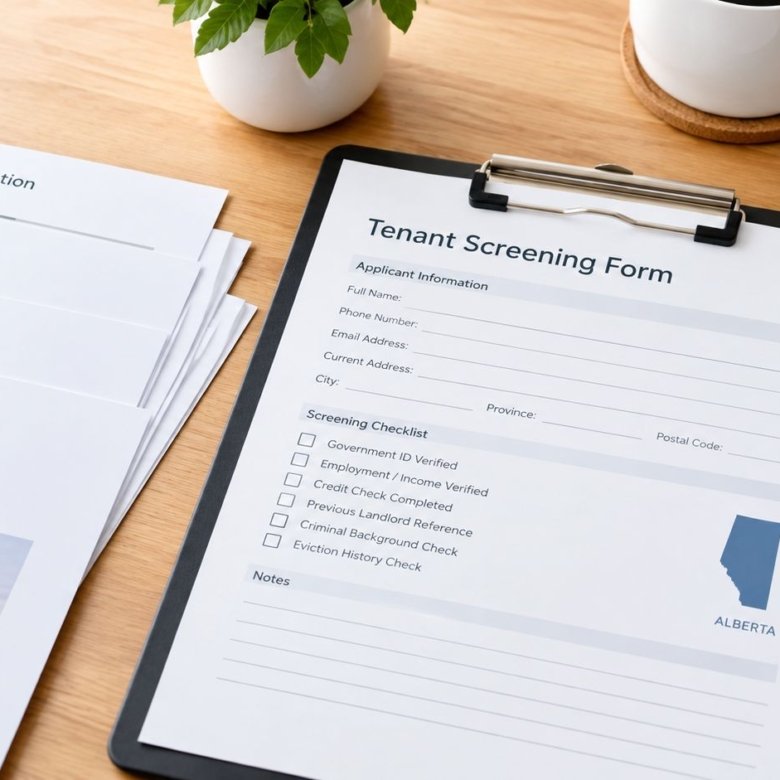

A condo can look ready for a new tenant while overlooked appliances, safety systems, shared areas, or pre-existing damage create problems later. In Calgary, Edmonton, Red Deer, and surrounding Alberta communities, a dependable condo checklist inspection has to do more than record whether the walls look clean. It should separate the unit from common property, use consistent condition ratings, capture clear photographs, and create records that landlords, tenants, property managers, and condo representatives can review during the tenancy.
The process also needs to account for two different rulebooks. Alberta tenancy obligations govern the rental relationship, while the condo corporation's bylaws, policies, responsibility maps, and maintenance procedures govern many shared or limited-common components. A checklist that ignores either side leaves gaps.
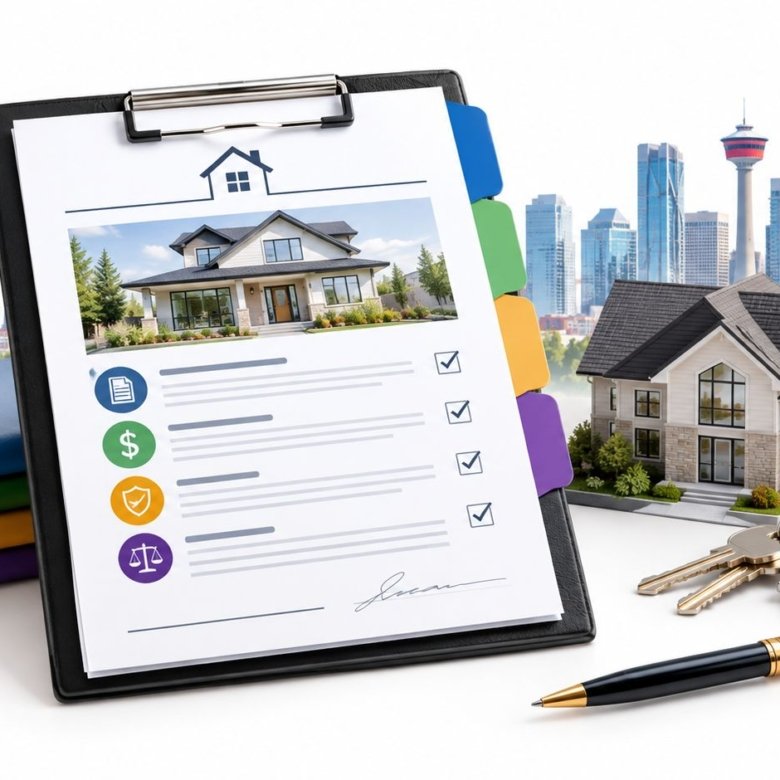
Owners can use the home inspection infographic as a visual reminder of why condition evidence matters. The practical workflow below turns that principle into eight repeatable checks for Alberta rental operations.
Table of Contents
- 1. Tenant-Ready and Pre-Lease Inspection Checklist for Condo Rentals
- 2. Move-In/Move-Out Inspection Protocol for Alberta Residential Rentals
- 3. Photography and Digital Documentation Standards for Alberta Condo Inspections
- 4. Alberta Residential Tenancies Act Compliance Inspection Framework
- 5. Condo Corporation Coordination and Reserve Fund Inspection Checklist
- 6. Property Condition Assessment for Alberta Condo Buildings
- 7. Maintenance and Repair Inspection Checklist for Alberta Condo Owners
- 8. Canadian Real Estate Association Condo Property Condition Standard
- 8-Resource Condo Inspection Checklist Comparison
- Turn Inspection Notes Into Better Oversight
1. Tenant-Ready and Pre-Lease Inspection Checklist for Condo Rentals
A pre-lease inspection should happen before the first serious showing, not after a tenant has signed and discovered unfinished work. A property manager can walk through the condo at least 48 hours before the first showing, confirm that the suite is clean and functional, and leave enough time for a vendor to correct issues without disrupting the leasing schedule.
The inspection should test every appliance included with the tenancy. The refrigerator, range, oven, dishwasher, microwave, washer, dryer, garburator, and ventilation equipment should be operated where practical, with each result recorded in writing. Photos should show the appliance's condition, model information where useful, and any visible marks that a tenant could later mistake for new damage.
Practical rule: A condo isn't rent-ready because it photographs well. It's rent-ready when the manager can demonstrate that the advertised features work and the documented condition matches what the tenant receives.
Readiness checks that prevent early complaints
A professional cleaning service is usually more reliable than a rushed owner clean for a move-out turnover. The cleaner should address appliances, cabinets, flooring, bathrooms, windows, baseboards, storage areas, and any balcony or patio that forms part of the tenant's access.
The property manager should also verify that utilities are on and functioning during showings. If a condo-mandated repair remains open, the corporation or its management company should confirm the repair plan before tenant placement. A maintenance contact should remain available during move-in week so urgent issues can be triaged quickly.
- Condition records: Photograph the empty suite before furniture arrives.
- Listing accuracy: Ensure every advertised appliance, parking stall, storage locker, and amenity is available and correctly described.
- Safety review: Check smoke alarms, carbon monoxide alarms where applicable, locks, lighting, handrails, and visible trip hazards.
- Condo coordination: Confirm move-in booking rules, elevator protection requirements, fob access, and any corporation forms before possession.
The manager should retain a copy of the inspection, cleaning invoice, repair confirmations, and listing photographs. Concerns involving asbestos or other hazardous materials should be referred to qualified professionals. A useful background resource is this guide to home inspection asbestos concerns.

2. Move-In/Move-Out Inspection Protocol for Alberta Residential Rentals
Move-in and move-out inspections need a controlled process because they establish the condition record at the two points most likely to produce a dispute. Alberta requires landlords and tenants to complete a written inspection report within one week before or after possession changes, and the landlord must provide a signed copy immediately after the inspection, according to Alberta's tenancy guidance.
That timing affects operations. A manager shouldn't treat the inspection as an informal walk-through several weeks after the tenant has moved in. The report should identify each room, fixture, surface, appliance, access device, and included area, with a condition rating and notes about responsibility where an issue exists.
Make the comparison fair
The tenant should attend the move-in inspection where possible, sign the report, and receive a copy. The same room order and terminology should be used at move-out. Consistency makes before-and-after comparisons easier and prevents a manager from describing similar conditions in conflicting ways.
The property should be photographed empty before the tenant moves in. Each room should be captured from consistent angles and under comparable lighting, with close-ups for scratches, stains, dents, cracks, missing items, or other pre-existing damage. Meter readings should be recorded independently, photographed in close-up, and acknowledged by the tenant if the tenancy requires those readings.
A manager should distinguish ordinary wear from tenant-caused damage rather than treating every difference as chargeable. The report can classify an observation as pre-existing, normal wear, tenant damage, cleaning issue, maintenance defect, or unresolved common-property matter. That classification supports a fair review of the security deposit and a clearer repair decision.
Landlords and managers can use this property inspection guide for rental homes to reinforce the room-by-room process. The final report should contain signatures, dates, photographs, repair notes, and a record of when the tenant received the copy. At move-out, the manager should compare the original record rather than relying on memory or a new employee's interpretation of the suite.
3. Photography and Digital Documentation Standards for Alberta Condo Inspections
A photograph has value only when a landlord, tenant, or property manager can interpret it later. A dark image of a kitchen corner cannot show whether a mark existed before occupancy, how extensive it was, or whether it changed. Build the record around room context, close detail, written observations, inspection dates, and controlled storage.
Start each room with wider views that establish location. Follow with close-ups of scratches, cracks, stains, dents, missing items, and other conditions. Use comparable lighting and repeatable viewpoints where practical. Natural light may need support from flood lighting, while a ruler or other stable reference object gives a defect visible scale.
Preserve the original record
Record the inspection date through device metadata or written notation. Photograph meter displays closely enough for the reading to be read later, and keep those readings separate from general condition images. A narrated video walk-through can supplement still photographs when the narrator identifies the room, explains a concern, and shows an appliance or fixture operating.
Use folders arranged by property, unit, inspection type, and date. Cloud backup, version control, and access logs can help a remote owner identify which report staff created, reviewed, or amended. Keep original files in secure storage. Staff should not crop, enhance, or otherwise alter the evidentiary originals.
- Room coverage: Include floors, walls, ceilings, windows, doors, closets, fixtures, and installed equipment.
- Damage scale: Place a reference object beside notable defects.
- File discipline: Name files consistently, with the unit and inspection date.
- Tenant access: Provide copies promptly in line with Alberta requirements.
- Privacy control: Exclude unnecessary images of personal belongings, documents, and people.
Photographs cannot capture every condition. Written notes should cover slow drains, unusual noise, weak airflow, intermittent appliance faults, and other issues discovered through operation rather than appearance. The move-in inspection checklist can help standardize that room-by-room record across move-in, routine, and move-out workflows.
When a concern may involve a hallway, parkade, elevator, or another shared condo area, label it as a common-property matter and preserve the relevant image for coordination with the condo corporation. Keep tenant communication with the report, including requests for clarification and agreed follow-up. A labelled, traceable file supports repair decisions and condition comparisons better than an unorganized camera roll.
4. Alberta Residential Tenancies Act Compliance Inspection Framework
A tenant reports a leaking faucet, while the property manager also needs to complete a scheduled inspection. The workflow must show what requires notice, what belongs in the unit report, how evidence is recorded, and who receives each follow-up. Alberta guidance requires 24-hour written notice before a routine inspection, so retain both the notice and proof of delivery instead of treating notice as a separate administrative task.
Start with the rented premises. Record hallways, elevators, parkades, fitness rooms, and other shared facilities separately because tenant access does not make those areas part of the unit's condition report. A concern in a common area should be identified as a building or condo-corporation matter and sent to the appropriate condo contact.
Keep legal requirements distinct from house procedure
Move-in and move-out reports have their own timing requirements. Routine inspections and maintenance visits require appropriate notice and communication controls. The written procedure should identify the applicable requirement, responsible person, notice date, delivery method, and retained evidence. Internal preferences should be labelled as policy, not presented as provincial law.
Use the Alberta RTA handbook to organize provincial tenancy procedures, then adapt the workflow to the owner's insurance, accounting, and dispute-management requirements. Retain records for six or more years where that is the owner's internal risk-control practice, while confirming the period against applicable professional advice and business needs.
A practical file should answer five questions:
- Notice record: What was sent, how was it delivered, and when was access scheduled?
- Inspection record: Who attended, which areas were inspected, and what condition was observed?
- Photo record: Which images support each report entry?
- Escalation record: Is the repair assigned to the tenant, landlord, vendor, or condo corporation?
- Closeout record: Was the work completed, invoice approved, and tenant informed?
Date-stamp reports and photographs, and keep the original evidence with any working copies. Apply the same sequence at move-in, during routine checks, and at move-out so condition ratings and repair decisions remain comparable. This repeatable record also helps the manager explain the difference between a tenant-responsibility issue and a building matter without overstating either conclusion.
5. Condo Corporation Coordination and Reserve Fund Inspection Checklist
The most expensive condo problem may sit outside the rented unit. A tenant can keep a kitchen clean and report a dripping tap promptly, yet the building may still face roof work, drainage failures, envelope repairs, parkade deterioration, or other common-property risks. The landlord needs a process that connects unit inspections with the condo corporation's records and responsibility map.
Alberta condominium corporations must retain a qualified person to complete a reserve fund study. The study includes an on-site visual inspection of visible components, interviews with the board and manager, and a review of the condominium plan, construction documents, and maintenance records. The study is required every five years, so it should be treated as a recurring budgeting and inspection tool rather than a one-time purchase document. These requirements appear in the Alberta condominium property regulation.
Review the building before promising stability
The reserve fund study must cover a 30-year timeframe, and Alberta says the corporation may complete a study sooner if needed, as explained in the province's reserve fund guidance. The report should identify items needing repair or replacement, assess present condition, estimate timing, identify current reserve funds, and include visual inspection of depreciating property, according to the Alberta reserve fund study fact sheet.
A 2026 Alberta condo dataset reported a median reserve fund balance of $5,905 per unit across more than 180 samples. Buildings built in 2016 or later showed a lower typical balance of $2,840 per unit, while buildings built from 1980 to 1999 showed $7,141 per unit. Those figures don't determine whether a building is sound, but they reinforce the need to examine deferred maintenance, visible wear, planned capital work, and special-assessment exposure. The dataset is available through Alberta condo reserve statistics.
Managers should request the reserve study, board minutes, financial statements, insurance summary, project schedules, and responsibility maps for windows, HVAC, balconies, roofs, and envelope components. Calgary roof replacement, Edmonton deferred-maintenance assessments, and Red Deer building-envelope upgrades can affect tenant communication, access, renewals, and operating budgets even when the unit itself appears satisfactory.
6. Property Condition Assessment for Alberta Condo Buildings
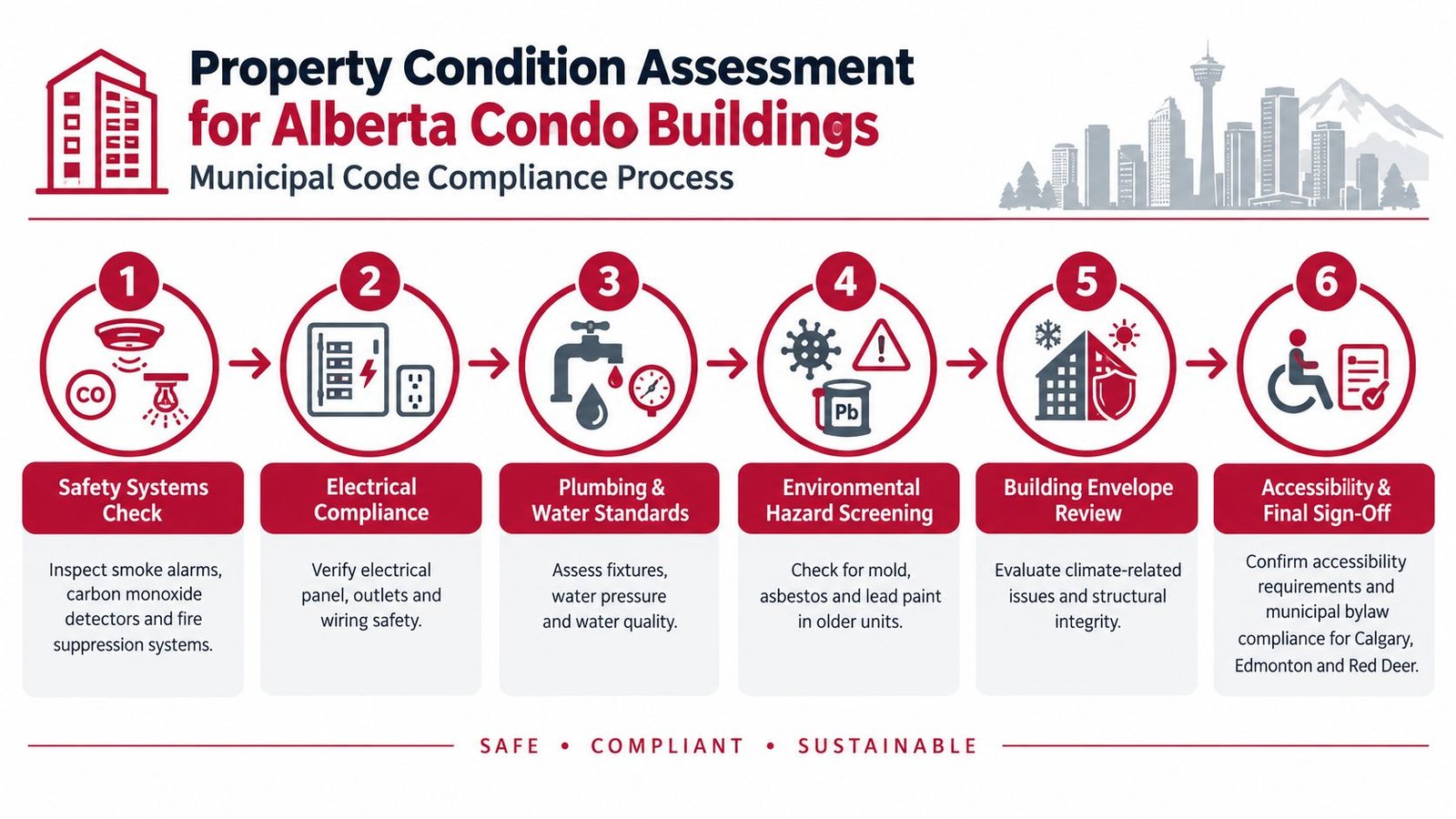
A unit inspection cannot replace a municipal compliance review or a qualified assessment of building systems. Calgary, Edmonton, Red Deer, and other Alberta municipalities may apply their own permitting, property standards, fire-safety, plumbing, electrical, and building-code processes. A landlord or manager should identify the authority involved in a concern rather than declaring that a condition is compliant based only on a visual walk-through.
The inspection should begin with life-safety systems that affect the tenant directly. Visible smoke alarms, carbon monoxide alarms where applicable, exit routes, door hardware, emergency lighting in shared areas, fire doors, stairwells, and access controls should be recorded. The manager should report failures or uncertainty to the appropriate qualified contractor, condo corporation, or municipal department.
Inspect systems by risk, not appearance
Electrical checks should look for damaged receptacles, exposed wiring, unusual heat, unsafe extension-cord use, and signs of unauthorized alterations. Plumbing checks should cover leaks beneath sinks, fixture operation, drainage, shut-off access, water stains, and moisture around toilets, tubs, showers, and laundry equipment. Heating and ventilation checks should record airflow, unusual sounds, visible damage, filter condition, and whether the equipment is unit-specific or building-controlled.
Environmental concerns need careful escalation. Suspected mould, asbestos-containing materials, contaminated water, or hidden moisture shouldn't be diagnosed casually by a leasing employee. The manager should isolate the concern where appropriate, notify the owner and corporation, and arrange assessment by a qualified professional.
Shared systems deserve separate attention. Roofs, drainage, HVAC, plumbing, electrical infrastructure, fire systems, building envelope, parking structures, and exterior walkways can affect habitability, access, insurance, and tenant satisfaction. Alberta-focused inspection guidance recommends thermal imaging and moisture detection for hidden leaks and envelope failures, especially where freeze-thaw and moisture conditions can conceal defects. The Edmonton-area condo inspection guidance provides context for adding those tools to a risk-based process.
The manager's report should state what was observed, what wasn't accessible, who controls the component, and what action follows. That clarity is more useful than a broad statement that the building is safe or compliant.
7. Maintenance and Repair Inspection Checklist for Alberta Condo Owners
A maintenance inspection is most useful when it drives a decision. For each condition, record the location, photo, rating, work-order number, responsible party, priority, and verification date. This creates a repeatable record for move-in, routine, and move-out workflows instead of leaving repair history in scattered emails.
Use the same room-by-room route each time, then add building items that may affect the unit. Check walls, ceilings, flooring, cabinetry, doors, windows, appliances, fixtures, and visible sealants for deterioration or incomplete work. Rate each item as satisfactory, monitor, repair, or urgent. The rating should reflect function and risk, not appearance.
Alberta seasons change the evidence available during an inspection. Spring, summer, fall, and winter visits may expose different concerns, including snow and ice effects, moisture after thawing, ventilation complaints, or weak heating performance. Schedule access according to the tenancy agreement, required notice, tenant privacy, and the actual maintenance need.
Decide who owns the next action
Unit-level repairs usually belong in the owner's maintenance plan. A damaged appliance, loose cabinet, failed interior lock, or worn finish can generally be assigned to the owner or manager, subject to the lease and the facts of the incident. A recurring ceiling stain, envelope concern, parking structure defect, or building-controlled system may require condo-corporation coordination instead. Record that distinction before assigning a vendor.
Use a short escalation table during the review:
- Urgent safety issue: Contact the appropriate emergency service, vendor, owner, or condo representative without delay.
- Water or moisture concern: Protect affected areas, document the location, identify the likely source, and coordinate access.
- Functional defect: Test the item, note the result, and obtain a repair or replacement recommendation.
- Cosmetic condition: Record it for planned work and distinguish normal wear from tenant-caused damage.
- Recurring failure: Review earlier work orders and vendor reports before approving another isolated repair.
Tenant communication should explain what was observed, what access is required, who controls the repair, and when the next update will be provided. A clear explanation helps manage delays caused by vendor availability or corporation approval without assigning responsibility prematurely.
Review recurring patterns by unit and building, and include photographs, approvals, invoices, and completion checks in the owner report. A checklist has value only when the record leads to verified work.
8. Canadian Real Estate Association Condo Property Condition Standard
A CREA-informed condition standard gives Alberta landlords a consistent way to inspect a condo before acquisition, before leasing, during routine management, and at turnover. Apply it to Calgary, Edmonton, Red Deer, and smaller communities, then adjust the review for the condominium documents, municipal requirements, tenancy rules, and building systems. It supports professional inspection and legal advice, but does not replace either one or the condo corporation's reserve study.
Use one condition record for every property, with separate fields for unit components and common property. That distinction helps determine whether a repair belongs in the rental budget, a corporation project, an insurance claim, or tenant communication. It also prevents a landlord from treating a building-wide issue as an in-unit maintenance task.
For a pre-lease review, inspect appliances, finishes, moisture indicators, windows, doors, plumbing, electrical fixtures, heating, ventilation, parking, storage, and access. Add photographs and condition ratings for each room or system, then retain the report for later comparison. Property managers can reuse the same workflow for tenant handover, routine reviews, and move-out documentation.
The condition review should be paired with condominium records:
- Reserve study: Compare observed conditions with listed capital components and planned work.
- Corporation records: Request repair histories, board minutes, financial statements, and project updates.
- Responsibility map: Confirm control of windows, balconies, HVAC, envelope elements, and other components before assigning work.
- Tenant impact: Record noise, access restrictions, amenity closures, parking changes, and project timing that may affect occupancy.
- Acquisition decision: Include known repairs and building risks in the investment review before committing.
A landlord should also record who must be contacted, what evidence supports the concern, and whether the issue needs corporation access or approval. This creates a usable handoff between the owner, property manager, tenant, vendor, and board.
Calgary benchmark data reported a typical reserve fund of $6,570 per unit, according to Calgary condo reserve statistics. Use that figure as a prompt for questions, not as a purchase decision. Review the building's condition, study timing, planned projects, insurance, governance, and responsibility rules together.
8-Resource Condo Inspection Checklist Comparison
| Resource | Core features ✨ | Quality / Legal ★ 🏆 | Value / Price 💰 | Target 👥 | USP / Key benefit ✨ |
|---|---|---|---|---|---|
| Tenant-Ready and Pre‑Lease Inspection Checklist for Condo Rentals | Cleanliness, safety systems, appliances, utilities, docs | ★★★★☆ · RTA-aligned | 💰 Reduces vacancy & early terminations | 👥 Condo landlords, PMs in Calgary/Edmonton/Red Deer | ✨ Ensures unit is rent‑ready before listing |
| Move‑In/Move‑Out Inspection Protocol for Alberta Residential Rentals | Room‑by‑room templates, damage vs wear, meter reads, photos | ★★★★★ · RTA Sec 36‑37 compliant 🏆 | 💰 Protects security deposits; lowers dispute risk | 👥 Landlords, turnover managers | ✨ Legally defensible move‑in/move‑out evidence |
| Photography & Digital Documentation Standards for Alberta Condo Inspections | Camera/lighting standards, metadata, backups, video, integration | ★★★★☆ · Evidence‑grade documentation | 💰 Investment in gear/training; high ROI in disputes | 👥 Remote owners, PMs, legal teams | ✨ Enables remote oversight & airtight proof |
| Alberta Residential Tenancies Act Compliance Inspection Framework | Move‑in/routine/move‑out flows, photo reqs, notice periods | ★★★★★ · Full RTA compliance 🏆 | 💰 Reduces fines & legal exposure | 👥 Landlords requiring legal certainty | ✨ Comprehensive RTA‑aligned inspection standard |
| Condo Corporation Coordination & Reserve Fund Inspection Checklist | Common property, reserve fund impact, bylaw compliance, communication | ★★★★☆ · Condo board focused | 💰 Early warning on levies; may need extra admin | 👥 Landlord investors in condo corporations | ✨ Aligns landlord actions with condo governance |
| Property Condition Assessment for Alberta Condo Buildings (Municipal Code) | Building code, life‑safety, electrical, plumbing, environmental hazards | ★★★★★ · Municipal code / NBC aligned 🏆 | 💰 Prevents municipal fines; remediation may be costly | 👥 Investors, building owners, PMs | ✨ Ensures municipal/bylaw compliance and safety |
| Maintenance & Repair Inspection Checklist for Alberta Condo Owners | Quarterly checks, HVAC/plumbing/electrical, work orders, vendor tracking | ★★★★☆ · Preventive focus | 💰 Lowers emergency repair costs; ongoing admin | 👥 Hands‑off landlords relying on PMs | ✨ Preventive schedule extends asset life |
| CREA Condo Property Condition Standard | National assessment framework, structure, systems, envelope | ★★★★☆ · Nationally recognized 🏆 | 💰 Credibility with lenders/insurers; training needed | 👥 Investors, lenders, large PM firms | ✨ Standardized Canada‑wide inspection benchmark |
Turn Inspection Notes Into Better Oversight
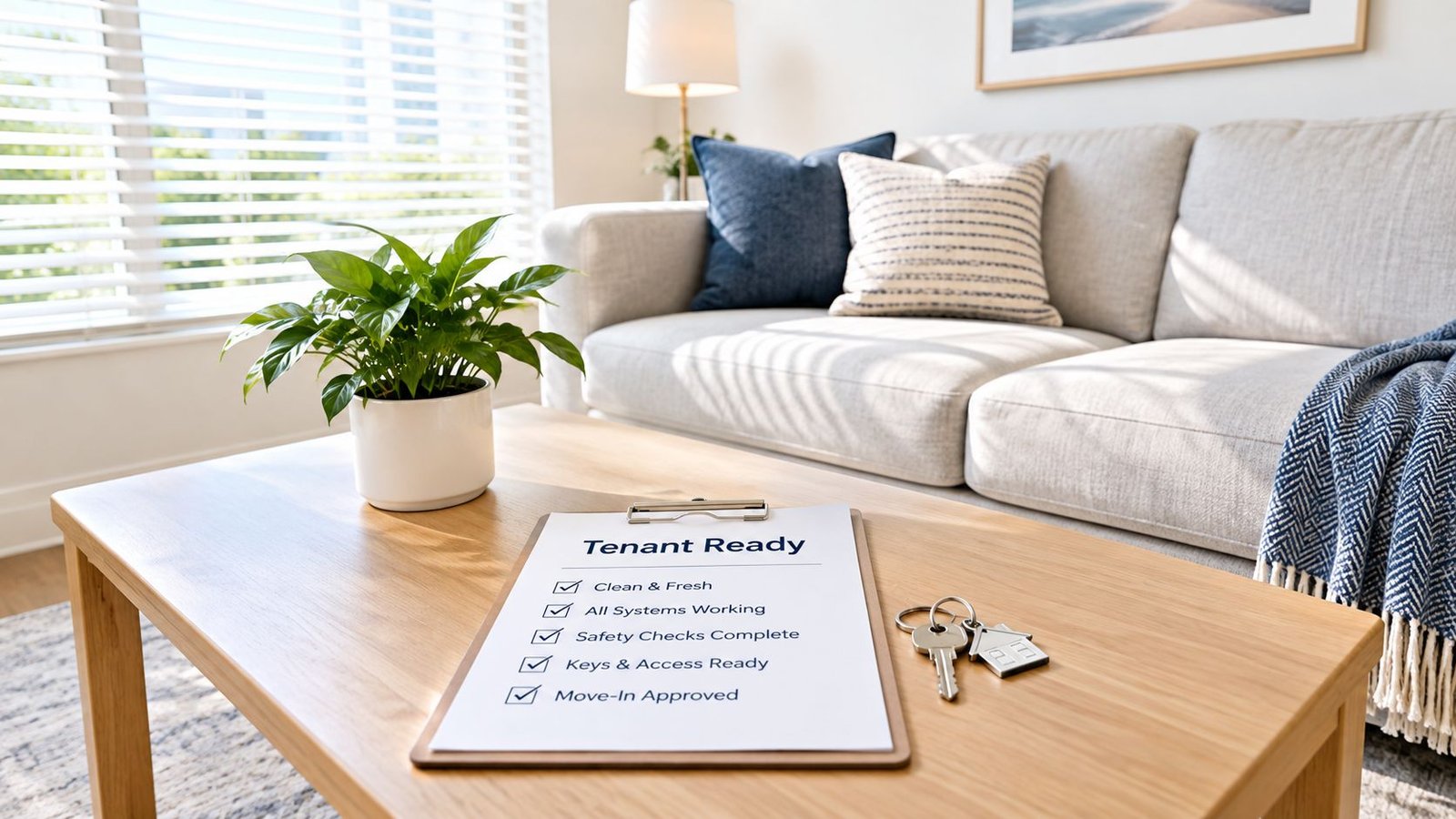
A condo checklist inspection becomes valuable when it operates as a repeatable management workflow. Before leasing, the manager prepares the unit, tests included equipment, confirms utilities, completes cleaning, checks condo requirements, and records the empty suite. At move-in, the manager and tenant review each room, identify pre-existing conditions, sign the report, and preserve photographs that show the starting point.
During the tenancy, routine inspections and maintenance visits should use the same room order and condition language. That consistency helps the manager identify changes without confusing normal wear with tenant damage. It also gives the owner a clearer record of recurring plumbing, appliance, ventilation, moisture, or access issues.
The workflow should include relevant common areas, but it must label them correctly. A damaged hallway, roof concern, parkade leak, elevator problem, exterior walkway defect, or building-envelope issue may affect the tenant and the rental asset while remaining controlled by the condo corporation. The manager should notify the corporation, record the communication, and avoid assigning responsibility based on assumption.
Alberta reserve-fund requirements make the building record especially important. Condominium corporations must arrange a qualified reserve fund study at least every five years, and the study assesses visible depreciating property, repair and replacement timing, current funds, and longer-term needs. Owners should compare inspection observations with the corporation's study, minutes, financial statements, insurance information, and project plans.
At move-out, the manager should return to the original report, use comparable photographs, identify changes, and assign each item a fair category. Tenant-caused damage, normal wear, landlord maintenance, insurance matters, and corporation-controlled work require different responses. A clear record supports better communication and reduces the risk that a tenant is blamed for a building issue or that an owner misses a recoverable repair.
Owners who live outside Calgary or Alberta need the workflow carried out locally, not emailed after a problem appears. Dreamhouse Realty Ltd. serves Calgary, Edmonton, Red Deer, and surrounding Alberta communities with rental management, tenant placement, lease administration, documented routine and move-out inspections, photo evidence, maintenance coordination, compliance oversight, and owner reporting. A free rental consultation and market analysis can also help owners evaluate pricing, demand, timelines, and the condition work required before leasing.
Contact GURIQBAL CHAHAL, MBA, PMP, REAL ESTATE BROKER, at 403-966-6072 for a free rental consultation, market analysis, or practical inspection support. A properly managed checklist gives owners more than a form. It gives them a defensible record, a clearer maintenance plan, and better oversight from acquisition through the next turnover.
Dreamhouse Realty Ltd. offers Alberta landlords structured condo property management, tenant placement, lease administration, routine and move-out inspections, photo-based condition reporting, and coordinated maintenance. Owners in Calgary, Edmonton, Red Deer, and surrounding communities can visit Dreamhouse Realty Ltd. to request a rental consultation and discuss inspection support.