
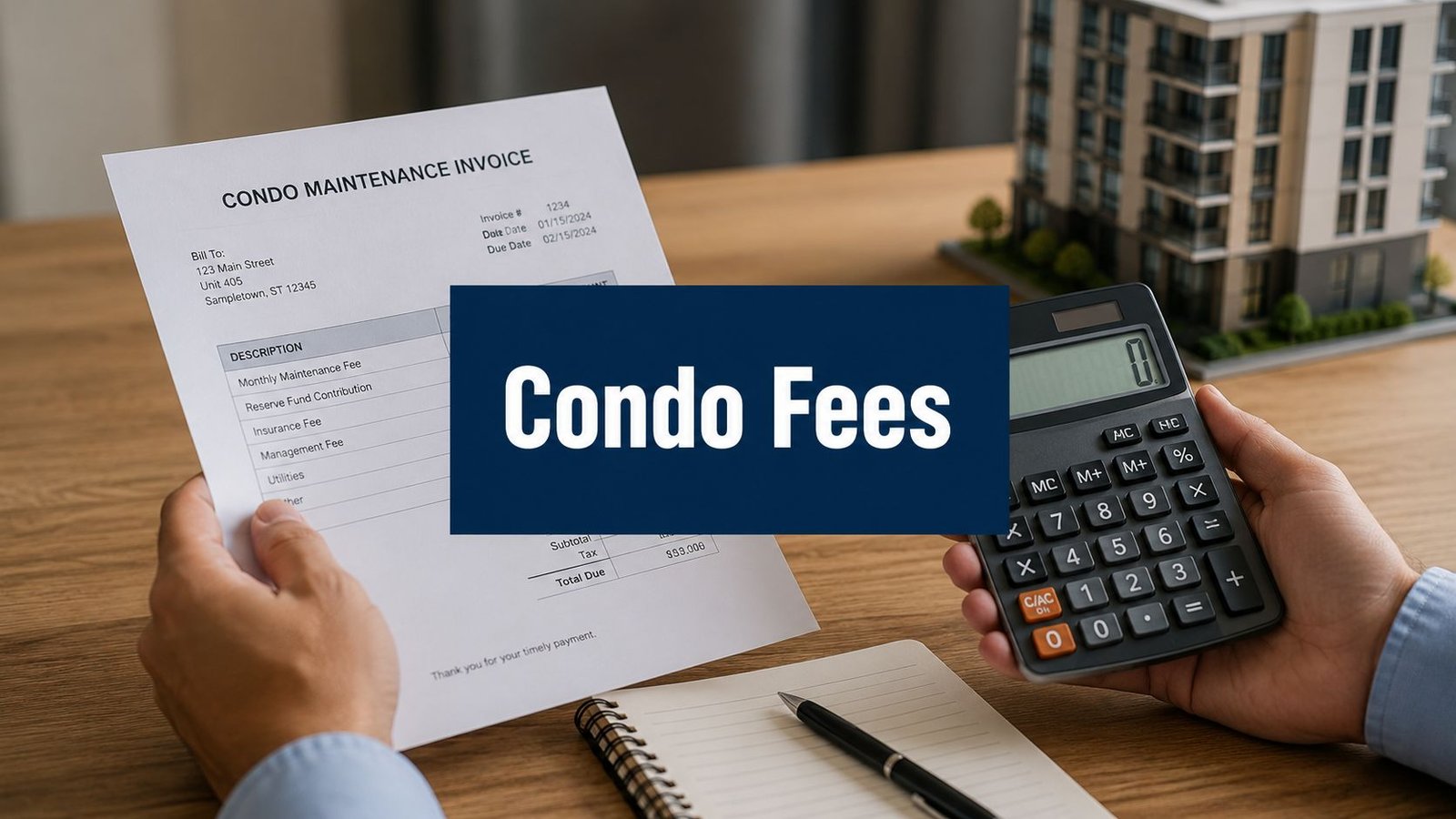
What looks like a manageable monthly cost can quietly destroy rental cash flow if you do not underwrite it properly.
A condo fee increase can wreck a rental deal faster than most Alberta landlords expect. One month the unit looks fine on paper. The next, a higher monthly statement quietly cuts into cash flow and turns a decent return into a thin one.
That is because condo maintenance fees are not just a bill for your unit. They are your share of the building's operating budget, reserve fund, and insurance costs. For a rental owner, that makes them less of a convenience expense and more of a direct threat to profit.
If the numbers on the statement feel abstract, they should not. The real question is simple, does the fee still leave enough room for rent, vacancy, tax, financing, and future repairs to produce acceptable net income? A landlord who treats the fee as a fixed underwriting expense will make better decisions than one who just hopes the board keeps increases small.
Table of Contents
Why Condo Maintenance Fees Matter to Alberta Landlords
A Calgary landlord looking at a condo statement should treat the fee as part of carrying the asset, plain and simple. Condo maintenance fees function as a shared claim on a building's full operating budget, and that makes them very different from a line item you can control unit by unit. The corporation still has to pay for insurance, utilities, repairs, and reserves whether the unit sits vacant or has a tenant in place.
Think like a cash-flow owner, not a homeowner
Rental numbers change fast once a condo fee enters the picture. A detached-house owner can choose when to replace a furnace or repaint a fence. A condo owner inherits a shared budget, shared decisions, and shared timing, so the monthly fee can climb even if the individual unit has not changed at all.
Calgary, Edmonton, and Red Deer buyers should underwrite condo ownership against the full monthly carrying cost, not the purchase price alone. One building can look cheap on the listing and then eat the difference through a heavier fee and a thin reserve fund. Another can look expensive up front and still support better cash flow over time because the corporation has funded repairs and reserves properly.
Practical rule: if the fee is being treated as a rounding error, the deal has already been underwritten badly.
The gap between buildings can be wide. Wahi's review of more than 1,500 condo buildings in the GTA found that the median monthly fee for a one-bedroom unit ranged from $533 to $1,039 in 2024, a spread large enough to change monthly affordability in a serious way. Alberta landlords should read fee differences the same way, because the size of the unit is only one part of the story. Wahi's GTA condo fees report
The test is simple. What does the fee do to net rent, and what does the building budget suggest is coming next?
What Condo Maintenance Fees Cover
A condo fee is the building's monthly operating budget in shared form. In Alberta, that bill is split across the corporation's budget and reserve-fund contributions, usually by unit factor or ownership percentage, not by a flat charge. Larger units, and units with parking or storage allocations, usually carry a bigger share.
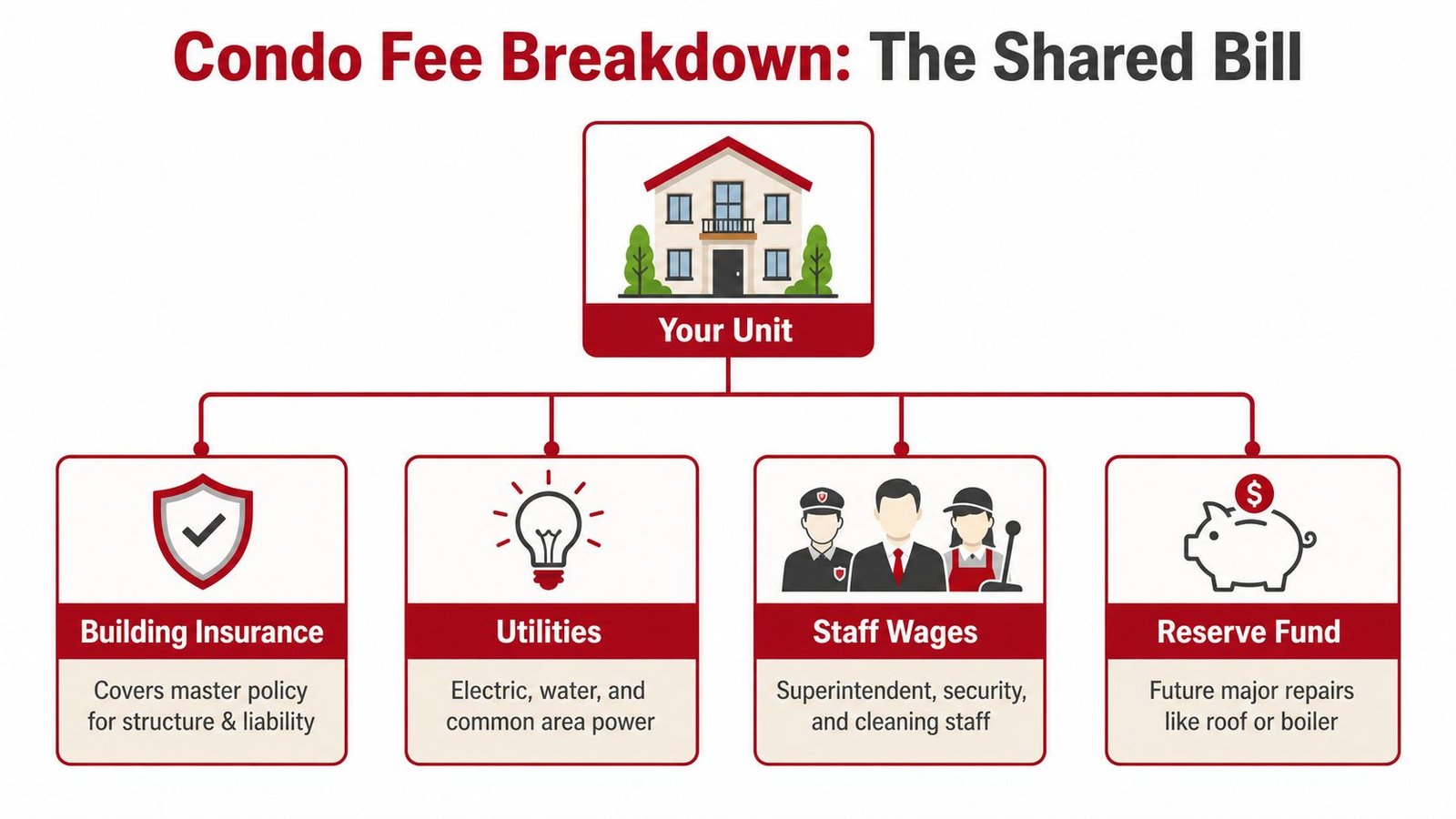
The monthly fee is really four bills bundled together
Read the budget in four buckets. Operations cover the day-to-day running of the building, insurance protects the structure and liability exposure, reserve contributions fund major future work, and amenities pay for the extras tenants use or expect. For an Alberta landlord, that split matters because it shows what part of the fee keeps the building functioning and what part supports the tenant experience.
| What Your Condo Fee Typically Pays For | ||
|---|---|---|
| Bucket | What It Covers | Why It Can Rise |
| Operations | Staff, management, common-area utilities, cleaning, snow removal, landscaping, small repairs | Labour, utility, and service costs move around |
| Insurance | Building structure and liability coverage | Insurance pricing can shift quickly with claims and replacement costs |
| Reserve Fund | Future major projects, such as roofing, elevators, boilers, or parking repairs | Older buildings need more planning and larger contributions |
| Amenities | Gym, lobby features, elevators, concierge-style services, shared equipment | More equipment and more users mean more upkeep |
That is why a unit with a polished lobby and more shared services can cost much more to carry than a basic walk-up. The fee is the building's operating model in monthly form, and it reaches far beyond narrow maintenance.
For owners underwriting a rental condo in Alberta, the sharpest question is how much of that monthly bill is tied to rental cash flow. A fee that looks manageable on paper can still erase margin if the building is heavy on amenities, underfunded in reserves, or expensive to insure. For a useful Alberta market context on rental returns, see this comparison of Calgary, Edmonton, and Red Deer rental performance.
CMHC's historical report shows how meaningful this expense has become over time. The share of households in owner-occupied dwellings that paid condominium fees rose from 7.5% in 1996 to 12.7% in 2011, and households living in condominium tenure paid an average of $302 per month in 2011. The same report notes that the highest fees were paid in high-rise apartment buildings. CMHC condominium fees report
How Condo Fees Compare Across Major Canadian Cities
Alberta landlords should compare condo fees against market benchmarks, not gut feel. A North American condo-fee survey put average monthly condo maintenance fees at $416 in Calgary, $480 in Vancouver, and $520 in Toronto. That makes Calgary look more affordable on paper, but averages hide the risk. A building with weak reserves, heavy amenities, or expensive insurance can blow past the city average fast. Average condo fee survey
A better comparison starts with the unit itself. Divide the monthly fee by the square footage, then compare that cost against other buildings you would buy. That tells you whether you are paying for solid upkeep and decent services, or subsidizing a bloated operating budget.
The same condo type can carry very different fees inside one city. Wahi's GTA analysis found a one-bedroom median fee spread from $533 to $1,039 across more than 1,500 condo buildings, with 33 Harbour Square and The Shangri-La (180 University Ave.) the only addresses reaching the top end of $1,039. That spread is not noise, it is a reminder that age, location, and amenity load can push carrying costs well beyond the middle of the market.
For Alberta investors, the question is whether the fee supports rental cash flow. A Calgary unit with higher monthly charges can still make sense if the building is well run and the rent covers the spread, but a cheap fee in a badly managed tower is a trap. Compare the building's fee structure with the rental return picture in the city, using Calgary, Edmonton, and Red Deer rental return comparisons as a reality check before you buy.
A strong board package should explain why the fee sits above or below the local norm. If the number looks out of line and the documents do not give a clear reason, assume the building is carrying either deferred maintenance or weak reserve planning. That is not a cosmetic issue. It shows up in your monthly cash flow, and eventually in your resale value.
When Low Fees Are Actually a Warning Sign
Low condo maintenance fees look attractive until the building starts sending surprise bills. In Alberta, a cheap monthly fee often means the corporation has been postponing real costs, which shows up later as a larger increase, a special assessment, or a reserve fund that never had enough in it to begin with.
Underfunded reserves usually become an owner problem
A reserve fund exists for major repairs and replacement work. When it is thin, owners do not save money, they delay paying it. That delay is dangerous because the bill still arrives, only now it lands as a catch-up increase or a lump-sum assessment when the building has fewer options and more urgency.
Consumer-facing guidance from the Condo Authority Ontario flags a history of special assessments and an underfunded reserve account as warning signs. Toronto-based commentary also notes that newer condos can see fee increases of 20% to 30% in the first few years, which is exactly the kind of early-life catch-up that punishes buyers who fell in love with a low initial fee. Condo Authority Ontario fees and finances
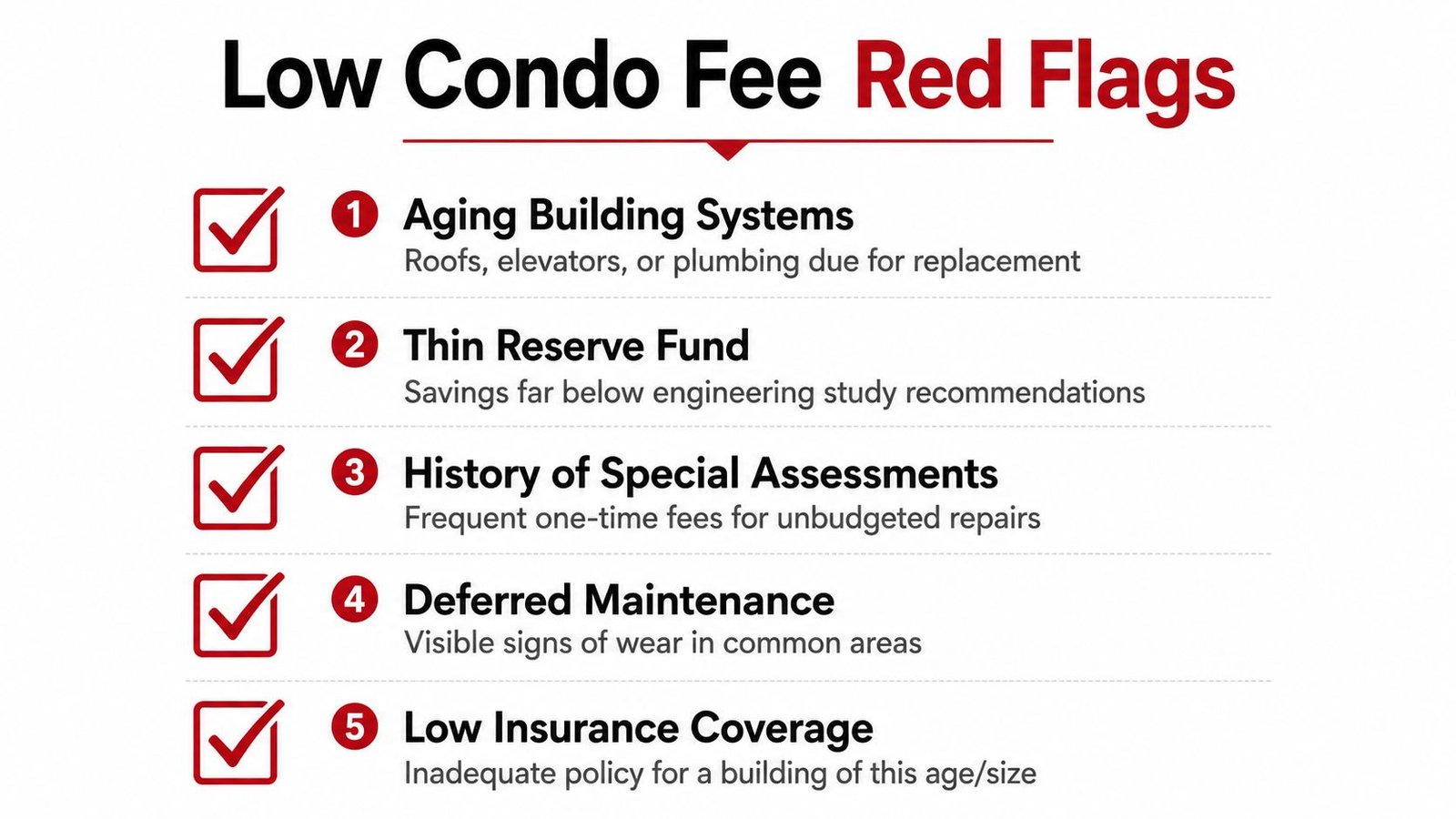
Read the documents for what they leave out
The useful documents are not the glossy brochures. They are the budget, reserve-fund study, meeting minutes, and any history of special assessments. If the building has deferred maintenance, worn common areas, or thin insurance coverage for its age and size, the low fee is not a win, it is a warning that the corporation is underpricing the asset.
A landlord should treat the following as red flags:
Aging building systems, because roofs, elevators, and plumbing do not get cheaper to replace.
Thin reserve funding, because low balances push the board toward abrupt fee hikes.
Special assessment history, because one-time charges often repeat when planning is weak.
Visible deferred maintenance, because the common areas usually reveal what the budget is hiding.
Weak insurance coverage, because underinsurance can become a catastrophic gap in an older building.
The practical move is straightforward. Low fees only count as a bargain after the reserve study, budget history, and assessment record say the building can support them.
What Drives Condo Fee Increases Year Over Year
Fee increases are not a board mood problem. They happen because the building's costs change, and the board has to choose between charging owners more now or letting a bigger bill show up later. For Alberta landlords, that matters because every fee change cuts straight into rental cash flow. The right way to read it is simple, underwrite the unit against the rent, then decide whether the fee still leaves enough room for profit.
The budget lines that usually move first
Insurance is usually the first line to move. Building policies can shift quickly, especially in older properties, larger complexes, or buildings with a claims history. Utilities also move, because common-area electricity, water, and heat do not stay flat just because owners want them to.
Labour comes next. A building with a superintendent, cleaners, security, or front-desk support carries recurring staffing costs, and those services are not cheap to replace. If the board underestimates those costs, the budget eventually has to be corrected through higher fees.
A board can postpone maintenance. It cannot stop ageing.
Aging systems are the other pressure point. Elevators, boilers, roofs, parkades, and plumbing lines wear out on their own schedule. When the board has to carry more of those repairs through the operating budget or the reserve fund, the monthly fee follows. That is where remote owners get hurt first, because the building's real condition shows up in the numbers before it shows up in the rent.
The same pattern shows up in building type. CMHC condominium fees report noted that the highest condominium fees were associated with high-rise apartment buildings. That fits the Alberta market. Taller buildings usually carry more shared systems, more equipment, and more services, so there is more cost to absorb and more room for the fee to climb.
The last pressure point is reserve funding. As a building matures, the corporation usually has to contribute more, not less, if it wants to avoid a special assessment. That is why a fee that looks fine in year one can become a lot less attractive by year five. A landlord should read that as a cash-flow warning, not a housekeeping detail.
Budgeting for Condo Fees as a Rental Property Owner
A rental owner should treat condo maintenance fees as a necessary operating expense, the same way rent collection, insurance, and taxes sit in the cash-flow model. If the rent can't comfortably absorb the fee, the deal is too thin. Hope is not a budget line.
Build the fee into the rent test, not the other way around
The practical move is to stress-test the unit against a fee increase before purchase. A landlord who can survive a higher monthly assessment is buying a more durable asset than one who needs the board to stay perfectly calm. The simplest habit is to underwrite on the higher end of the likely range, then compare that with the current rent and the next lease renewal.
A property owner also needs a separate cash buffer. That buffer should cover the gap between income and obligations when a tenant leaves, the board raises fees, or a special assessment lands at the wrong time. A condo with tight margins can still work, but only if the owner has cash discipline.
The same discipline matters when choosing management support. Remote owners who cannot track budgets, minutes, and repairs closely need a manager who can read the warning signs early. How to choose a property manager in Calgary
A simple fee shock test
If a condo fee rises by $50 per month, the annual carrying cost increases by $600. That is a small number on paper and a real dent in net income once vacancy, repairs, and financing are already included. A landlord who ignores that compounding effect is not protecting yield.
Use this checklist:
Treat the fee as fixed, because the building charges it whether the unit is occupied or not.
Stress-test rent against a higher fee, because renewals do not always arrive with more income.
Set aside a fee buffer, because special assessments rarely wait for a convenient month.
Review the budget and reserve study each year, because old assumptions are where surprises begin.
The best rental owners do not ask whether the current fee is tolerable. They ask whether the building can absorb the next increase without breaking the deal.
How Fees Affect Your Rental Investment Returns
A Calgary investor comparing two similar condo purchases needs to read the fees through a rental cash-flow lens. One building may charge more each month but keep its reserve fund in better shape. The other may look cheaper on paper and still leave the owner exposed to weak budgeting, fee jumps, or a special assessment later. The better rental often is the one with the cleaner financial story, not the one with the lowest sticker price.
The fee changes the return before the mortgage does
Rental returns depend on several expense categories beyond the financing payment. Condo fees sit beside vacancy, property tax, insurance, and routine upkeep, so they can wipe out the margin a buyer thought was available. Two units with the same purchase price can produce very different results if one carries a materially heavier monthly assessment.
Alberta investors should compare the fee against the unit's share of the building and the rent it can command. Fee per square foot helps, but only as a starting point. A larger unit can properly carry a bigger share under the condo corporation's allocation rules, yet that still has to hold up against market rent in Calgary, Edmonton, or wherever the unit sits. If the fee eats too much of gross income, the deal is weak for the landlord, even if the listing looks clean.
The mistake is assuming a lower purchase price makes up for a building with shaky finances. It usually does not. A modestly cheaper condo with unstable fees can produce worse rental returns than a better-run building with a fee that is easier to justify.
Use a full owner-cost view before you buy. If you want a clear breakdown of the cash drains that hide inside rental operations, review what your rental property really costs to self-manage.
Decide between condo, townhouse, and detached based on control
A condo suits investors who want less exterior maintenance and are willing to pay for shared systems. A townhouse often gives a middle ground. A detached home gives the owner more control and more responsibility, which can be the better move when condo fee pressure leaves no useful spread in the numbers.
The right property is the one that still leaves room after vacancy, property tax, insurance, repairs, and fee increases. If condo fees leave no cushion for real-life costs, the investment is fragile. In Alberta, that means the building may still work for an owner with strong cash reserves, but it is a poor fit for someone underwriting purely on optimistic rent.
Smart Questions to Ask Before Buying a Rental Condo
Good condo due diligence is boring, and that is exactly why it works. Calgary, Edmonton, and Red Deer investors should ask the same questions every time, because the building either has a defensible financial story or it doesn't.
The documents that matter most
Review the last three years of budgets and look for recurring misses. Check the reserve fund study and see whether the current contributions line up with the building's age and components. Ask directly about any planned special assessments, because surprise charges are usually only a surprise to buyers who didn't ask.
Then confirm the unit factor. If the fee seems high or low for the unit size, the allocation may explain it. After that, compare the fee on a per-square-foot basis against local alternatives, then ask whether the amenity load fits the likely tenant.
The best question to ask is not “Is this fee low?” It is “Does this building have the money and structure to stay liveable without raiding future owners?” If the answer is unclear, keep walking.
A short buyer checklist helps keep the process disciplined:
Budget history: Look for fee changes, not just the current number.
Reserve study: Confirm the building is funding major repairs properly.
Special assessments: Ask what has happened before, because history usually repeats.
Unit factor: Verify that the allocation matches the unit's real share.
Amenity fit: Pay for what your tenant will use, not what looks impressive in a brochure.
Remote owners should be especially cautious. If board meetings, reserve documents, and maintenance updates are too hard to track from another province, professional management starts paying for itself in missed problems avoided, not just tasks completed. A licensed Alberta property manager can keep the fee story tied to the rental story instead of letting it drift into a surprise.
Want a second set of eyes on a condo before you buy, or help protecting cash flow after you own it? Contact GURIQBAL CHAHAL, MBA, PMP, Real Estate Broker at 403-966-6072 or talk to Dreamhouse Realty Ltd Team. about condo rental oversight, budgeting support, and property management across Calgary, Edmonton, and Red Deer.
Dreamhouse Realty Ltd. helps Alberta owners keep condo ownership tied to cash flow, compliance, and tenant stability, not guesswork. If a rental condo needs better oversight, sharper budgeting, or a manager who reads the fee risk before it hits your return, contact Dreamhouse Realty at 403-966-6072 or visit Dreamhouse Realty Ltd. to see how their Calgary, Edmonton, and Red Deer team supports landlords like you.