
A Calgary landlord can sign what appears to be a straightforward rental agreement, wait for the tenant's move-out message, and then discover the notice doesn't end the tenancy on the expected date. The problem often isn't the tenant's intention. It's the tenancy structure written into the agreement, the start of the tenancy month, and whether the notice was served on time.
That distinction affects vacancy planning, rent changes, renewal decisions, and the amount of administrative attention a property needs. In Alberta, “renting” and “leasing” are often used casually, but a fixed-term tenancy and a periodic tenancy create different operational obligations under the Residential Tenancies Act.
Table of Contents
- Why the Renting Versus Leasing Distinction Matters for Alberta Landlords
- How Alberta Law Defines Fixed-Term and Periodic Tenancies
- Comparing Notice Periods and Rent Increase Rules
- How Calgary Market Conditions Shift the Leasing Decision
- Drafting Agreements and Avoiding Implied Tenancy Traps
- Choosing the Right Tenancy Structure for Your Property
- Professional Property Management Support for Alberta Landlords
Why the Renting Versus Leasing Distinction Matters for Alberta Landlords
A Calgary owner who manages one home personally may treat “lease” and “rental agreement” as interchangeable words. That approach can become expensive when a periodic tenancy is involved. Alberta government guidance explains that a fixed-term tenancy ends on the date written in the agreement without notice, while a monthly tenancy requires the tenant to give one month of notice and the landlord to give three months of notice. Alberta's tenancy-start guidance also explains that a tenancy month doesn't have to match the calendar month.
Consider a tenancy that runs from the 15th to the 14th. A landlord who assumes the tenancy follows calendar months may calculate a move-out date incorrectly. A tenant's notice can then fail to end the tenancy when either party expected, leaving the owner with a later vacancy, delayed marketing, and a cash-flow forecast that no longer matches reality.
Practical rule: The agreement's tenancy type and tenancy-month cycle should be recorded before anyone calculates a notice deadline.
The legal label also shapes the landlord's ability to plan. A fixed-term arrangement gives the owner a known contractual end date. A periodic arrangement continues until proper written notice is given, so the manager must track notice receipt, effective dates, lease history, and the applicable tenancy cycle.
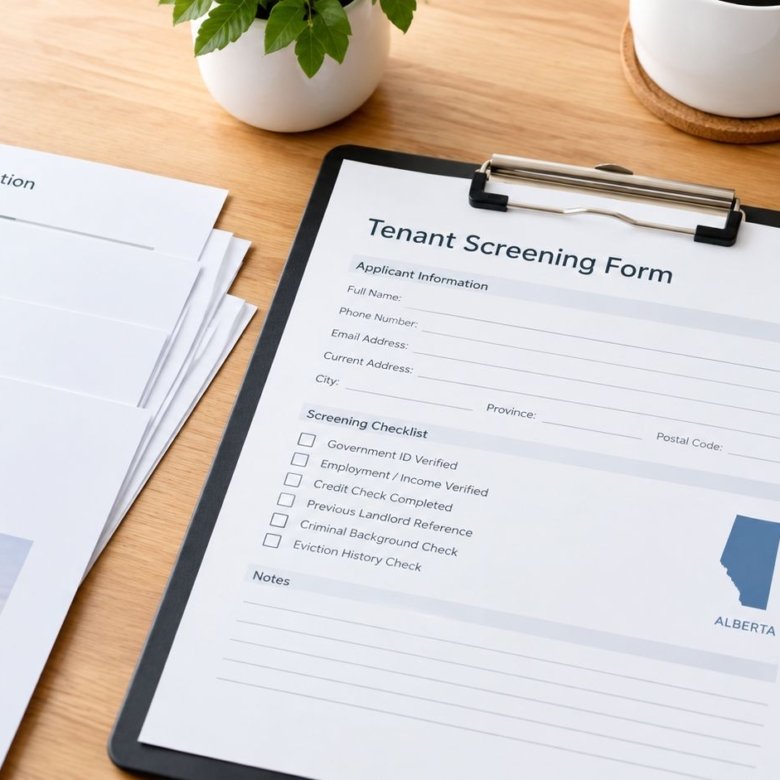
Tenant selection remains part of the risk calculation. Before choosing a structure, landlords should use a documented screening process that verifies the applicant's identity, income, references, and rental history. A resource such as Burnt tenant screening for landlords can help owners assess applicants before the agreement is signed, but screening won't correct an unclear term or an incorrectly calculated notice date.
The core issue is operational, not semantic. The difference renting and leasing creates affects when a unit can be recovered, when rent can change, and how much vacancy exposure an owner carries. A contract that uses familiar words but fails to identify the legal tenancy type leaves the management process open to avoidable disputes.
How Alberta Law Defines Fixed-Term and Periodic Tenancies
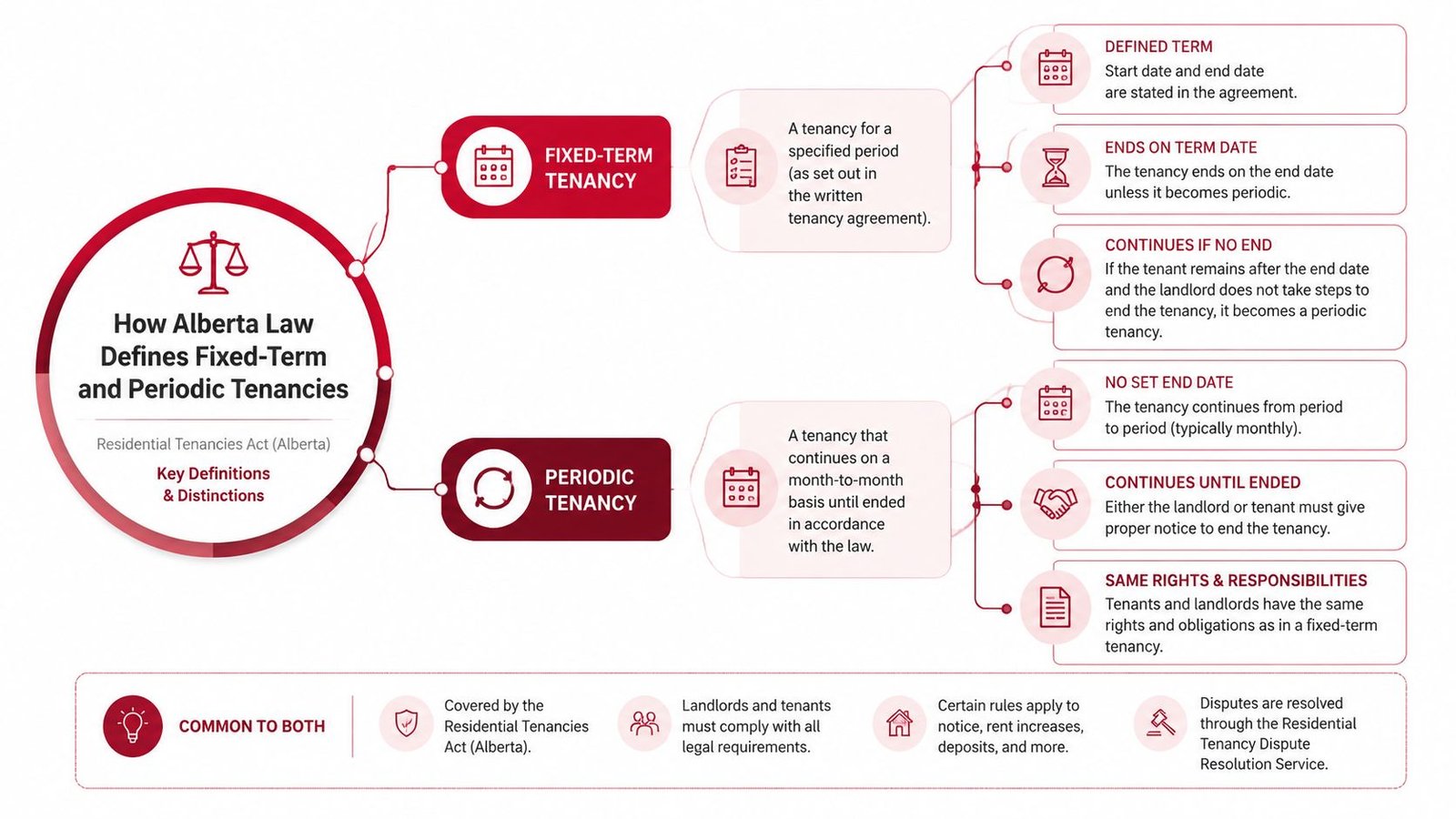
Alberta law separates residential tenancies by how they end. A fixed-term tenancy has a defined beginning and a defined end date. The tenancy ends on the exact date written in the agreement, and neither party needs to provide notice to bring that fixed term to its stated conclusion. Alberta's starting-a-tenancy guidance sets out that distinction directly.
A periodic tenancy has no fixed end date in the same sense. It continues from one tenancy period to the next until one party gives proper written notice under the Residential Tenancies Act. Month-to-month is the common example, but Alberta also recognises other periodic cycles.
The simplest comparison is a hotel booking versus an auto-renewing subscription. A fixed term resembles a booking with a stated departure date. A periodic tenancy resembles a subscription that continues until cancellation complies with the applicable rules. The analogy isn't a substitute for the agreement, but it helps explain why a landlord can't manage both structures with the same calendar reminders.
The written agreement must remove ambiguity
Alberta doesn't require landlords to use a standard residential lease form. That flexibility is useful, but it puts more responsibility on the owner to draft a complete document. Alberta-focused tenancy guidance from liv.rent's explanation of Alberta lease agreement rules identifies key terms that should appear in writing, including:
- Tenancy type: State clearly whether the agreement is fixed-term or periodic.
- Dates and payment terms: Identify the start date, end date when applicable, rent amount, and due date.
- Property costs: Set out utility responsibilities and deposit terms.
- Property rules: Document provisions concerning pets, smoking, occupants, and other agreed conditions.
The Residential Tenancies Act applies to most residential rental housing and establishes the framework for landlord and tenant rights and responsibilities, according to Alberta's rights and responsibilities guidance. Some living arrangements fall outside the Act, including certain situations where an occupant shares the landlord's living quarters as though part of the family.
For a Calgary property owner, the agreement therefore does more than confirm rent. It identifies the tenancy structure that drives notice handling, renewal administration, rent-change records, and termination planning.
Comparing Notice Periods and Rent Increase Rules
The practical difference renting and leasing becomes clearest when a landlord has to forecast a vacancy or plan a rent change. A fixed-term lease and a month-to-month tenancy don't operate on the same termination timetable, even though both are regulated under Alberta's Residential Tenancies Act.
| Feature | Fixed-Term Lease | Periodic Tenancy (Month-to-Month) |
|---|---|---|
| End of tenancy | Ends on the date written in the agreement | Continues until proper written notice is given |
| Notice to end at term | No notice is required from either side | Tenant gives one month of notice, landlord gives three months of notice |
| Rent increase during term | Not permitted during the fixed term | Permitted only after the statutory timing requirement is met and proper notice is served |
| Rent-increase timing | At least 365 days since the tenancy began or the last increase, whichever is later | At least 365 days since the tenancy began or the last increase, whichever is later |
| Forecasting | Known contractual end date | Notice-based and dependent on the tenancy month |
Alberta's ending-a-tenancy guidance explains that a monthly tenant must give one full tenancy month of notice, while a landlord must give three full tenancy months. A tenancy month can differ from the calendar month, so the manager must work from the actual cycle stated or established for the tenancy.
A late notice can move the vacancy
Alberta provides a useful example. If a tenant gives notice on June 2 for a monthly tenancy intended to end on June 30, the notice is late for that ending date. The tenancy instead ends on July 31, creating a 31-day timing effect under the government example.
That shift can affect advertising, cleaning, inspections, contractor scheduling, and the date a new tenant can take possession. Owners who rely on a spreadsheet containing only calendar-month assumptions can easily forecast the wrong turnover date.
For fixed-term tenancies, the contractual end date provides more certainty, but rent increases still require careful tracking. Under Alberta's during-a-tenancy rules, rent can't increase during the fixed term and can't increase until at least 365 days have passed since the later of the tenancy start date or the last increase. Alberta has no statutory rent cap, but the timing restriction still applies.
Periodic rent increases also require written service on each tenant. The notice must include the effective date, the landlord's signature, and the date signed, as described in Alberta's legal requirements for rent notices. A landlord dealing with notices, increases, or a disputed move-out can also review legal requirements for rent notices as a practical drafting reference.
For owners who want an Alberta-focused overview of landlord obligations, the Alberta landlord and tenancy resource can support the broader compliance review. The document itself should remain the controlling record.
How Calgary Market Conditions Shift the Leasing Decision
A fixed term can look attractive when the main concern is rent certainty. In Calgary's changing rental environment, the more important benefit may be turnover control. Recent CMHC-based market reporting places vacancy at 3.3% in Calgary and 3.4% in Edmonton, according to Alberta rental market reporting from WealthNorth.
The same reporting says Calgary asking rents in June 2026 were down 1% month-over-month and 4% year-over-year. Those figures should be treated as market indicators, not a guarantee for any individual property. A well-located condominium, a suburban townhome, and a detached home can experience different demand, pricing pressure, and tenant response.
Why a fixed term can protect more than price
In a looser market, a vacancy can last longer and a landlord may need to adjust marketing or pricing to secure a suitable replacement tenant. A fixed-term agreement doesn't eliminate vacancy risk at expiry, but it provides a known date for re-marketing and can reduce the uncertainty associated with a tenant leaving on a periodic schedule.
That certainty helps an owner organise:
- Marketing preparation: Photos, copy, showings, and advertising can be scheduled around a known possession date.
- Maintenance planning: Contractors can be booked for the interval between tenancies.
- Financial forecasting: The owner can model the expected end of the current occupancy rather than waiting for periodic notice.
- Renewal conversations: The manager can approach the tenant before expiry instead of reacting after notice arrives.
Flexibility still has a place
A periodic tenancy can suit an owner who expects to sell, occupy, renovate, or reposition the property, provided the owner understands the applicable notice obligations. It can also suit tenants whose plans are uncertain, which may help a landlord attract applicants who won't commit to a longer fixed term.
The trade-off is that flexibility can weaken vacancy forecasting. In a balanced or tenant-favourable market, a landlord shouldn't assume a month-to-month structure automatically creates pricing power. The owner must weigh possible rent flexibility against the risk of a tenant leaving at a less convenient time and the cost of finding a replacement.
The right structure depends on the property's expected hold period, local demand, and the owner's tolerance for turnover uncertainty.
Drafting Agreements and Avoiding Implied Tenancy Traps
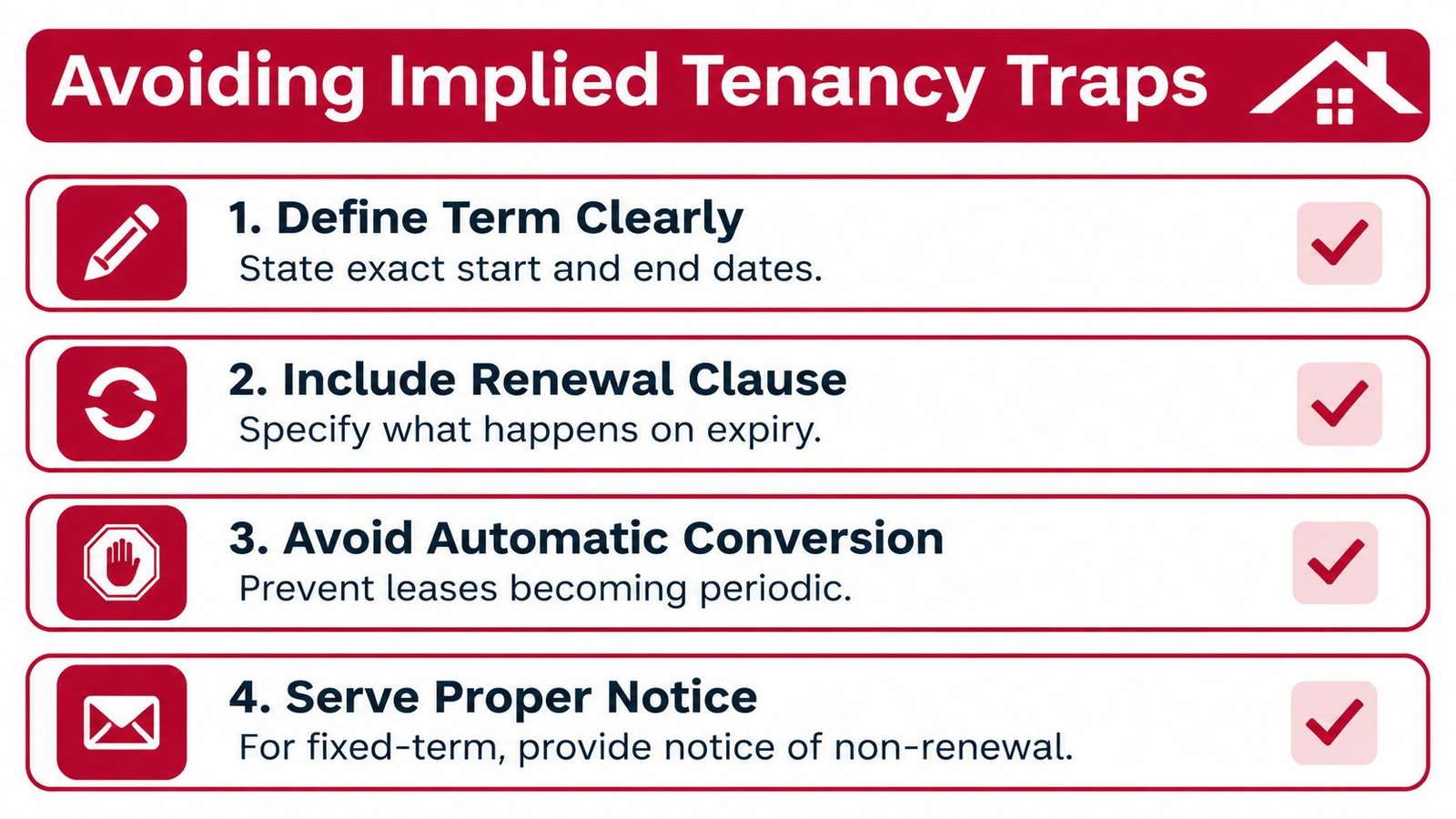
A well-drafted agreement should make the tenancy type obvious to a reader who has never met the landlord, tenant, or property manager. Alberta's flexible form requirements allow owners to prepare their own documents, but that doesn't make missing terms harmless.
At minimum, the written agreement should identify the fixed or periodic structure, the rent amount, the due date, the applicable utilities, deposit terms, and rules about matters such as pets and smoking. It should also record the exact start date and, for a fixed term, the exact end date.
The expiry date requires an action plan
One of the most important traps occurs after a fixed term expires. If the tenant stays in the unit and the landlord accepts rent, Alberta guidance says the tenancy can continue as an implied periodic tenancy. The new cycle depends on the original term. If the fixed term was less than a month, the implied periodic tenancy becomes weekly. If the fixed term was more than a month, it becomes monthly, according to Alberta's residential tenancy agreement guidance.
That outcome can surprise owners who believe the original fixed term continues automatically. Once the arrangement becomes periodic, future termination and rent-change administration follows the applicable periodic rules rather than the expired fixed-term date.
A manager should create a renewal or move-out workflow before the end date arrives:
- Review the agreement: Confirm the end date, rent history, occupants, and special terms.
- Contact the tenant: Discuss renewal intentions early enough to document the next arrangement.
- Prepare the next document: Use a new fixed-term agreement or clearly establish the periodic tenancy.
- Record communications: Keep signed documents, notices, delivery records, and payment history together.
- Escalate uncertainty: Obtain legal advice when the parties disagree about renewal, possession, or notice.
Landlords can use a rental lease agreement example as a drafting reference, but a template shouldn't replace Alberta-specific review. The agreement must reflect the actual arrangement, including who is legally bound and who is merely occupying the property.
Document the decision before accepting post-expiry rent. Payment can become evidence of a continuing periodic relationship, even when the owner intended the fixed term to end.
Choosing the Right Tenancy Structure for Your Property
There isn't one correct answer for every Alberta rental. The decision should follow the owner's operating plan, not a general belief that leases are safer or month-to-month arrangements are more profitable.
A single-family home with a tenant who wants stability may fit a fixed-term structure. The known end date can support maintenance planning and reduce the chance that the owner has to respond to an unexpected move-out. A condominium near employment, transit, or post-secondary demand may require a closer review of tenant mobility and local competition before the owner commits to a longer term.
Match the contract to the owner's timeline
The owner's intended hold period matters. If the property may be sold, occupied, or substantially renovated, a periodic structure may offer more flexibility, but only if the owner can manage the notice requirements and timing risk. If the property is intended to produce steady rental income, a fixed term may provide better occupancy planning.
Tenant profile matters too. A tenant with uncertain relocation plans may value periodic flexibility. A tenant who wants predictable housing may prefer a fixed term. Neither preference removes the need for screening, accurate documentation, or compliance tracking.
The named parties require particular care in roommate, family, and sublet situations. Alberta guidance recognises that a landlord may be the owner, property manager, or another authorised person, while some living arrangements fall outside the Residential Tenancies Act. The key question is who signed the agreement, who is authorised to occupy the unit, and whether an additional occupant has a direct contractual relationship with the landlord.
A practical decision filter
- Choose a fixed term when: Occupancy stability and a planned expiry date matter more than short-notice flexibility.
- Consider periodic tenancy when: The owner needs adaptability and can maintain a reliable notice calendar.
- Pause before signing when: The expected occupant, sublet arrangement, or family-living situation isn't clearly documented.
- Use professional oversight when: The owner manages several units, lives outside Alberta, or can't reliably monitor dates and written notices.

A contract structure should make the owner's intended outcome easier to administer. If it creates uncertainty about expiry, occupants, or notice delivery, the apparent flexibility may cost more than it saves.
Professional Property Management Support for Alberta Landlords
Tenancy type decisions become manageable when the owner treats them as part of a documented operating system. The manager needs to know the tenancy cycle, review rent-increase eligibility, record every notice, confirm delivery, and plan renewal or re-leasing activity before the relevant date.
For owners in Calgary, Edmonton, Red Deer, and surrounding communities, Dreamhouse Realty Ltd. provides lease drafting, tenant placement, rent collection, inspections, maintenance coordination, notice oversight, and owner reporting for residential properties. Its residential property management services in Calgary are structured around local operations and Alberta tenancy administration.
The support can extend beyond lease paperwork. Owners who need dependable property management tenant and owner support can use dedicated communication processes to keep inquiries, tenant issues, and owner updates from falling through the cracks.
The essential lessons are straightforward:
- Tenancy type controls the workflow: Fixed-term and periodic arrangements have different termination mechanics.
- Notice timing affects cash flow: A late notice can move the actual ending date beyond the owner's intended date.
- Rent increases require date tracking: The 365-day restriction applies regardless of the label used for the arrangement.
- Expiry needs follow-through: Accepting rent after a fixed term can create an implied periodic tenancy.
- Market conditions change the trade-off: Calgary owners should weigh flexibility against turnover and re-leasing exposure.
Dreamhouse Realty Ltd. offers lease drafting, tenant placement, inspections, rent collection, and Residential Tenancies Act compliance support for Calgary and other Alberta rental properties. Contact GURIQBAL CHAHAL, MBA, PMP, REAL ESTATE BROKER, Phone 403-966-6072 for a free rental consultation and market analysis, or visit Dreamhouse Realty Ltd. to discuss the right tenancy structure for the property.