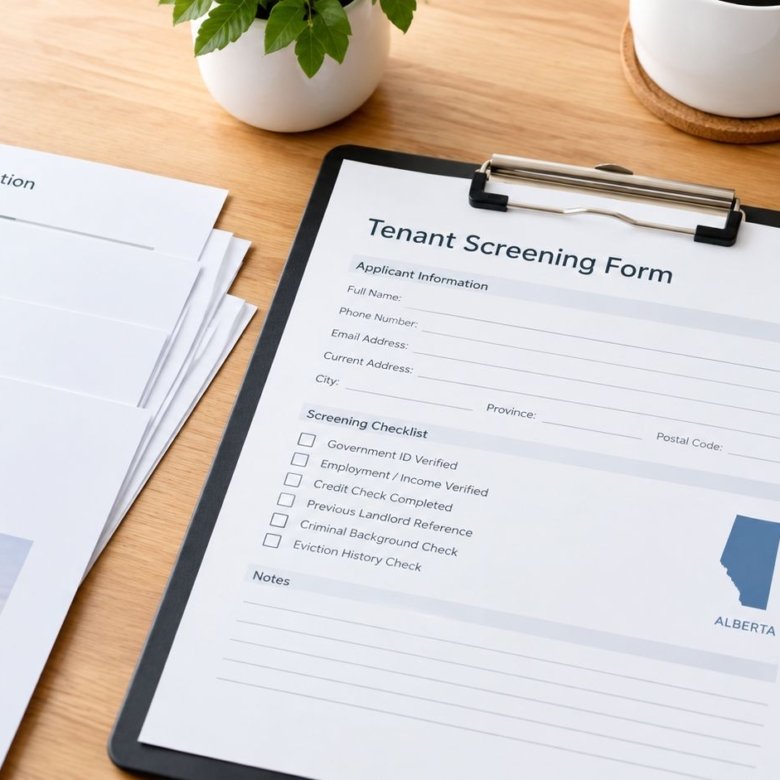

A condo landlord in Calgary can receive two urgent messages within minutes. The condo corporation may send a bylaw violation notice because a tenant used the wrong waste bin, while the tenant reports water coming through the ceiling and expects immediate help. Both issues matter, but they may fall under different rules, responsibilities, documents, and decision-makers.
That split is the central reality of condo property management services in Alberta. A rental condo isn't managed like a detached home because the owner must satisfy the tenant under Alberta's Residential Tenancies Act while also respecting the condominium corporation's bylaws, procedures, insurance structure, and financial obligations under the Condominium Property Act. The right manager provides more than rent collection. The manager coordinates the owner, tenant, board, corporation's manager, contractors, insurers, and regulatory records before a small issue becomes an expensive dispute.
Table of Contents
- The Unique Challenge of Managing Condo Rentals
- How Condo Management Differs from Single-Family Homes
- Alberta Regulatory Framework for Condo Property Managers
- Core Services Included in Condo Property Management
- Understanding Condo Fees and Reserve Fund Obligations
- Evaluating Condo Property Management Companies in Alberta
- Next Steps for Condo Landlords in Calgary and Edmonton
The Unique Challenge of Managing Condo Rentals
A tenant's leaking ceiling doesn't automatically tell the landlord who pays for the repair. The source could sit inside the unit, in a common element, or in a shared building system. The condo corporation may need to investigate the building envelope or a common plumbing line, while the unit owner may still need to arrange interior access, drying, restoration, or tenant communication.
At the same time, the tenant remains the landlord's responsibility under the tenancy agreement. Alberta's official tenancy framework covers landlords, tenants, and agents, which means a manager's records, notices, communications, and timing need to support an organised compliance process rather than an informal exchange of texts. The Alberta landlord and tenancy resource can help owners understand why statutory documentation matters, but a manager still needs to apply the rules to the specific tenancy and building.

One unit, two operating relationships
The tenant expects a safe, functional home and a clear response to maintenance requests. The condominium corporation expects compliance with move-in procedures, parking rules, pet restrictions, waste policies, renovation controls, and other bylaws. A landlord cannot tell the tenant that a board rule is someone else's problem. If the tenant's conduct creates a violation, the owner may receive the notice, incur costs, and need to correct the behaviour.
A satellite dish, an unapproved flooring change, repeated noise complaints, or misuse of a visitor stall can place the owner between competing expectations. The manager must document what happened, identify the applicable rule, communicate without escalating the dispute, and determine whether the tenancy agreement or Alberta law supports further action.
Practical rule: A condo manager should never treat a board notice and a tenant complaint as separate files when both relate to the same unit, building system, or incident.
Professional support also extends to building-related services that affect tenant experience and owner reputation. For example, an owner reviewing common-area upkeep may browse our condominium service to understand how a specialised vendor approaches condominium work, while the property manager coordinates access and confirms the correct party's responsibility.
The value of a specialised manager lies in the buffer. The owner gets a documented decision process, the tenant gets a consistent contact, and the corporation gets a responsive unit owner who understands that condo living creates obligations beyond the lease.
How Condo Management Differs from Single-Family Homes
A detached rental generally gives the owner direct control over the property. A condo unit sits inside a governed community, so management starts with identifying which decision belongs to the owner and which belongs to the corporation.
The first distinction is the board relationship. A condo manager may need to respond to violation notices, obtain building records, coordinate with the corporation's manager, follow move-in booking requirements, and explain a tenant's conduct to the owner. A single-family manager usually deals directly with the tenant, trades, utilities, and municipal requirements without a condominium board acting as another operational party.
Responsibility changes at the building boundary
Maintenance creates the most common confusion. Unit interiors, appliances supplied by the owner, fixtures, and tenant-caused damage may sit with the owner, while roofs, elevators, hallways, exterior walls, and other common property may fall under the corporation's responsibility. The governing documents and the facts of the incident control the answer, so a manager should inspect, document, and communicate before authorising work.
Insurance has a similar split. The corporation carries a master policy for covered condominium property interests, while the unit owner needs appropriate landlord coverage for the rental unit, contents, liability, improvements, and risks that the corporation's policy doesn't address. A manager who can't explain that division leaves the owner exposed when a leak, fire, or tenant incident crosses policy boundaries.
| Management Aspect | Condo Unit | Single-Family Home |
|---|---|---|
| Governance | Owner, tenant, condo board, and corporation's manager may all be involved | Owner, tenant, manager, and contractors usually deal directly |
| Rules | Bylaws, policies, lease terms, and provincial tenancy rules must align | Lease terms and provincial tenancy rules form the main operating framework |
| Maintenance | Responsibilities can divide between unit components and common property | Owner generally controls the building and maintenance decisions |
| Access | Move-ins, elevator bookings, parking, lockers, and contractor access may require corporation coordination | Access is usually arranged directly with the tenant |
| Insurance | Corporation master coverage and owner landlord coverage must work together | Owner's property and landlord policies cover the home's risks |
| Financial planning | Condo fees, reserve contributions, and possible assessments affect carrying costs | Owner budgets directly for repairs, services, and capital replacements |
Why generic management templates fail
A generic rent-collection service may list the unit, collect payments, and send a contractor when a tenant calls. That approach misses the administrative layer that protects the owner from bylaw disputes and maintenance responsibility errors.
A capable Calgary or Edmonton condo property manager starts with the corporation's bylaws, rules, insurance information, contact details, and building procedures. The manager then builds the lease-up, inspection, maintenance, and communication process around those documents. This preparation costs less than guessing after a violation, water loss, or renovation dispute has already developed.
Alberta Regulatory Framework for Condo Property Managers
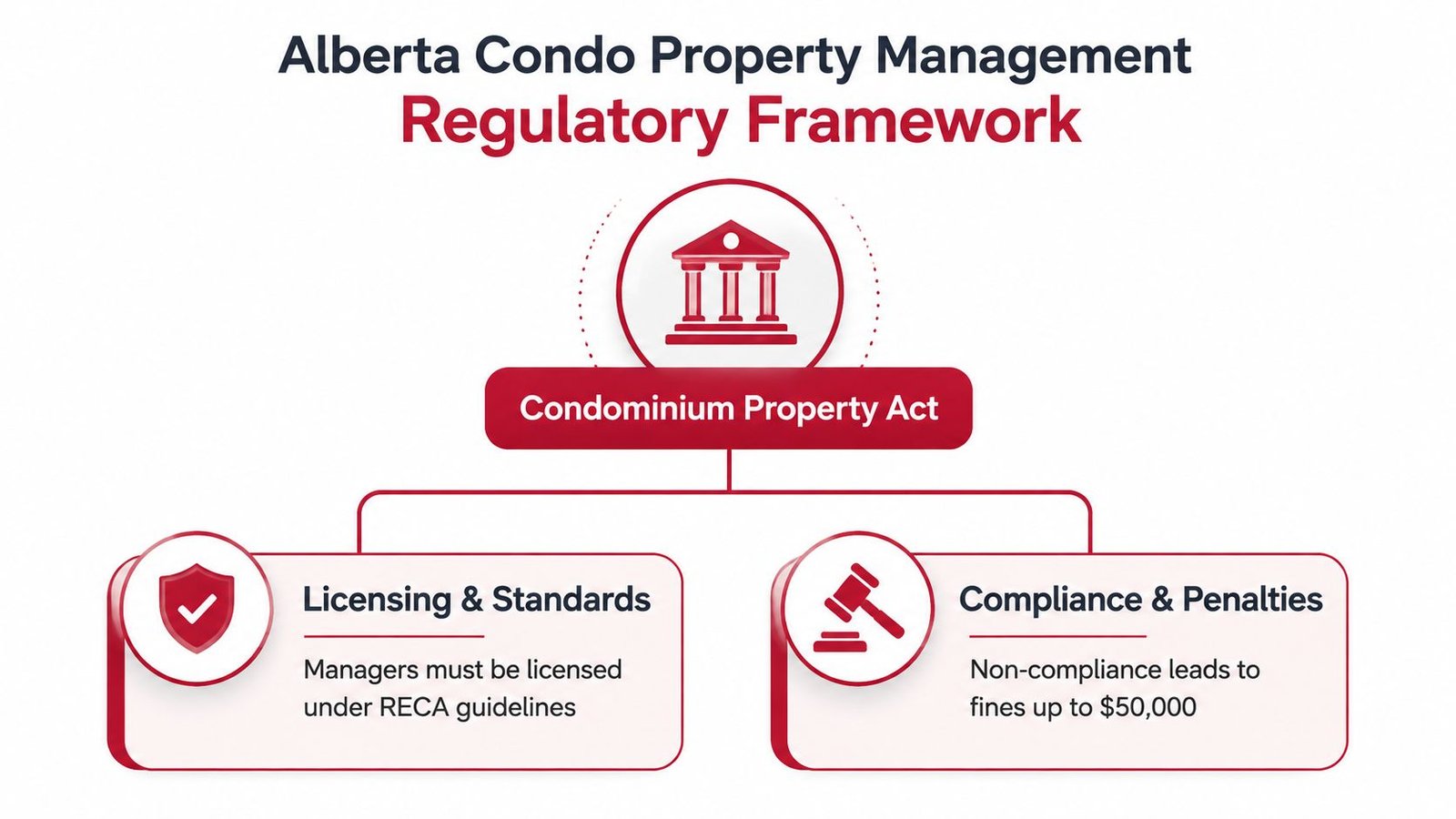
A rented condo has two legal relationships running at once. The Condominium Property Act governs the condominium corporation, ownership rights, common property, governance, reserve funds, and bylaws. The Residential Tenancies Act governs most landlord-tenant matters, including notices, records, and agent responsibilities. A manager must satisfy both frameworks because a corporation's rules cannot replace a landlord's tenancy obligations, and a lease cannot override valid condominium requirements.
This dual-layer responsibility is the practical fault line in Calgary and Edmonton condo rentals. A tenant may have rights under the Alberta landlord and tenancy rules, while the owner must still respond to a bylaw issue, corporation notice, or building procedure. Good file management keeps those duties separate and coordinated.
Alberta's condominium ownership system dates to the Condominium Property Act of 1966, with substantial reforms introduced through the Condominium Property Amendment Act, 2014. The reforms addressed consumer protection, transparency, and governance. They also affect board communications, financial reporting, records, reserve planning, and advice given to owners. The history of Alberta condo management law provides background on that legal development.
Licensing is part of the risk review
Alberta requires condominium managers and companies providing condominium management services to be licensed by the Real Estate Council of Alberta (RECA). The requirement took effect on December 1, 2021. Unlicensed providers must stop condominium management activities, as explained in RECA's condominium management licensing guidance.
Individual eligibility has defined requirements. Applicants must be at least 18 years old, hold a high school diploma or equivalent, demonstrate English proficiency, complete required courses, provide a certified criminal record check, and, for associate-level licensing, affiliate with a licensed condominium management brokerage. Alberta's condominium manager certification information summarises these requirements.
Documentation protects every party
The management file should retain lease documents, inspection reports, notices, tenant communications, board correspondence, contractor invoices, photographs, and approval records. If a tenant disputes a notice or the corporation alleges a bylaw breach, the file should show what happened, when each party was contacted, and what action followed.
The Residential Tenancies Act includes a specific condo leasing rule. If a condominium plan is registered after a periodic residential tenancy begins and the landlord seeks vacant possession to sell the unit as a condominium unit, the landlord must serve at least 180 days' notice, as set out in the Alberta Residential Tenancies Act.
A corporation's enforcement process and a landlord's tenancy process remain separate. A board may issue a bylaw notice, but any tenancy consequence still requires a lawful basis, proper notice, and appropriate records. Owners should obtain legal advice for disputed or high-risk situations.
Core Services Included in Condo Property Management
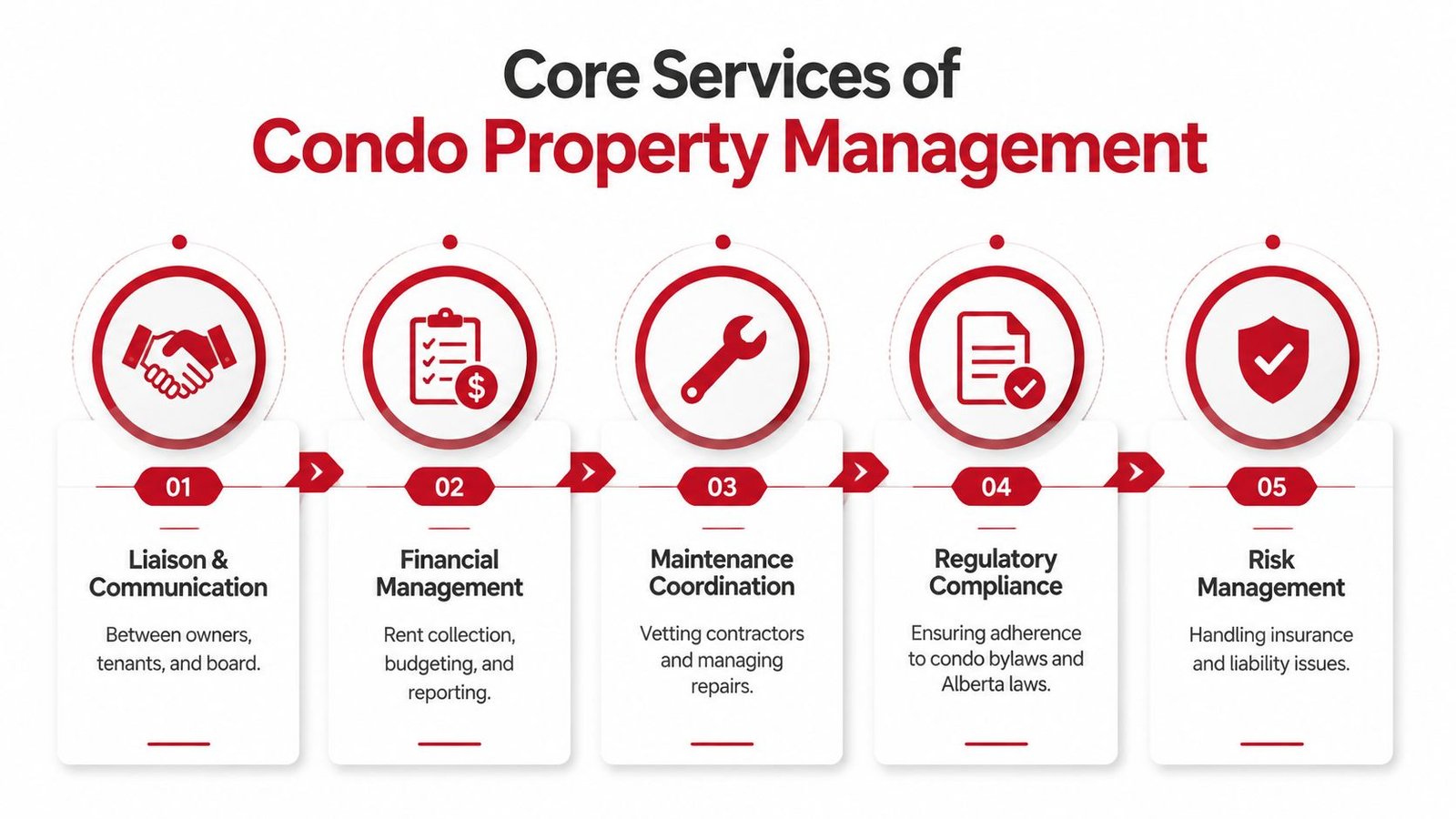
The difference between basic rental administration and full-service condo management becomes clear during an incident. Basic service may collect rent and forward a maintenance request. Full-service support identifies the building rule, checks the lease, coordinates the corporation's manager, confirms responsibility, records the decision, and keeps the tenant informed.
Leasing starts with building rules
Tenant screening should consider more than income and rental history. A manager needs to explain relevant building rules before approval, including pet restrictions, occupancy requirements, smoking provisions, parking assignments, storage locker terms, and move-in procedures. A tenant who agrees to these conditions early is less likely to create a preventable conflict after possession.
Lease documents should connect the tenancy obligations with applicable condominium requirements without promising terms the landlord can't legally enforce. Move-in and move-out coordination may require elevator bookings, deposits, time windows, protective coverings, and building forms. The manager should confirm those requirements before the tenant arrives, not after the concierge refuses access.
Board liaison and maintenance coordination
The manager becomes the owner's operational contact for the corporation. That includes forwarding tenant information where appropriate, responding to violation notices, requesting clarification, tracking deadlines, and escalating building-system problems through the corporation's established process.
Maintenance needs a clear triage system:
- Inside the unit: The manager assesses fixtures, appliances, finishes, and possible tenant damage.
- At the boundary: The manager documents leaks, moisture, odours, and system failures before assigning responsibility.
- In common property: The manager contacts the corporation's manager and tracks the work order through completion.
- During emergencies: The manager protects people and property first, then preserves records for insurance and cost allocation.
Financial and compliance administration
Rent collection, arrears follow-up, owner statements, lease renewals, inspections, and vendor invoices form the rental side of the file. Bylaw notices, board correspondence, access records, insurance certificates, and corporation approvals form the condo side. The manager should keep both sides connected, with a clear chronology that an owner, insurer, board, or legal adviser can understand.
A property-management platform can help centralise work orders, tenant messages, inspection photos, invoices, and owner reports. Owners comparing systems may streamline operations with RealEstateCRM, provided the technology supports Alberta-specific records and doesn't replace competent human review.
Eviction or termination decisions require particular care when repeated tenant conduct affects the condominium. A manager should distinguish a board's enforcement rights from the landlord's tenancy rights, issue only supportable notices, and preserve evidence. The low-cost option is rarely the one that leaves the fewest unresolved risks.
Understanding Condo Fees and Reserve Fund Obligations
Condo fees pay for the corporation's shared operating obligations and long-term planning. They may support common-area services, insurance, administration, utilities covered by the corporation, routine repairs, and reserve fund contributions. The exact allocation depends on the building's governing documents, contracts, physical systems, and budget.
The owner's rental analysis must therefore include more than mortgage, taxes, insurance, and management fees. AGM minutes, financial statements, budgets, reserve fund information, and proposed projects can reveal carrying-cost pressure before it appears in a monthly statement. Owners seeking a basic explanation can review this guide to strata fees and their meaning, while a manager should interpret the specific condominium corporation's records.
Reserve funds are not routine maintenance accounts
Under Alberta's Condominium Property Act, a condominium corporation must establish and maintain a reserve fund for major repairs and replacement of property and common property. The fund can't be used for ongoing maintenance such as yard work or window cleaning. Corporations may support the reserve through regular fees, better budgeting, increased contributions, special assessments, or borrowing, according to Alberta's reserve fund guidance.
That distinction matters to landlords because a low monthly fee doesn't necessarily mean a lower total cost. A building with deferred work may later require a special assessment, borrowing, or a significant fee adjustment. A manager can flag that exposure, but the owner still needs to review the records and obtain professional advice before purchasing.
| Fee Component | Typical Allocation | Landlord Impact |
|---|---|---|
| Common-area operations | Cleaning, landscaping, administration, and routine services | Affects monthly carrying costs and the owner's net rental income |
| Corporation insurance | Coverage arranged for condominium property interests | Requires the owner to maintain separate, suitable landlord insurance |
| Reserve fund contribution | Long-term major repair and replacement planning | Reduces immediate cash flow but supports future building condition |
| Management contract | Professional administration for the corporation | Can influence fees, service quality, reporting, and board workload |
| Special assessment or borrowing | Funding for needs not covered by available resources | Can create a material unplanned cost and alter hold-versus-sell decisions |
A new budgeting issue for Alberta corporations
As of 2026, Alberta condominium corporations must fund the Condominium Tribunal through a mandatory annual fee of $9 per titled unit, paid by the corporation rather than individual owners. Implementation details remain unclear in some areas, including how parking stalls are treated, as discussed in this Alberta condo budget discussion.
The practical question is whether the corporation absorbs the fee through regular budgeting or recovers it through a special levy. Boards and owners should identify the treatment in budgets and meeting records instead of assuming the cost will be handled automatically.
Evaluating Condo Property Management Companies in Alberta
A manager who treats a condo unit like a detached home may still collect rent competently, but that isn't enough. The owner needs evidence that the company can handle board correspondence, bylaw processes, shared-system repairs, insurance coordination, and Alberta's licensing requirements.
Fee structure deserves equal scrutiny. Industry reporting describes ongoing rental-unit management fees often ranging from 6% to 12% of monthly rent, while condo corporation management is frequently priced per unit, with Alberta examples around $20 to $40 per unit per month, and higher pricing for luxury or high-service buildings, according to Alberta property-management pricing guidance. These figures describe different services, so an owner should compare scope rather than selecting the lowest headline fee.
Questions that expose capability
Ask each candidate to explain how the company handles a water leak involving common property, a tenant's repeated parking violation, an unapproved alteration, and a disputed move-out charge. Strong answers should identify the records, contacts, escalation points, and approval steps, not just promise a quick response.
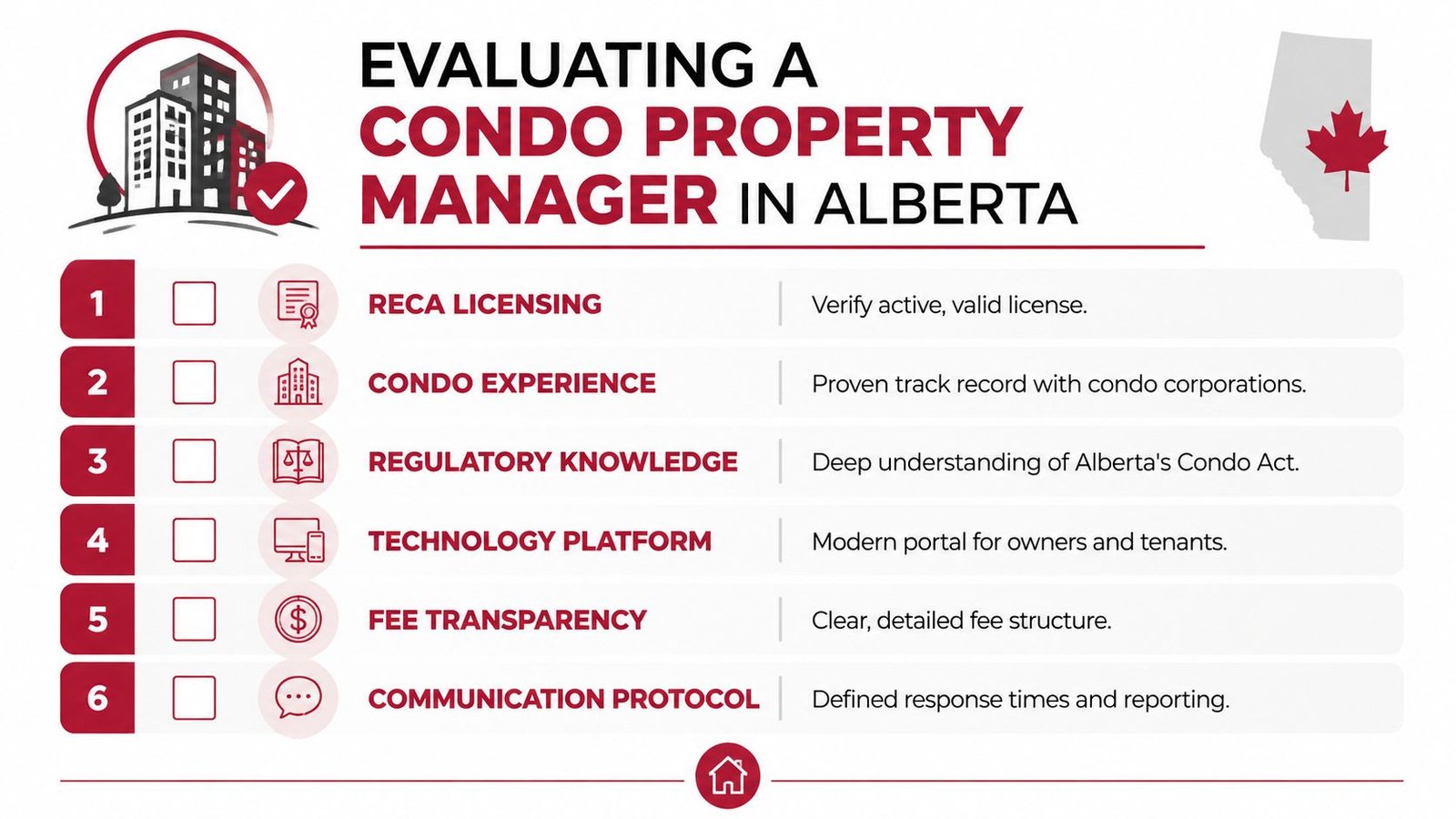
A practical interview checklist includes:
- RECA status: Confirm the company and responsible manager hold the required condominium management licensing.
- Condo experience: Ask which Calgary, Edmonton, or other Alberta buildings the team understands and how it works with their corporation managers.
- Insurance knowledge: Require a clear explanation of corporation coverage, owner landlord coverage, tenant insurance, and claim coordination.
- Fee transparency: Request separate pricing for leasing, renewals, ongoing management, inspections, maintenance coordination, and other charges.
- Reporting process: Review sample owner statements, inspection reports, work-order records, and board correspondence.
- Communication protocol: Confirm who handles emergencies, routine requests, violation notices, and owner approvals.
Owners should also review practical safety procedures, including smoke-alarm responsibilities and inspection expectations. A tenant safety guide from Wisenet Security Ltd. offers general background, but Alberta compliance decisions should remain grounded in applicable provincial requirements and the property's actual systems.
A useful comparison resource is this overview of property management companies. The right choice is the company that makes the operating boundaries visible and accepts accountability for the follow-through.
Next Steps for Condo Landlords in Calgary and Edmonton
A landlord preparing to hire a manager should gather the condo bylaws, current rules, recent board minutes, budgets, reserve fund information, insurance certificates, parking and locker details, tenant records, and current lease agreements. Those documents let each candidate price the assignment accurately and identify risks before onboarding.
During interviews, ask:
- How does the company apply the Condominium Property Act and Residential Tenancies Act together?
- Who communicates with the corporation's manager and board?
- How are bylaw notices logged, answered, and escalated?
- How does the company classify unit, common-element, and tenant-caused maintenance?
- What reserve fund and special-assessment information does the owner receive?
- Which fees apply during leasing, vacancy, renewals, inspections, and repairs?
Red flags include dismissing RECA licensing, treating all condos like single-family homes, refusing to explain insurance boundaries, providing vague fee schedules, or offering no documented process for notices and records. Calgary and Edmonton owners should also choose local familiarity, because building governance, enforcement practices, access procedures, and tenant demand can differ by property and neighbourhood.
The sensible next move is to interview at least three licensed firms, compare their written scopes, and test their answers against a real building issue. A lower quote only works when it includes the oversight the condo requires.
Dreamhouse Realty Ltd. provides condo rental management, tenant placement, lease administration, inspections, maintenance coordination, rent collection, owner reporting, and Alberta compliance support for landlords in Calgary, Edmonton, Red Deer, and surrounding communities. Contact GURIQBAL CHAHAL, MBA, PMP, REAL ESTATE BROKER at 403-966-6072, then visit Dreamhouse Realty Ltd. to discuss a management plan built around the tenant, the condominium corporation, and the owner's investment objectives.