

A landlord in Calgary checks the calendar and sees that a tenant's fixed-term lease ends soon. The tenant has paid reliably, the property is in good condition, and everyone appears to expect the tenancy will continue. The landlord assumes the agreement will roll into month-to-month occupancy, so no renewal document is prepared.
That assumption creates a serious Alberta property-management risk. A fixed-term residential tenancy ends on the date written in the lease unless the parties negotiate a new agreement or transition to a periodic tenancy. The tenancy does not automatically continue just because the tenant remains willing to stay. Alberta's rules make lease rollover an active management responsibility, not an administrative detail.
A well-prepared lease renewal agreement in Alberta protects occupancy planning, documents negotiated terms, and helps prevent rent changes that breach provincial requirements. The following guide explains the legal framework, drafting points, renewal choices, execution timeline, and the role of professional oversight for owners in Calgary, Edmonton, Red Deer, and surrounding communities.
Table of Contents
- The Hidden Risk in Alberta Fixed-Term Expirations
- Residential Tenancies Act Rules for Renewals and Rent
- Essential Clauses in a Compliant Renewal Document
- Choosing Between Fixed-Term and Periodic Tenancies
- Execution Timeline and Serving the Renewal Notice
- Securing Your Investment with Professional Management
The Hidden Risk in Alberta Fixed-Term Expirations
A landlord with a busy job and properties in different cities may treat a signed fixed-term lease as a continuing arrangement. The tenant is still in the home, rent is still arriving, and no one has sent a termination letter. From an operational perspective, everything looks normal.
Legally, that assumption can be wrong. Alberta states that a fixed-term residential tenancy ends automatically on the date specified in the agreement. Neither party has to give notice to terminate it at term end, and the arrangement doesn't automatically renew. If the landlord and tenant want to continue, they must negotiate a new fixed term or move to a periodic tenancy, such as month-to-month occupancy. (Alberta's tenancy-ending guidance explains that the agreement should be renewed or changed in writing when the parties want the relationship to continue.)
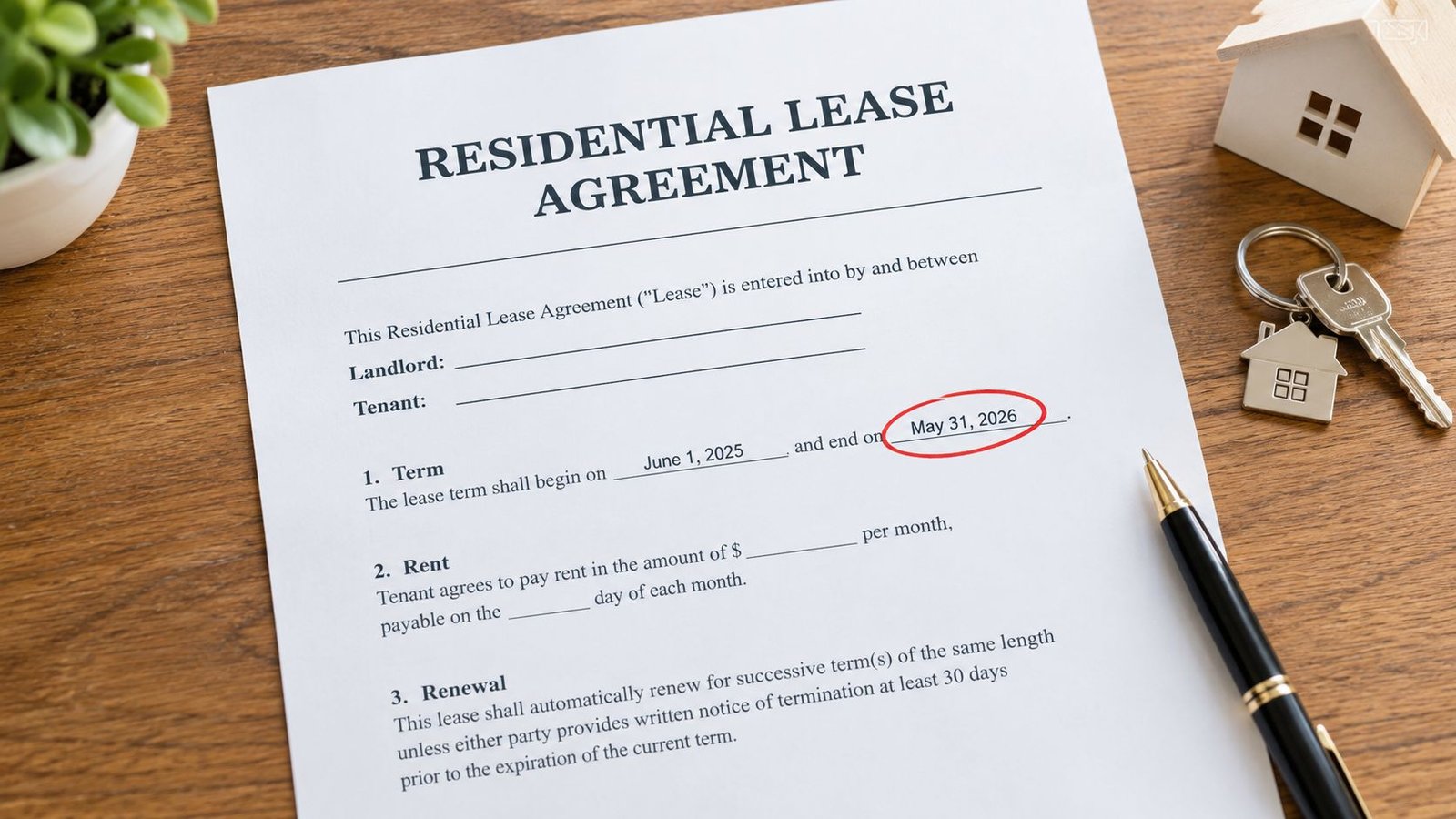
How the do-nothing expiration creates exposure
Consider an owner who discovers the issue after the expiry date. The tenant may believe the tenancy continues, while the owner believes a new agreement can be created later. That uncertainty complicates rent collection, insurance records, maintenance authorisation, inspection planning, and any later dispute about the tenancy's legal status.
The immediate business problem is occupancy. If the owner wants the tenant to remain, renewal discussions need to happen before the end date. Alberta identifies the end date in the fixed-term agreement as the point at which the tenancy ends, so waiting for an automatic extension can result in an accidental vacancy or a rushed negotiation.
Practical rule: Treat the lease expiry date as a deadline for completed paperwork, not as the date to begin thinking about renewal.
A renewal agreement should confirm the parties' intention to continue and identify the terms that will govern the next period. It can preserve acceptable provisions while recording changes to rent, term length, utilities, pets, parking, or other negotiated conditions. Verbal expectations are difficult to administer and even harder to prove when the parties later disagree.
Why owners miss the risk
Remote owners often rely on tenants to raise renewal questions. Busy local landlords may focus on repairs and rent collection while assuming the existing lease provides continuing protection. Neither approach gives the property a reliable rollover process.
A professional renewal workflow places every lease expiry on a forward-looking calendar, opens the discussion early, records the tenant's response, and escalates unresolved decisions before the end date. That process protects the owner's investment because it connects legal compliance with practical occupancy planning.
Residential Tenancies Act Rules for Renewals and Rent
A renewal can look routine until the proposed rent change fails Alberta's timing rules. The parties may agree to continue, but a new document cannot bypass statutory limits on when rent may increase.
A landlord cannot increase rent until at least 365 days have passed since the tenancy began or since the last rent increase, according to Alberta's rules during a tenancy. That restriction still applies when the higher amount is presented as part of a lease renewal. Before preparing the document, verify the tenancy start date, the date of the last increase, and the intended effective date. If the required period has not passed, the revised rent cannot take effect yet.
Fixed-term expiry and periodic notice
A fixed-term tenancy ends on the agreed expiry date without termination notice from either party. If the tenant remains under a periodic tenancy, different notice rules apply to later rent increases and to any termination that requires notice.
For rent increases during periodic tenancies, the written notice periods are:
- 12 full tenancy weeks for a week-to-week tenancy.
- 3 full tenancy months for a month-to-month tenancy.
- 90 days for other periodic tenancies.
These periods are set out in the provincial guidance cited above. They operate alongside the 365-day restriction. For example, a landlord may have to wait until the annual timing requirement is met and then allow the applicable notice period before collecting the higher rent. Sending the notice late does not shorten either requirement.
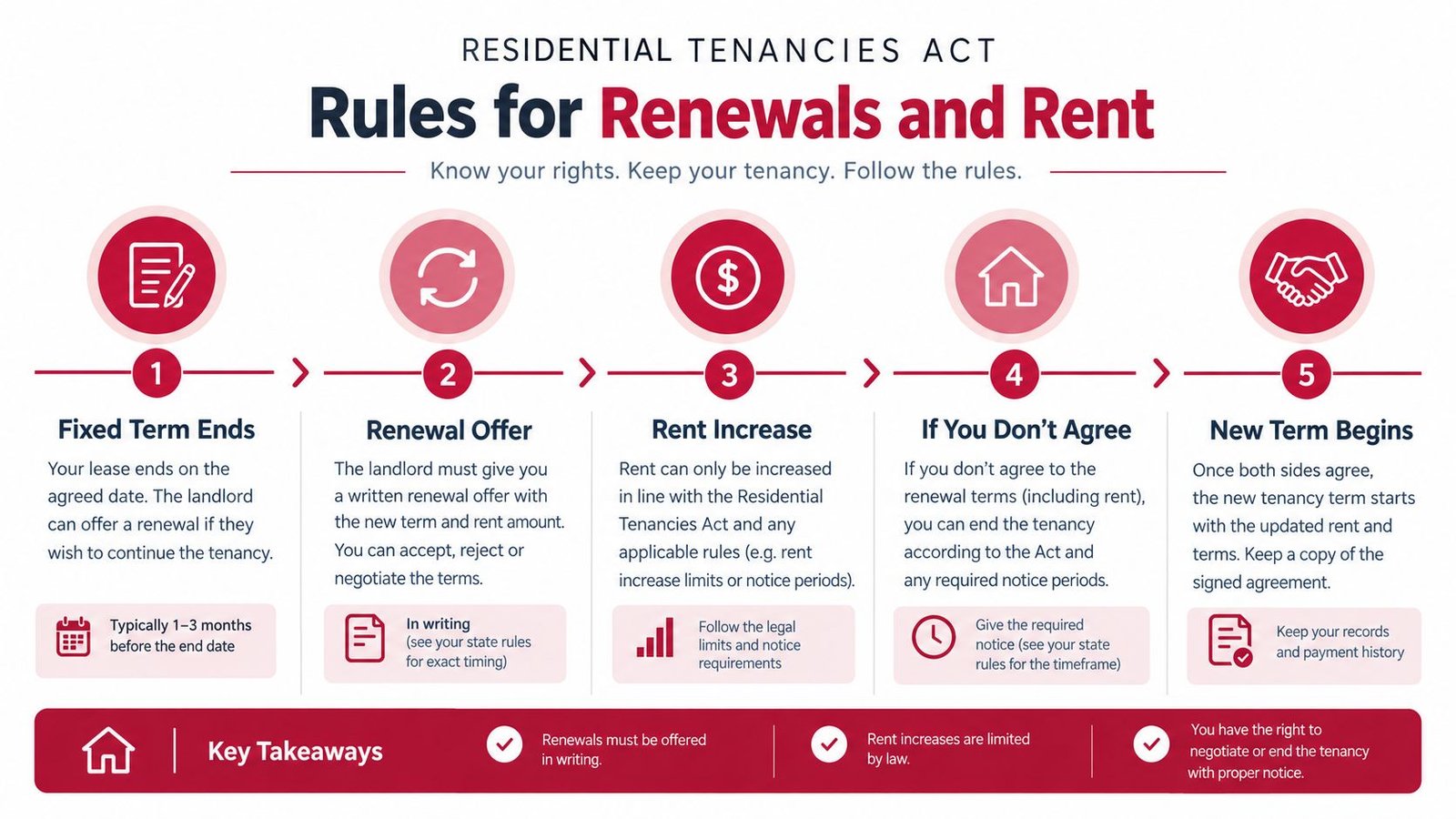
What landlords should verify
Before issuing renewal paperwork, review:
- The fixed-term expiry date.
- The tenancy start date.
- The date of the last rent increase.
- Whether the proposed arrangement is another fixed term or a periodic tenancy.
- The written notice period required for any rent change.
- How the notice and renewal documents will be delivered and recorded.
A detailed Alberta RTA handbook for landlords can help owners organize the review. Unusual clauses, disputed increases, or uncertain tenancy classifications may require legal advice.
The operational risk is easy to miss. A manager who treats expiry as an administrative date can approve a rent change that starts too early, leaving the owner with an unenforceable increase and a strained tenant relationship. A documented review before expiry protects cash flow and keeps the renewal within Alberta's statutory framework.
Essential Clauses in a Compliant Renewal Document
A renewal document should make the next tenancy easy to administer. It shouldn't force the landlord, tenant, or property manager to search through old emails to determine which provisions survived and which terms changed.
The document should identify the landlord and tenant by their exact legal names, state the complete rental-property address, and identify the original agreement being renewed. It should then specify the new term, including the commencement date and expiry date if the parties choose another fixed term.
Build the agreement around clear commercial terms
The rent clause needs more than a monthly figure. It should state the payment amount, due date, accepted payment method, included utilities, and any other recurring charges the parties have agreed to. If the renewal changes responsibility for utilities, parking, storage, or services, that change should appear directly in the written agreement.
The renewal should also address the security deposit without casually describing it as a new deposit. The document can acknowledge the existing deposit, confirm that it remains held under the tenancy, and record any lawful adjustment or agreement. The owner should keep the related records with the original lease and inspection documentation.
A clear renewal file commonly includes:
- Parties and property: Confirm names, address, suite details, parking stalls, and storage areas.
- Term: State whether the new arrangement is fixed-term or periodic, along with the applicable dates.
- Rent and payments: Record rent, due date, payment method, utilities, and approved recurring charges.
- Rules: Reconfirm or revise pet permissions, smoking restrictions, occupancy expectations, parking terms, and alteration conditions.
- Maintenance responsibilities: Identify the obligations that continue and any property-specific arrangements.
- Signatures: Obtain signatures and dates from all required parties, then distribute the completed copy.
Don't rely on a vague addendum
A short sentence such as “all other terms remain unchanged” can be useful, but it shouldn't replace careful review. The landlord needs to know which old provisions are still suitable for the property and whether any conflict exists between the original lease and the new document.
For example, a tenant may have received informal permission for an additional occupant or pet after the original lease was signed. If the renewal ignores that change, the parties may carry conflicting expectations into the next term. A renewal is the right time to document the actual arrangement and resolve it before a dispute develops.
Owners who need a starting point can review an Alberta residential lease agreement example for the types of provisions that should be addressed. Any template still needs to be checked against the specific property, tenancy history, and current Alberta requirements.
A renewal document earns its value by removing uncertainty. If a manager can't tell what changed by reading the signed paperwork, the document needs work.
The final copy should be stored with the original lease, notices, payment records, inspection reports, and communications. Good documentation supports day-to-day administration and gives the owner a coherent record if the parties later disagree.
Choosing Between Fixed-Term and Periodic Tenancies
A renewal decision should reflect the owner's investment plan, not just the tenant's immediate preference. A new fixed term can support stable occupancy and predictable planning. A periodic tenancy can preserve flexibility, but it requires the owner to manage statutory notice rules and accept less certainty about the tenant's future commitment.
The choice also depends on the property. An owner holding a Calgary townhouse for the long term may value continuity with a reliable tenant. An investor considering a sale, family occupancy, or a substantial change to the property may prefer not to commit to another fixed term without reviewing the plan carefully.
Fixed-Term vs Periodic Tenancy Comparison
| Feature | Fixed-Term Renewal | Periodic (Month-to-Month) |
|---|---|---|
| End date | The agreement sets a defined end date. | The tenancy continues by recurring periods until properly ended. |
| Occupancy planning | Provides clearer planning for the agreed term. | Offers flexibility, but the tenant may leave with the required notice. |
| Tenant relationship | Encourages a confirmed commitment from both parties. | Can suit parties who want to continue without locking in another term. |
| Rent changes | Must still comply with Alberta's rent-increase timing rules. | Requires the applicable written notice and compliance with the 365-day restriction. |
| Owner flexibility | May limit short-term changes to the owner's plans. | Can better suit an owner reviewing a possible sale or personal use. |
| Administration | Requires a new agreement for the new fixed term. | Requires careful tracking of periodic dates, notices, and communications. |
When a fixed term fits
A fixed-term renewal is usually the cleaner operational choice when the tenant is suitable, the property will remain a rental, and the owner values occupancy continuity. It gives both parties a defined commitment and creates a clear point for the next review.
The owner should still avoid treating the document as a rubber stamp. The renewal should reflect current property conditions, accurately record permissions, and confirm financial terms that comply with provincial rules. A long fixed term can also reduce flexibility if the owner's circumstances change.
When periodic occupancy fits
A month-to-month arrangement may make sense when the owner needs flexibility or the tenant isn't ready to commit to another fixed term. It can preserve the relationship while allowing both parties to reassess their plans. The trade-off is less certainty, more active notice management, and a greater need for accurate records.
Owners who use drafting software should treat it as a support tool rather than a substitute for review. For example, LegesGPT's AI contract generator can help organise contract drafting, but the final renewal still needs Alberta-specific checking and confirmation that the facts match the property.
The strongest decision process weighs tenant performance, property condition, the owner's hold strategy, and the need for flexibility. Neither tenancy type is automatically safer. The risk comes from selecting one without documenting it clearly or without understanding the obligations that follow.
Execution Timeline and Serving the Renewal Notice
A reliable renewal process begins before the final month. The exact working dates should be calculated from the lease expiry, the proposed term, and any rent-change restrictions. Alberta's official rules govern the legally required notice periods, while the owner's internal timeline should create enough room for review, negotiation, signatures, and contingency planning.
Around 90 days before expiry
The manager should open the renewal file and inspect the existing agreement. The review should identify the fixed-term expiry date, current rent, last increase date, utility responsibilities, pet or occupancy provisions, outstanding maintenance issues, and any unresolved tenant communications.
This is also the point to assess whether renewal serves the owner's investment plan. The manager can review the property's condition, expected operating needs, and the owner's preference for another fixed term or periodic tenancy. A renewal offer shouldn't be drafted before those decisions are made.
Around 60 days before expiry
The landlord or manager can present the proposed terms in writing and invite the tenant to respond. If rent is changing, the file must first confirm that the 365-day rule has been satisfied and that the proposed effective date and notice process comply with Alberta requirements. The parties should avoid presenting an unlawful increase as a renewal condition that cannot be negotiated.
A written offer should identify the proposed rent, term, included services, material rule changes, response deadline, and signing process. It should also explain whether the owner is offering another fixed term or proposing a transition to periodic tenancy.
Around 30 days before expiry
By this stage, the manager should know whether the tenant accepts, declines, or needs clarification. Negotiations should be recorded in writing, and the final agreement should be signed before the fixed-term end date whenever the parties intend to continue.
If the tenant declines and the owner doesn't want a periodic arrangement, the manager should organise the next steps for possession, inspection, advertising, cleaning, repairs, and re-leasing. If the tenant accepts, the completed document should be distributed to every party and stored in the property record.
Service and record control
The owner should use a legally appropriate delivery method for formal notices and retain evidence of delivery. Depending on the document and circumstances, that may include hand delivery or registered mail, but the manager should confirm the correct method rather than relying on an informal email for every purpose.
A complete renewal record should contain:
- The original agreement: Keep the lease and all signed addenda together.
- The proposed renewal: Retain the offer and any revisions.
- Tenant communications: Save acceptance, refusal, questions, and negotiated changes.
- Delivery evidence: Record when and how formal documents were served.
- Final signatures: Store the executed agreement and provide copies.
- Calendar controls: Record the next expiry date and any future rent-review restriction.
A landlord shouldn't wait until the expiry date to discover that a tenant hasn't signed. Early escalation gives the owner choices. Delay removes them.
Securing Your Investment with Professional Management
Lease renewals combine legal timing, tenant communication, financial planning, and occupancy control. A landlord may handle each task competently in isolation and still miss the connection between them. A rent increase can be correctly calculated but served too late. A tenant can agree to stay, but the fixed term can still expire before the paperwork is complete.
Professional property management reduces that dependence on memory. A manager can track lease dates, confirm the last rent increase, prepare renewal terms, document conversations, coordinate signatures, and escalate decisions when a tenant hasn't responded. The manager can also connect renewal planning with inspections, maintenance, tenant screening, rent collection, and owner reporting.
What structured oversight changes
A renewal system should give the owner a clear status for every property. The file should show which leases are approaching expiry, which tenants have received offers, which terms are under negotiation, and which agreements have been executed. That visibility matters to Calgary owners with multiple units and to remote investors who can't inspect files or properties locally.
Professional oversight also supports better decisions around periodic tenancy. A manager can explain the administrative consequences, monitor notices, and help the owner avoid assuming that continued occupancy means an automatic extension. When a tenant chooses not to renew, the same team can coordinate marketing and showings rather than leaving the property idle while the owner searches for help.
Dreamhouse Realty Ltd. is one Alberta option for owners seeking coordinated rental management. Its services include lease drafting and execution, tenant communication, rent collection, inspections, maintenance coordination, and compliance record-keeping across Calgary, Edmonton, Red Deer, and surrounding communities. Owners can also review information about working with a licensed property manager in Alberta when comparing management providers.
The value for remote and busy owners
Out-of-province owners face a practical disadvantage when a renewal issue develops quickly. A local manager can communicate with the tenant, inspect the property, arrange vendors, and maintain a documented file without requiring the owner to travel. That local follow-through helps protect the asset while keeping decisions aligned with the owner's instructions.
The right provider should explain its renewal workflow, notice controls, documentation standards, inspection process, and owner reporting. It should also identify which matters fall outside property management and require independent legal advice. Clear boundaries are part of responsible compliance.
A lease renewal agreement in Alberta should never be treated as a routine signature request. It's a control point for occupancy, cash flow, documentation, and legal risk. Owners who build a repeatable process are less likely to face an accidental vacancy or an improperly timed rent increase.
Dreamhouse Realty Ltd. offers Alberta landlords lease renewal coordination, compliant documentation, tenant communication, inspections, and ongoing rental management for homes and small multifamily properties. Visit Dreamhouse Realty Ltd. or contact GURIQBAL CHAHAL, MBA, PMP, REAL ESTATE BROKER, at 403-966-6072 to discuss protecting the next lease rollover in Calgary, Edmonton, Red Deer, or surrounding communities.