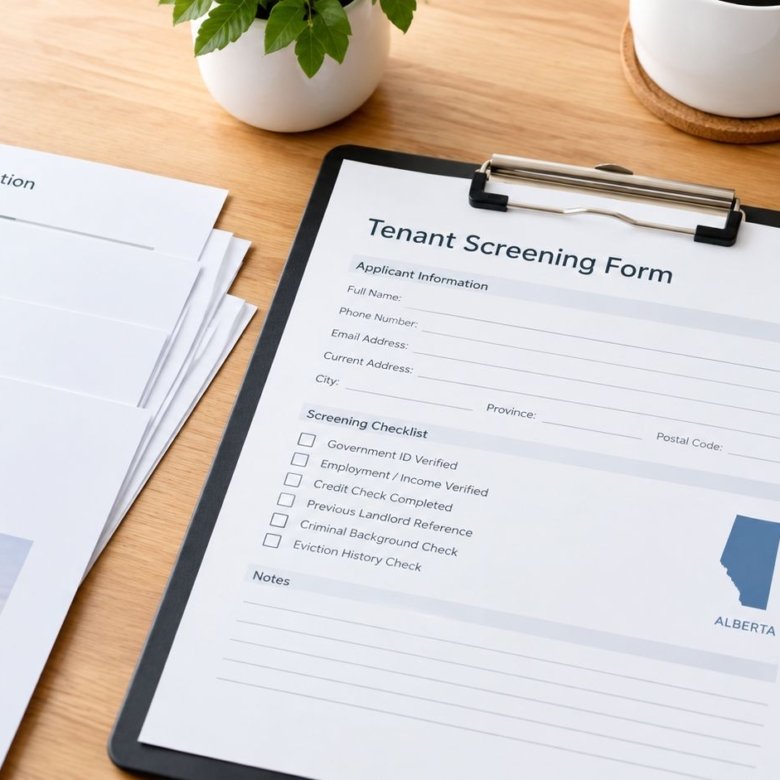

An Alberta owner with a duplex in Calgary or a condo in Edmonton usually reaches the same uncomfortable decision: rent the property personally, hire a professional, or leave it empty until the market feels easier. The temptation is to treat real estate rentals as passive income. In practice, vacancy, pricing, tenant communication, repairs, paperwork, and legally correct notice dates decide whether the property produces dependable income or absorbs it.
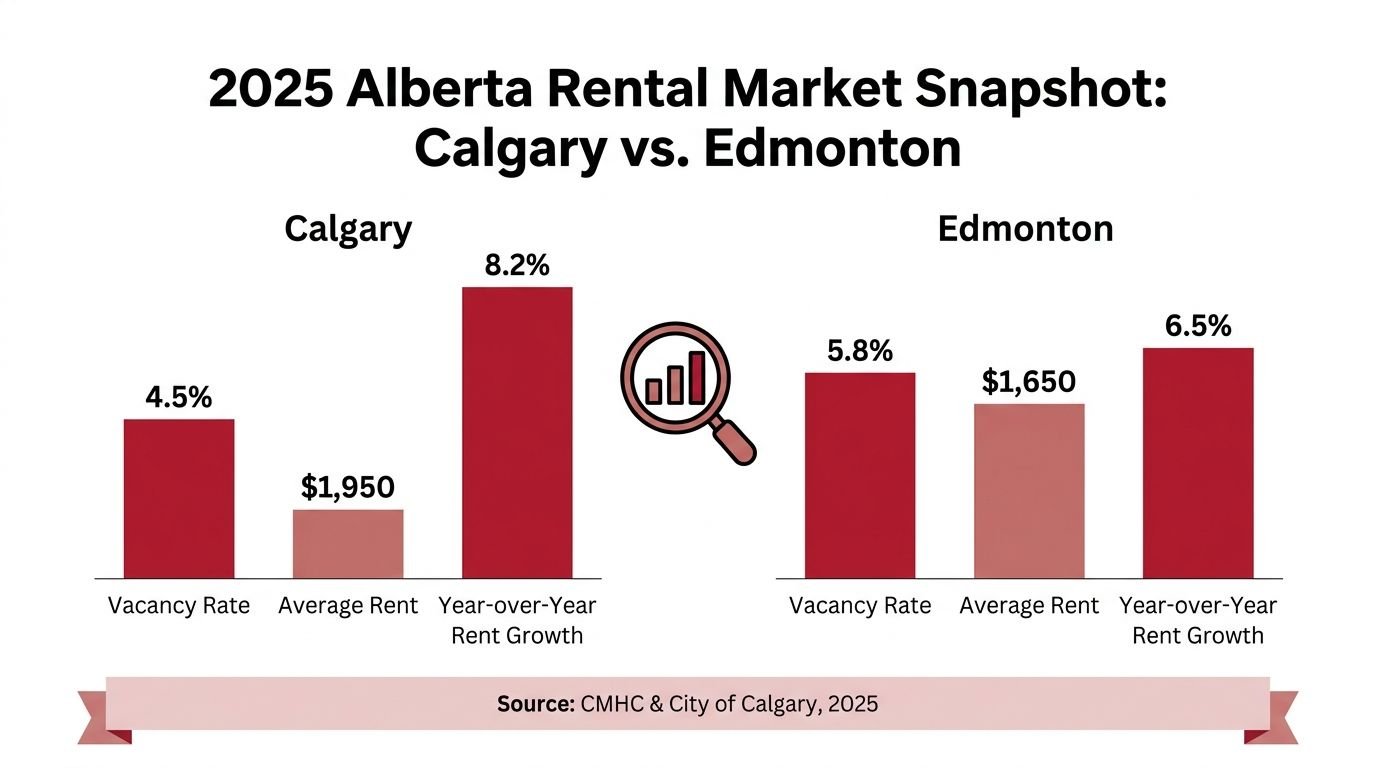
The operating choice matters more in a market that no longer behaves uniformly. Calgary's purpose-built apartment vacancy rate reached 5.0% in 2025, while Edmonton's was reported at 3.8% in CMHC's late-2025 coverage, so an owner can't apply one Alberta strategy to every property. CMHC's major-centre rental market reporting provides the broader context, but the owner still has to translate market data into a listing, lease, and management workflow.
Table of Contents
- Where Alberta Landlords Stand Right Now
- What Counts as a Real Estate Rental in Alberta
- Reading the 2025 Calgary and Edmonton Rental Market
- Alberta Notice Rules That Decide Your Vacancy
- Self-Managing Versus Hiring a Property Manager
- How an Alberta Rental Actually Gets Leased
- Key Rental Terms Every Owner Should Know
- Choosing Your Next Step and Getting Help
Where Alberta Landlords Stand Right Now
A Calgary owner with one side of a duplex vacant might focus on the advertised rent. A more experienced operator starts with a different question: how quickly can the unit be positioned, shown, screened, leased, and documented without creating a compliance problem? If the owner has a full-time job, lives outside the city, or owns more than one unit, the answer can change the economics of the entire rental.
Calgary moved from a tight purpose-built rental environment in 2023 to a more balanced one by 2025. CMHC reported a 5.0% apartment vacancy rate in Calgary in 2025, while the City of Calgary separately reported market vacancy rising from 4.6% in 2024 to 5.1% in 2025. CMHC's Rental Market Reports identifies 3% as a long-standing balance threshold, putting Calgary above that benchmark in 2025.
That change doesn't mean every Calgary rental is difficult to lease. It means owners have less room for weak marketing, optimistic pricing, delayed replies, or incomplete applications. Edmonton's different vacancy position reinforces the same point: submarket, unit type, condition, and price now matter more than a broad Alberta label.
The decision owners should make first
An owner considering self-management should assess the work:
- Availability: Can the owner answer enquiries, conduct showings, and respond to urgent maintenance?
- Distance: Can inspections, key exchanges, and contractor access be handled locally?
- Documentation: Can the owner keep leases, condition reports, notices, deposit records, and repair invoices organised?
- Tolerance for conflict: Can the owner handle arrears, complaints, move-out disagreements, and RTDRS-related paperwork without delaying action?
A property manager doesn't remove the owner's financial responsibility. The manager creates a repeatable operating system around it. That distinction is central to deciding whether professional help is an unnecessary expense or a sensible way to protect income.
What Counts as a Real Estate Rental in Alberta
“Real estate rentals” covers several operating models, and the category affects the rules, costs, and daily decisions. A single-family home or duplex is usually managed as an individual residential asset. A condominium rental adds condo corporation bylaws, board procedures, building access rules, and shared-property obligations. A purpose-built apartment is part of a larger rental operation competing against market benchmarks tracked by CMHC.
The Residential Tenancies Act is central to most Alberta residential rental relationships, but it isn't the only framework an owner may encounter. Condo owners must also review the corporation's bylaws and any restrictions affecting leasing, occupants, pets, parking, or move-in procedures. Purpose-built operators manage a broader building system, including common areas, service contracts, resident communications, and turnover across multiple units.
Types of Real Estate Rentals in Alberta
| Category | Main Regulator | Typical Lease Form | Owner Watchouts |
|---|---|---|---|
| Single-family home or duplex | Alberta residential tenancy rules, plus applicable municipal requirements | Fixed-term or periodic residential lease | Vacancy, repairs, screening, notices, utilities, and condition documentation |
| Secondary condominium rental | Alberta residential tenancy rules and the condominium corporation framework | Fixed-term or periodic residential lease | Condo bylaws, board approvals or notices, move bookings, parking, insurance, and building rules |
| Purpose-built apartment | Alberta residential tenancy rules, municipal requirements, and building operating policies | Standard residential lease used across the property | Competitive pricing, service standards, common areas, maintenance response, renewals, and resident retention |
The distinction affects budgeting. A condo owner may need to account for condo fees, bylaws, move-in restrictions, and building-specific procedures. A duplex owner may carry more direct responsibility for exterior maintenance, utilities, and contractor coordination. A purpose-built operator has scale, but also has more residents, more operational touchpoints, and stronger competition from nearby buildings.
Owners should identify the property class before choosing a lease process or management company. A manager experienced with apartment buildings may not use the same inspection, showing, or owner-reporting workflow as a manager focused on Calgary houses and secondary condos.
Reading the 2025 Calgary and Edmonton Rental Market
A Calgary owner can lose weeks by pricing a rental from city-wide averages instead of the competing homes nearby. Calgary's 2025 primary rental market vacancy rate was 5.0% overall, with studios at 6.0%, one-bedroom units at 4.4%, two-bedroom units at 5.7%, and three-bedroom-plus units at 4.4%. The secondary-market condominium vacancy rate was 2.2%. CMHC's Calgary housing data dashboard gives owners the property-type context needed before setting rent.
The City of Calgary reported market vacancy rising from 4.6% in 2024 to 5.1% in 2025. The City's housing trends data offers a separate local measure, while CMHC's purpose-built figures help owners compare unit types and rental segments.
Calgary's rental supply also grew at its fastest pace in decades in 2025. Edmonton's purpose-built vacancy rate was 3.8% in CMHC's late-2025 coverage. CMHC's release on Canada's vacancy rate and rental construction supports a clear operating rule: price against the immediate competition, not an old assumption that every Alberta rental is undersupplied.
How owners should interpret the numbers
A renovated inner-city condo may compete differently from a newly built suburban apartment. A family-sized duplex is judged on parking, storage, yard access, school-area convenience, and total occupancy cost, not bedroom count alone. Check nearby listings, recent leasing activity where available, condition, utilities, parking, pet rules, and amenities before choosing a price.
My recommendation is direct: price for the property that exists, not the property the owner wishes it were. If enquiries are weak, review the price, photos, listing copy, availability, and showing process immediately. A stale listing usually creates a longer vacancy and a harder lease-up.
Alberta Notice Rules That Decide Your Vacancy
Alberta notice periods are operational deadlines, not administrative details. Under the Alberta Residential Tenancies Act, a landlord's notice to end a periodic tenancy generally must be given on or before the first day of a three-month notice period, defined as three consecutive tenancy months. A missed date can push the planned turnover into another tenancy cycle.
The provincial rules vary by tenancy type. Alberta's tenancy-ending guidance states that week-to-week arrangements require one full tenancy week from either party, month-to-month arrangements require one full tenancy month from the tenant and three full tenancy months from the landlord, and year-to-year arrangements require 60 days from the tenant and 90 days from the landlord. For a yearly tenancy, the notice must be given before the last day of the tenancy year to be effective on that date.
Build the calendar before the vacancy
An owner should record the tenancy type, anniversary or rent cycle, notice delivery date, intended possession date, inspection date, repair window, listing launch, showing schedule, and new-tenant move-in. The calendar needs proof of delivery, not just a note that someone “sent the notice.”
Practical rule: A notice workflow should be visible to the owner, the manager, and anyone responsible for leasing. If only one person knows the deadline, the process is fragile.
The Residential Tenancies Act notice to end a tenancy is separate from rent increase requirements. Owners shouldn't combine the two casually or assume that a rent increase notice can replace a termination notice. If a dispute develops, the owner may need to use the Residential Tenancy Dispute Resolution Service process, supported by the lease, notices, delivery records, rent ledger, inspection reports, and communications.
Professional management earns its keep here through calendar control and document discipline. The value isn't sending a form. It's aligning notice timing with marketing, repairs, access, and possession so the owner doesn't lose income through preventable scheduling errors. Owners who want a practical Alberta compliance reference can also review this Alberta landlord and tenancy guide.
Self-Managing Versus Hiring a Property Manager
Self-management looks inexpensive because the owner sees no management invoice. That view ignores unpaid labour, missed calls, travel, delayed leasing, contractor coordination, and the cost of getting a notice or deposit process wrong. Hiring a licensed property manager adds a visible expense, but it transfers recurring operating tasks to a professional workflow.
Under Alberta's real estate regulatory framework, owners should verify that a prospective manager operates through the appropriate licensed property management brokerage structure. They should also ask how the firm handles trust accounting, screening, inspections, maintenance approvals, after-hours issues, owner statements, and dispute records.
The two models in practice
| Factor | Self-Management | Licensed Property Manager |
|---|---|---|
| Time commitment | Owner handles enquiries, showings, rent collection, repairs, notices, and tenant communication | Manager coordinates the operating workflow and reports to the owner |
| Monthly cost | No separate management fee, but the owner supplies the labour and absorbs operational interruptions | Management and leasing fees apply according to the agreement |
| Compliance risk | Owner must track Alberta rules, deposits, inspections, notices, records, and dispute preparation | Manager provides established procedures, though the owner should still review reporting and instructions |
| Maintenance | Owner finds vendors, approves work, schedules access, and follows up | Manager coordinates vendors, work orders, access, approvals, and documentation |
| Leasing | Owner writes the listing, responds to leads, screens applicants, and prepares the lease | Manager handles marketing, showings, screening, lease execution, and move-in coordination |
| Scalability | Workload expands directly with every additional unit or issue | Systems and staff can absorb more properties, subject to service capacity |
A single duplex can make sense for self-management when the owner lives nearby, has flexible time, understands the rules, and can handle conflict without hesitation. The calculation changes when the owner has a second unit, works unpredictable hours, lives outside Alberta, or owns a property with frequent maintenance needs. Recovered vacancy days, faster response times, fewer failed showings, and proper documentation can matter more than the management fee.
For a structured checklist on evaluating service quality, communication, fees, and responsibilities, owners can consult VerticalRent's hiring a property manager tips. A Calgary owner comparing local operating options can also review residential property management in Calgary.
The firm should be judged by execution, not by a low fee alone. An owner should request a sample statement, management agreement, inspection report, screening policy, maintenance approval process, and explanation of how vacancies are marketed. If the answers are vague, the apparent savings aren't worth the risk.
How an Alberta Rental Actually Gets Leased
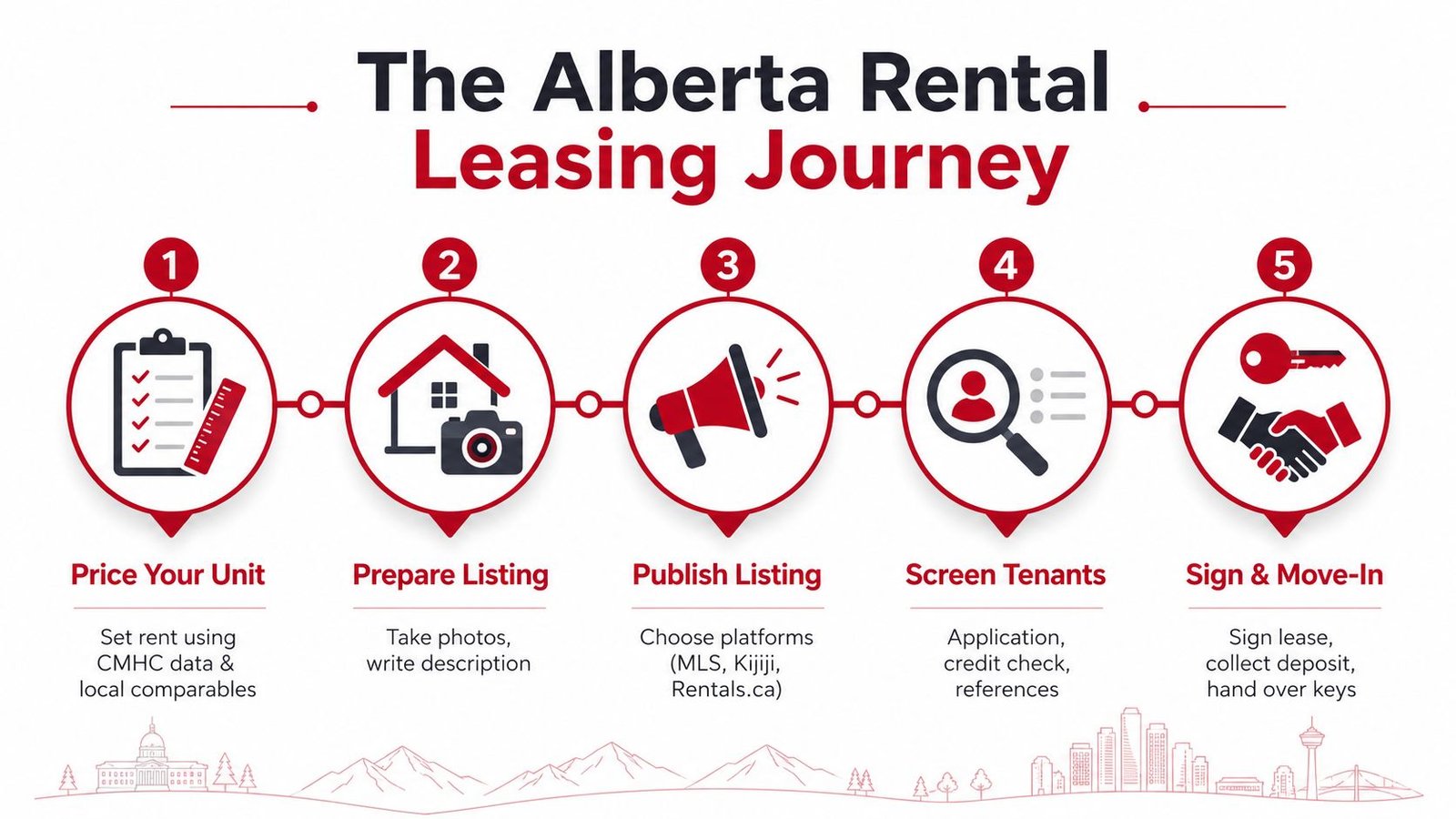
The leasing process starts before the listing goes live. An owner first reviews the property's condition, included utilities, parking, storage, appliances, pet position, availability date, and nearby competition. The rent should reflect the unit's actual finish and features, supported by current market information and local comparable listings rather than by the owner's mortgage payment.
Next comes presentation. Professional photos, accurate copy, a clear list of inclusions, and prompt enquiry handling determine whether qualified renters continue the conversation. A listing can appear on platforms such as MLS, Kijiji, and Rentals.ca, but distribution alone won't fix an unrealistic price or unclear availability.
Screening should follow a consistent order
A reliable application workflow protects both sides of the tenancy. Owners commonly review:
- Income verification: Confirm employment, income sources, and the applicant's ability to carry the rent.
- Credit information: Obtain consent and review payment history, outstanding obligations, and inconsistencies.
- References: Contact prior landlords and verify that the information matches the application.
- Rental history: Ask about payment patterns, property care, occupants, and reasons for leaving.
- Decision records: Apply the same documented criteria to every applicant and keep the file organised.
The owner then prepares and signs the lease, collects the deposit, and completes a condition inspection report with the tenant at move-in. The inspection happens again at move-out, with written observations and photographs supporting the property's condition record. In Alberta, the security deposit must be held in a trust account, so owners need a process that separates deposit handling from ordinary operating cash.
An Alberta rental lease agreement example can help an owner understand the information a complete lease should address, but a template doesn't replace proper completion or legal judgment.
After move-in, rent collection should flow into an owner statement showing income, management charges where applicable, maintenance, repairs, and disbursements. The most common handoff failures are predictable: an unsigned lease, a missing inspection report, incomplete applicant records, unclear utility responsibility, or an undocumented repair. Those gaps become evidence problems when an RTDRS dispute arises.
Key Rental Terms Every Owner Should Know
Owners make better decisions when the language on the lease matches the language on the statement. A security deposit is money held against obligations under the tenancy, and Alberta requires it to be held in trust. There's no statutory cap stated in the supplied provincial guidance, although one month's rent is a practical market benchmark owners commonly use.
A condition inspection report records the property's state at move-in and move-out. It should be completed with the tenant, signed or otherwise properly documented, and supported by photographs where useful. Without a clear baseline, an owner can struggle to distinguish ordinary wear from damage.
Rent arrears means rent remains unpaid after it is due. Non-payment can trigger a 14-day notice process under Alberta tenancy rules, and the owner should preserve the rent ledger, communications, notice, and delivery evidence. NSF charges and interest must be handled according to the lease and applicable Alberta requirements, not added casually as a penalty.
Terms that shape the operating picture
- Vacancy rate: CMHC's market measure describes availability across a rental segment. An owner's vacancy is the actual period when that specific unit produces no rent.
- Periodic tenancy: The tenancy continues by recurring rental periods until properly ended.
- Fixed-term tenancy: The lease runs for an agreed term. Owners should understand what happens at expiry rather than assuming every fixed term ends with an empty unit.
- Rent increase: Alberta rules governing increases are separate from termination rules. Owners should verify the correct timing and notice requirements before issuing one.
- Owner statement: The monthly record should reconcile rent received, arrears, repairs, management charges, deposit-related activity, and funds disbursed.
Tax records belong in the same organised system. Owners reviewing rental income, expenses, capital items, and reporting obligations can use this guidance on common tax filing mistakes as a prompt to speak with a qualified tax adviser. A clean monthly statement won't replace tax advice, but it gives the adviser usable records.
Choosing Your Next Step and Getting Help
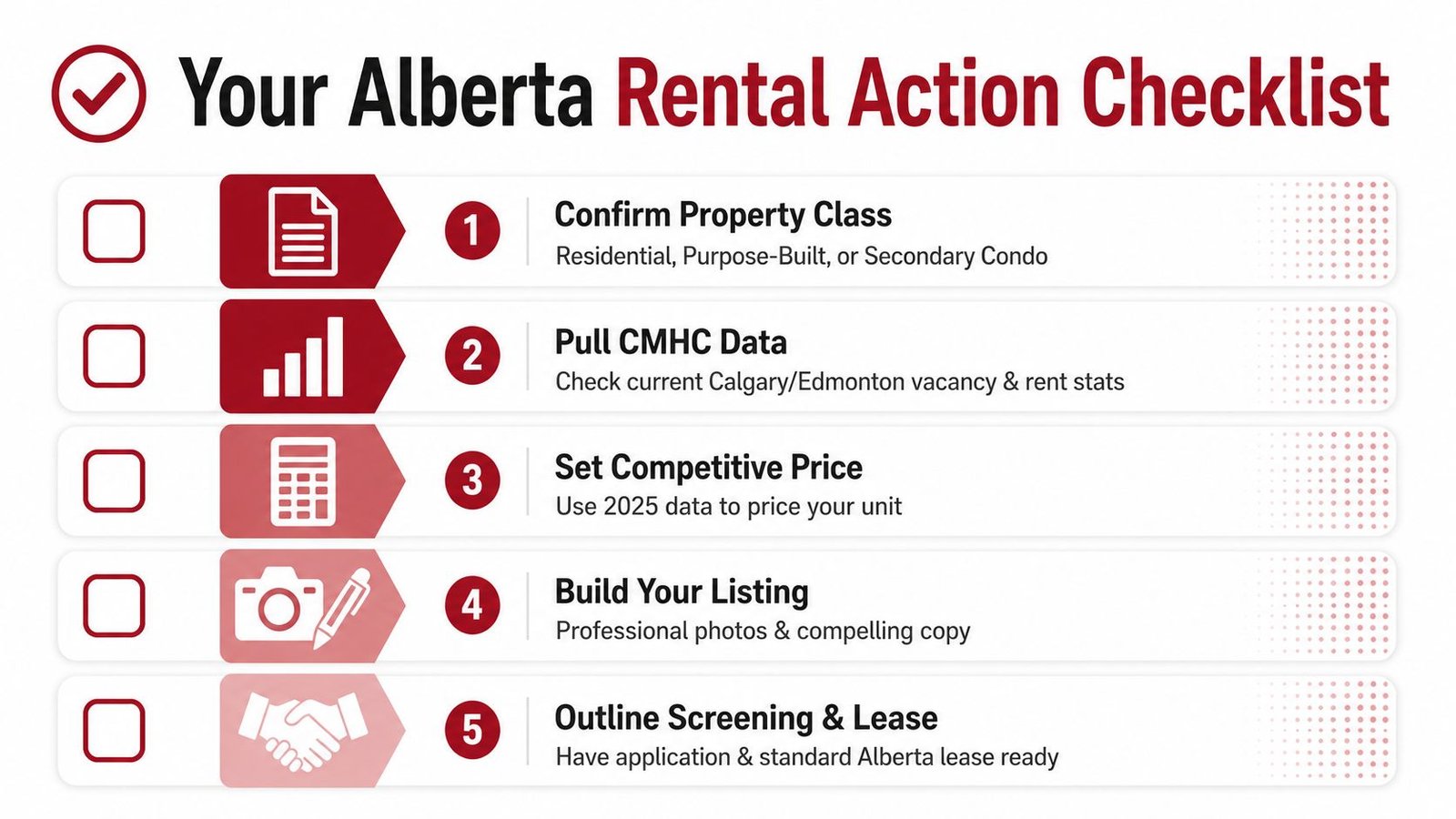
The decision can be made with a short operating check rather than a vague feeling about the market. An owner should complete these actions before advertising the property or signing with a manager:
- Confirm the property class. Identify whether the asset is a residential house, duplex, secondary condo, or purpose-built rental, then review the rules and building obligations that apply.
- Pull relevant market data. Review the current Calgary or Edmonton vacancy picture, then compare the property with nearby units that match its type, condition, size, parking, and amenities.
- Set a defensible price. Use market evidence and a realistic availability date. Don't price from the mortgage payment or from a listing that has already gone stale.
- Choose the operating model. Self-management suits an available, organised local owner. A licensed manager makes more sense when time, distance, scale, or compliance risk creates recurring pressure.
- Organise the records. Set up the required trust-account process for deposits, prepare the lease and inspection documents, and calendar the applicable notice deadlines well before turnover.
GURIQBAL CHAHAL, MBA, PMP, REAL ESTATE BROKER, with Royal LePage, can provide a no-cost rental review for an owner assessing positioning, compliance gaps, leasing readiness, and whether professional management could pay for itself. He can be reached at 403-966-6072.
An Alberta rental works best when the owner treats it as an operating business, not a passive side hustle.
Dreamhouse Realty Ltd. offers rental pricing guidance, professional listings, tenant placement, screening, lease preparation, inspections, rent collection, maintenance coordination, compliance support, and owner reporting across Calgary, Edmonton, Red Deer, and surrounding Alberta communities. Owners can visit Dreamhouse Realty Ltd. to request a rental consultation and discuss whether full-service management fits the property.