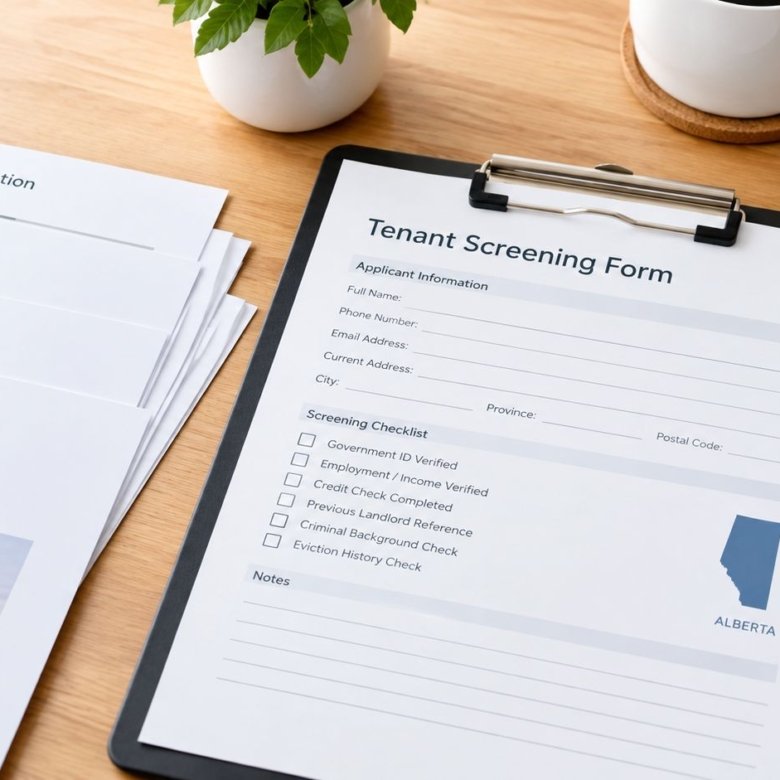

A Calgary landlord receives an e-transfer marked “rent,” but the tenant's name doesn't match the lease, the memo omits the unit, and the payment instructions were changed by email only. The money arrives, yet the record is weak. If the tenant later disputes the payment, the landlord may have to prove who paid, which property the money covered, and whether the landlord's instructions were genuine.
That's why rent payment online isn't merely a convenience feature. It's a control system for payment timing, identity verification, reconciliation, owner reporting, and dispute prevention. Online payments have become a mainstream Canadian channel. A 2025 report analysing $21,876,603,069 in rent payments collected from January 2014 through October 2025 found that online payments rose from 4% in 2014 to 51% in 2025, while tenants paying offline were 23% more likely to pay late (Canadian online rent-payment report).
Calgary owners who avoid trouble do not just ask tenants to “send rent online.” They document the permitted method, verify changed instructions independently, reconcile every deposit, and keep payment evidence separate from legal service records. The following workflow is designed for landlords and property owners across Calgary, Edmonton, Red Deer, and surrounding Alberta communities.
Table of Contents
- When Online Rent Goes Wrong in Calgary
- What Alberta Law Actually Allows for Rent Collection
- Setting Up Online Rent Payment for Your Alberta Rental
- Choosing the Right Payment Method for Each Tenant
- Running a Monthly Reconciliation That Actually Holds Up
- Security, Scams, and Auditable Paper Trails
- A Calgary-Specific Rent-Payment Checklist and Next Steps
When Online Rent Goes Wrong in Calgary
A Calgary owner of a condominium receives an email advising that the rent-transfer address has changed. The message uses familiar branding and arrives shortly before the due date. The tenant sends the payment, the funds clear, and everyone assumes the month is complete.
Later, the tenant says the payment was made exactly as instructed. The lease, however, names a different recipient and reference format. The landlord's bank statement shows money received, but the transfer record doesn't clearly identify the unit or rental period. A second problem appears when the landlord sends a late-rent notice through a portal that has no documented acknowledgment from the tenant.
The landlord now has several separate questions to answer:
- Was the new payment instruction authentic?
- Did the payment relate to the correct property and month?
- Was the tenant's account credited to the right ledger?
- Was any legally significant notice served correctly?
A payment receipt can establish that funds moved. It doesn't automatically prove that a notice was legally served, that an unidentified deposit belongs to a particular tenant, or that a changed banking instruction was authorised. That distinction is where many otherwise careful owners lose control.
Practical rule: A cleared payment isn't a complete payment record until the payer, amount, date, property, and rental period match the ledger.
The answer isn't to return to cash or cheques. The answer is to build a workflow that treats online payment as evidence, not just speed. Landlords also need to understand what happens when arrears continue and documentation becomes important. Owners considering Alberta eviction procedures should ensure their payment records and notice records are maintained as separate, organised files.
Online collection works well when the process is consistent. It fails when tenants receive informal instructions, landlords post unidentified deposits, and managers assume a bank confirmation resolves every legal question.
What Alberta Law Actually Allows for Rent Collection
Alberta landlords can offer electronic rent payments, but the lease must not turn that option into a prohibited automatic-payment requirement. The Alberta Law Reform Institute confirms that Alberta's Residential Tenancies Act prohibits a landlord or tenancy agreement from requiring post-dated cheques, automatic debiting of a tenant's bank account, automatic credit-card charges, or another form of automatic payment for rent (Alberta Law Reform Institute guidance).
That boundary changes how a Calgary lease should be written. A landlord can identify e-transfer, direct deposit, or another agreed electronic method. A landlord shouldn't require the tenant to authorise an automatic withdrawal just because a software platform offers that feature.
Separate choice from compulsion
A compliant payment clause should identify:
- The permitted method, such as e-transfer or a specified portal.
- The due date, stated clearly in the lease.
- The recipient, including the verified payee identity or portal account.
- The payment reference, such as the tenant name, unit, and rental period.
- The process for changing instructions, requiring written notice through a known communication channel and independent verification.
The purpose isn't to make payment difficult. It's to prevent a landlord from treating an automatic debit as the only acceptable route. If a tenant chooses a recurring arrangement voluntarily through an approved process, the landlord still needs a workflow that respects the statutory boundary and records the tenant's choice accurately.
Electronic methods can also involve delays or multiple steps. A transfer may be sent to the wrong address, remain unmatched in a bank report, or arrive without enough information for posting. Clear instructions and confirmation procedures therefore matter as much as the payment button itself.
Payment evidence is not service evidence
A bank confirmation proves something about the transaction. It doesn't by itself prove that a late-rent notice, termination notice, or other legally significant document was properly served.
Alberta guidance treats electronic service as a separate issue. Electronic service requires the recipient to have provided an electronic address for service, the document must be sent in a usable format, the sender must request acknowledgment, and the recipient must acknowledge receipt. A portal receipt can support an administrative record, but it shouldn't be treated as automatic proof of valid service.
Landlords needing a practical Alberta reference should keep the Alberta RTA handbook available during lease drafting and arrears administration. Payment terms, payment records, and service records belong in related but distinct files.
Setting Up Online Rent Payment for Your Alberta Rental
A successful system starts with the operating decision, not the software subscription. A landlord with a small number of units may manage e-transfers effectively, while a growing portfolio may need a property-management portal that connects payments to tenant ledgers and owner statements.
Build the workflow before inviting tenants
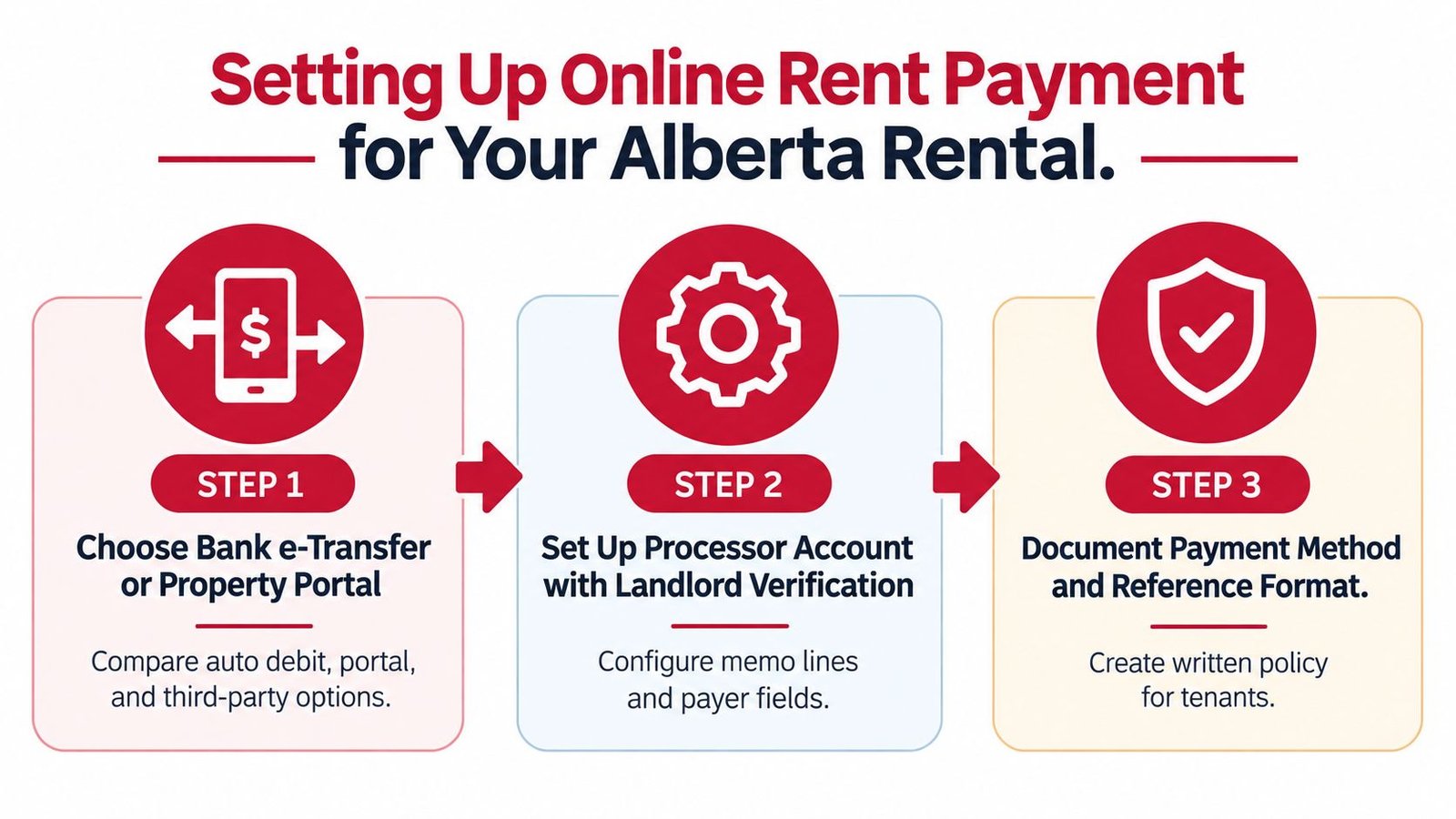
The setup should follow a defined sequence:
- Choose the channel: Compare bank e-transfer, a property-management portal, and a third-party processor based on record quality, tenant usability, funding timing, and reconciliation.
- Open and verify the account: Use a business identity that tenants can recognise. Configure payer fields, property fields, notifications, and reporting before sending instructions.
- Write the payment policy: State the due date, recipient, reference format, and process for reporting failed or misdirected payments.
- Onboard tenants: Give each tenant the same written instructions and confirm that the tenant can identify the property and rental period in the memo.
- Test the records: Run a controlled test or onboarding check so the landlord can see how the transaction appears in the bank report, processor report, and tenant ledger.
- Go live for the first full month: Monitor the first cycle closely instead of assuming the platform has matched every payment correctly.
A useful policy might require the tenant to include the rental address or unit number, tenant surname, and rental period in the transfer memo. The landlord should retain the original confirmation, not only a screenshot, and should document any correction made after posting.
| Method | How it works | Typical fee | Best for |
|---|---|---|---|
| Bank e-transfer | Tenant sends a one-time payment to a verified recipient and includes the required reference | Varies by bank or account arrangement | Small portfolios with disciplined manual reconciliation |
| Property-management portal | Tenant pays through a portal connected to the property ledger and owner reporting | Varies by provider and plan | Owners who need centralised records and statements |
| Third-party processor | A payment provider processes electronic funds transfers or card payments and supplies reports | Varies by provider, method, and disclosed processing terms | Portfolios needing payment controls without full management software |
The same design principle applies to other service businesses that need dependable digital collections. A practical resource on online payment solutions for plumbers and HVAC can help owners compare payment workflows, even though rental administration has additional Alberta tenancy requirements.
Don't make the tenant responsible for discovering missing details. The landlord should provide one approved instruction sheet, one verified payee identity, and one reference format that survives staff changes and tenant turnover.
Choosing the Right Payment Method for Each Tenant
No single method fits every Alberta rental. The right choice depends on the owner's portfolio size, tenant circumstances, need for reporting, and tolerance for manual follow-up.
Interac e-transfer is usually the sensible baseline for a small portfolio. It's familiar to many Canadian tenants, supports one-time payment, and can create a useful confirmation trail. Its weakness is operational. Tenants may omit the unit number, use the wrong recipient, or send partial amounts, leaving the landlord to identify and reconcile the deposit.
A property-management portal adds structure. It can connect the tenant, property, amount, and payment status in one system, which helps owners who manage condos, townhomes, or several units across different Calgary neighbourhoods. The trade-off is cost, onboarding effort, and dependence on accurate account configuration.
Pre-authorised debit through a Canadian processor can reduce tenant effort and support scheduled collection, but Alberta landlords must not require automatic debiting for rent. Any recurring arrangement must be handled carefully, with the tenant's choice documented and a non-automatic compliant payment route available.
Credit card payment can help a tenant who needs a particular payment option, but processing costs must be disclosed before the tenant selects it. Credit card payments should not become the default just because they are convenient for the landlord's software.
Alberta guidance recognises electronic transfers and direct deposit as lawful payment methods when the parties agree, and recommends retaining confirmations and other proof of payment for later disputes (Alberta payment-method guidance).
For a small Alberta portfolio, e-transfer is generally the practical starting point. A portal becomes more compelling when owner statements, ledger matching, multiple properties, and exception queues matter more than keeping the process informal. A processor can be appropriate where the owner needs structured reporting, but its fees, funding timing, and automatic-payment settings require careful review.
The payment method should serve the record, not replace it. A tenant who pays through a polished portal can still be misapplied if the unit is wrong, the amount is partial, or the landlord doesn't review exceptions.
Running a Monthly Reconciliation That Actually Holds Up
Reconciliation is the centre of a defensible rent-payment system. The landlord should be able to connect each deposit to a named payer, exact amount, transaction date, and rental period without relying on memory or a vague bank description.
Match four fields every time
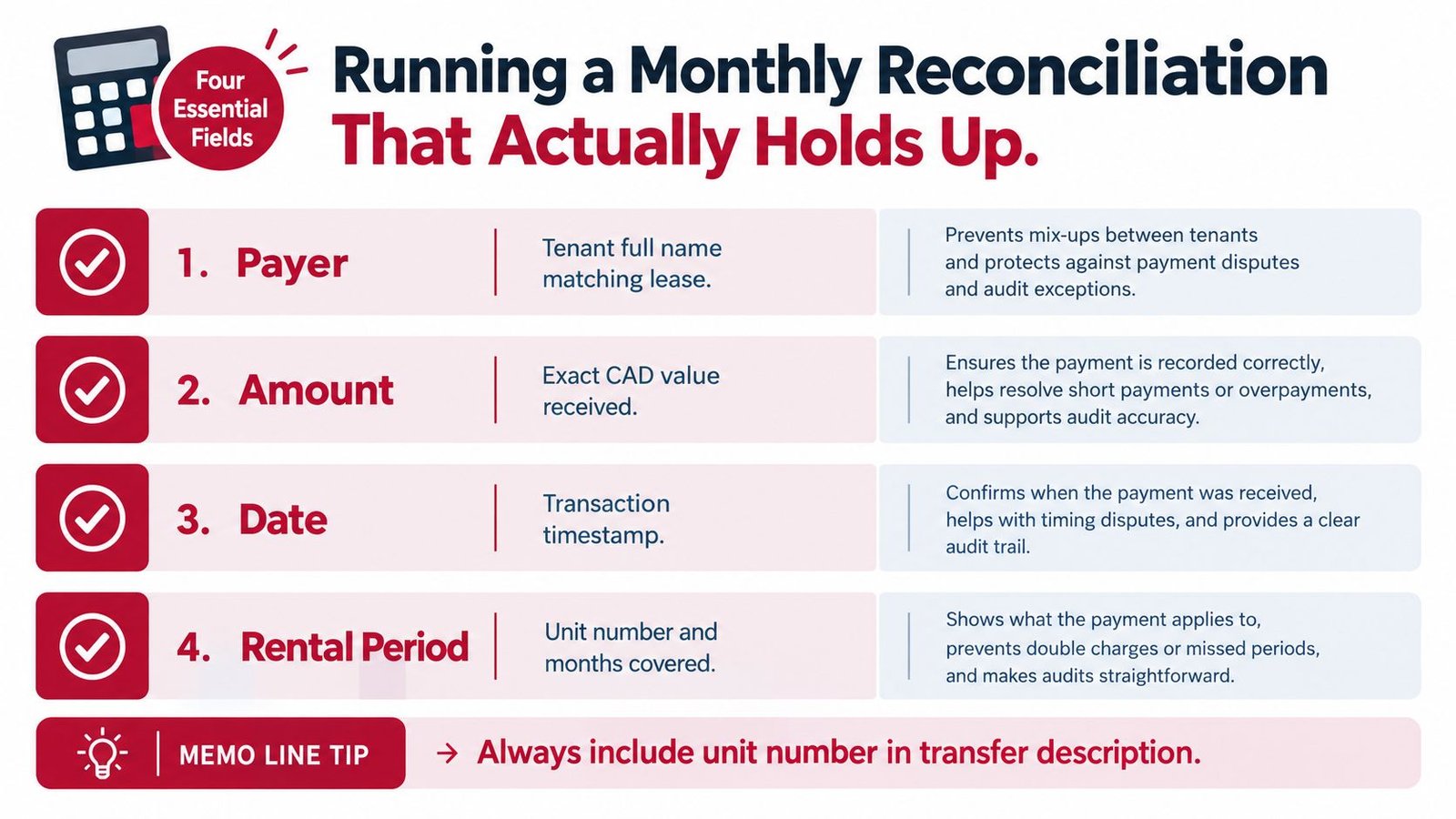
The monthly review should begin with the processor or bank report, then move to the internal tenant ledger. Each transaction should be matched using:
- Payer: The name should correspond with the tenant or an authorised payer connected to the lease.
- Amount: The received amount should be compared with the scheduled rent and any documented adjustment.
- Date: The transaction timestamp should be retained, especially where timing affects whether payment was made on time.
- Rental period: The record should identify the property, unit, and month or period covered.
The tenant's memo line is a simple but powerful control. Requiring the rental address or unit number and rental period prevents a deposit from becoming an unidentified item in a pooled operating account.
Resolve exceptions before statements
A landlord shouldn't issue an owner statement while unresolved deposits remain in the account. The close process should be:
- Export the bank or processor report.
- Match every transaction to the tenant ledger.
- Investigate duplicates, partial payments, reversals, rejected transfers, and unmatched deposits.
- Record the resolution in an audit note.
- Issue the owner statement after reconciliation.
- Archive the source report and exception log.
An unidentified deposit shouldn't be posted as rent until the payer and property are verified. If a payment fails, the landlord should record the failure, contact the tenant through the approved channel, and avoid serving an arrears notice until the payment status has been checked.
Record standard: Bank or processor record, internal ledger entry, and tenant-facing confirmation should form one complete transaction chain.
The Government of Alberta identifies a minimum three-year retention period for security-deposit records after tenancy termination, including receipt date, amount, deposit date, and financial institution. That structure provides a defensible benchmark for online-rent records, which should include the lease terms, transaction identifier, amount, date and time, payer, property, confirmation, failed-payment notices, correction history, and owner remittance entry (Government of Alberta landlord information).
Owners comparing administrative systems can also review tools designed to simplify payment workflows, particularly where reconciliation needs to extend beyond a spreadsheet. For rental operations, a structured rent payment ledger remains essential even when a portal supplies automated reports.
Security, Scams, and Auditable Paper Trails
The fastest payment method can provide the weakest recovery path. An e-transfer may arrive quickly, but if a tenant follows fraudulent banking instructions, the landlord may have no reliable way to show which account was authorised or whether the recipient matched the lease.
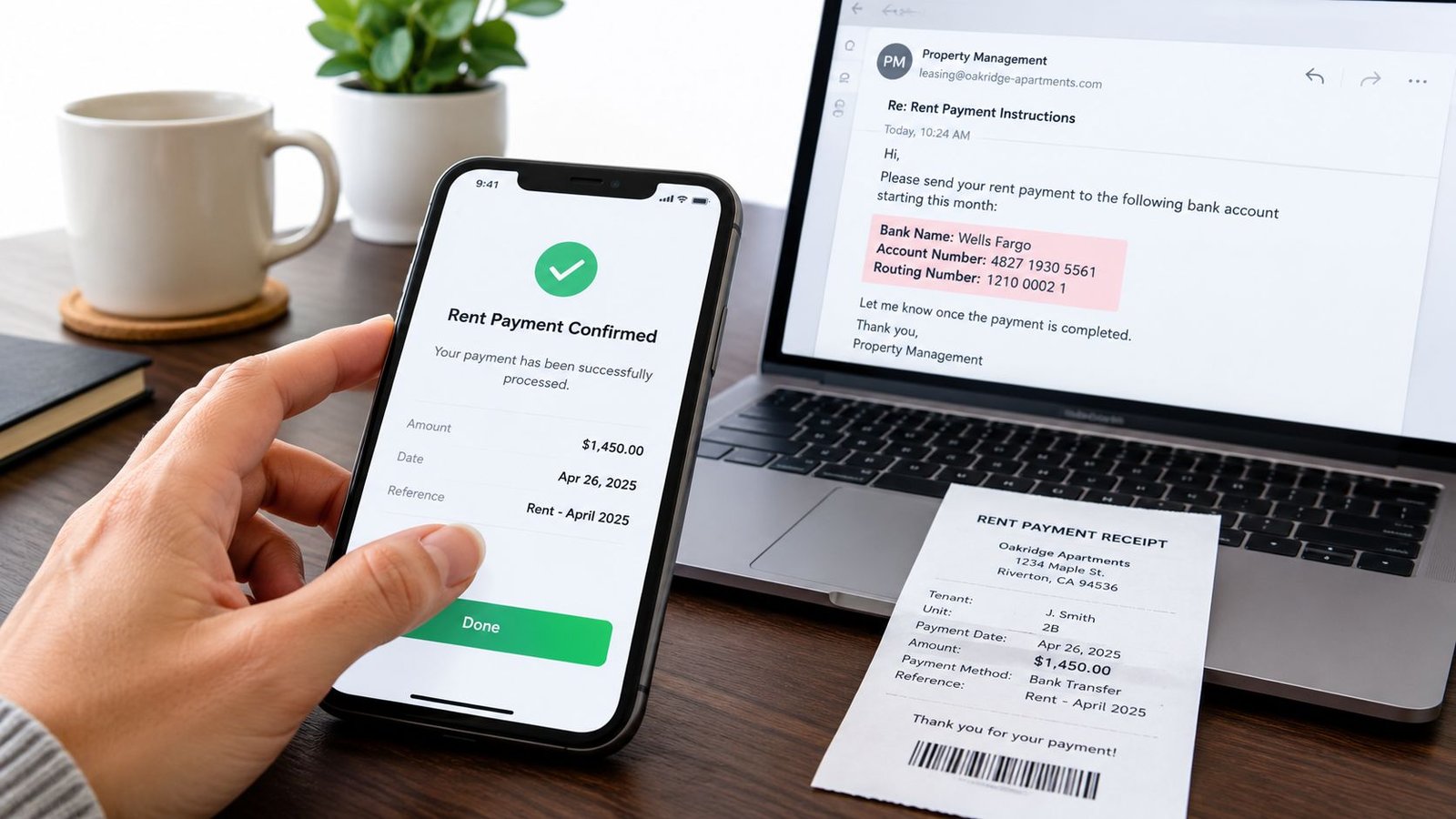
Calgary landlords should assume that payment instructions can be impersonated. A changed email address, unfamiliar payee name, urgent request, or altered deposit account deserves independent verification through a previously known telephone number or established tenant portal. The tenant shouldn't be expected to trust a new instruction merely because it appears to come from the landlord.
A strong policy has several hard boundaries:
- No informal holding transfers: Prospective tenants shouldn't send money before the lease, identity, payment purpose, and recipient are verified.
- No unconfirmed banking changes: A changed recipient must be checked through a separate trusted channel.
- No mixed-purpose deposits: Rent, security deposits, repairs, and other funds should be identified separately in the records.
- No screenshot-only files: Preserve the original confirmation, processor record, bank report, and written instructions.
- No assumption that digital means served: Keep delivery logs and acknowledgment evidence for legally significant notices.
Tenants should retain e-transfer confirmations, bank records, receipts, and their own payment log. Alberta-specific tenant guidance recommends keeping those records for at least two years, or longer where a dispute is anticipated. The same guidance confirms that alternative delivery of a security deposit, including e-transfer, requires the tenant's written agreement, and that tenants remain responsible for paying rent on time even where condominium circumstances may redirect payment to a corporation (Alberta tenant guidance).
A landlord's file should show the original lease instruction, any approved change, the transaction identifier, the payment amount and date, the property reference, and every correction. Notices need their own service file with the recipient's service address, document version, timestamp, delivery record, and acknowledgment.
Convenience is valuable, but evidence is what survives a complaint. A secure online rent process makes verification and retrieval routine rather than forcing the landlord to reconstruct events after a dispute.
A Calgary-Specific Rent-Payment Checklist and Next Steps
Calgary owners need a monthly process that connects collection to cash-flow reporting. CMHC reported a 5.0% vacancy rate in Calgary's purpose-built rental market in 2025 and average two-bedroom apartment rents of $1,914 (CMHC Calgary rental-market data). Those conditions make accurate records important for distinguishing rent collection issues from vacancy, leasing, or property-level problems.
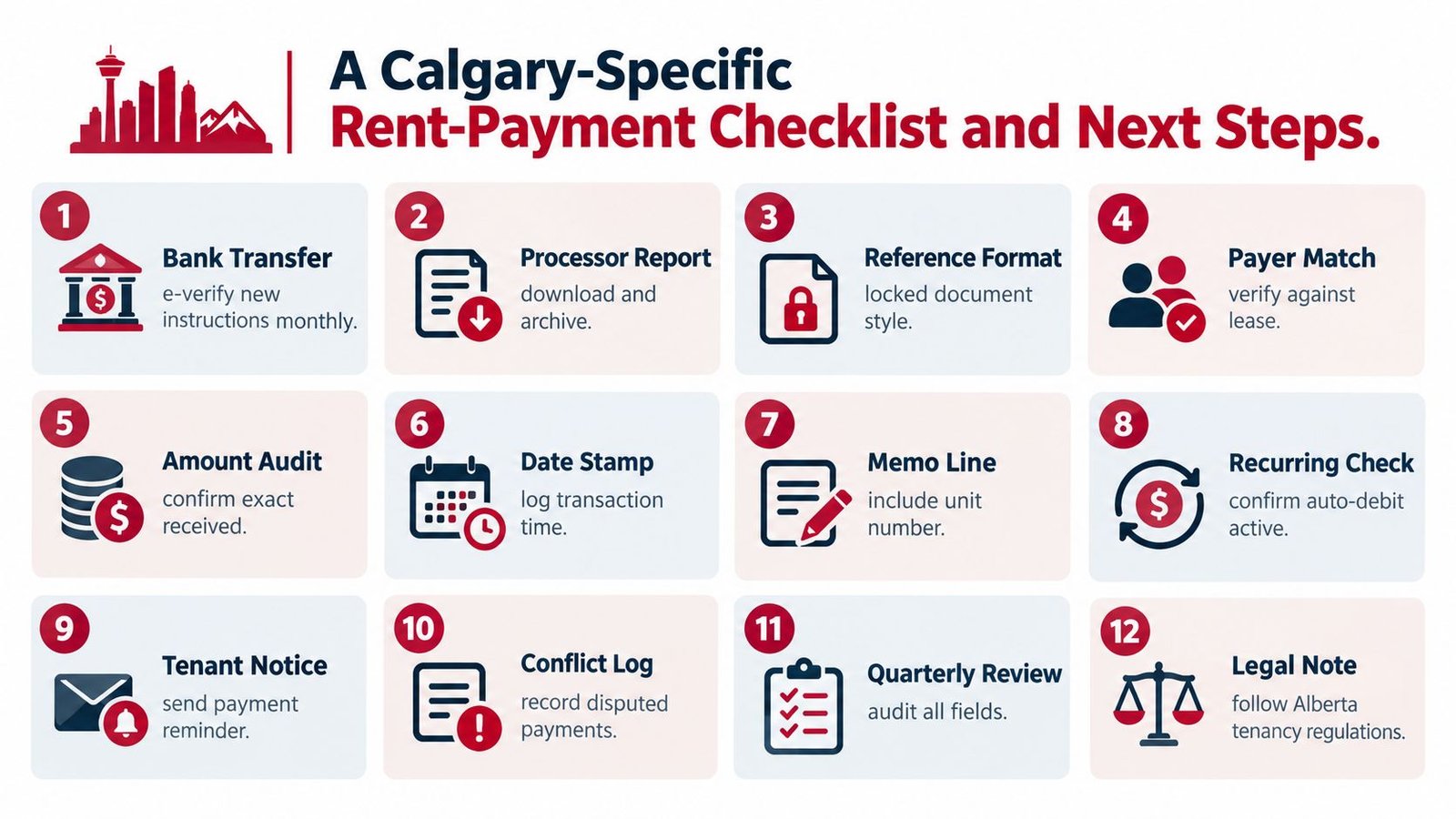
A practical rent-cycle checklist includes:
- Confirm the approved payment method.
- Verify any changed payment instruction independently.
- Use the locked reference format.
- Download the bank or processor report.
- Match the payer to the lease.
- Confirm the exact amount received.
- Log the transaction date and time.
- Check the unit and rental-period memo.
- Record failed, partial, reversed, or disputed payments.
- Follow up on exceptions before arrears action.
- Issue the owner statement after reconciliation.
- Archive the source reports, confirmations, and audit notes.
A PDF workflow can help remote owners and managers keep lease terms, payment records, exception notes, and monthly statements organised. Owners evaluating document tools may find this PDFWix guide to real estate PDFs useful when standardising files across properties.
The strongest next step is an audit of the current rent process. The owner should test whether a third party can identify who paid, which unit was covered, what period the payment covered, and whether the record separates payment evidence from notice-service evidence.
Dreamhouse Realty Ltd. offers Calgary property owners structured online rent collection, arrears follow-up, tenant and owner portals, reconciliation, and statement reporting aligned with Alberta tenancy requirements. For a free rental consultation about rent payment controls, leasing, and ongoing management, contact GURIQBAL CHAHAL, MBA, PMP, REAL ESTATE BROKER, at Phone 403-966-6072, or visit Dreamhouse Realty Ltd..