

A Calgary landlord can do everything right on the phone and still get tripped up at the kitchen table. The lease is signed, the tenant moves in, the repair ticket is open, and then a notice goes out late, or worse, not in the right form. That is usually when a simple delay turns into a rent dispute, a repair complaint, or a process problem that costs far more than the original fix.
That is why Alberta landlord and tenancy compliance is not a side issue. The province's rental sector is large enough that the rules affect a major share of households, with the Alberta Law Reform Institute citing the 2021 Census as showing 465,220 renter households out of 1,633,220 total households in Alberta, slightly more than one quarter of all households. The same ALRI report also notes that researchers could not find reliable statistics on the total number of landlords, which makes renter-household counts one of the clearest baseline indicators for the market ALRI report.
Why Alberta Landlord and Tenancy Compliance Shapes Every Rental Decision
A remote owner lists a condo in Calgary, gets a tenant quickly, and then misses the timeline on a notice because the file sits in an inbox. The repair request that should have been documented with photos gets handled by text messages instead. A few weeks later, the conversation is no longer about the unit itself, it's about whether the landlord followed the process the Act expects.
That is the practical reality of rental ownership in Alberta. The Residential Tenancies Act (RTA) is the operating system underneath most private rentals, and Alberta's guidance points landlords to dedicated information and a landlord and tenant handbook to explain rights, responsibilities, notices, and dispute processes Alberta landlord and tenant guidance. Once a landlord sees the RTA as a day-to-day workflow, the business starts to make more sense. Move-in documents, repair logs, entry notices, and rent letters stop being paperwork and start being controls.
What goes wrong first
The first failure is usually not dramatic. A landlord forgets the written notice, delays a repair response, or enters without enough notice because a contractor was free that afternoon. Those shortcuts feel small in the moment, but they create the kind of record that a tenant can point to later.
Practical rule: the file should show who was told, when they were told, and what happened next.
That is the difference between a clean tenancy file and a dispute file. Landlords who treat compliance as an administrative afterthought usually discover that the RTA is already part of the business, just not in the place they expected. The notice, the repair, the inspection, and the response are all part of one chain.
Why this matters more in Alberta than many owners assume
Alberta is not a casual, handshake market. The province's rules are specific, and the consequences of getting them wrong are usually operational, not theoretical. That means the landlord who keeps good records is not being overcautious, that landlord is creating the evidence needed if the tenant later questions rent, access, habitability, or termination.
A useful way to think about it is simple. The lease sets expectations, but the daily handling of the tenancy proves whether those expectations were honoured. In practice, that is where the strongest Alberta landlords separate themselves from the ones who only read the agreement once and hope for the best.
The RTA Framework Every Alberta Landlord Must Understand
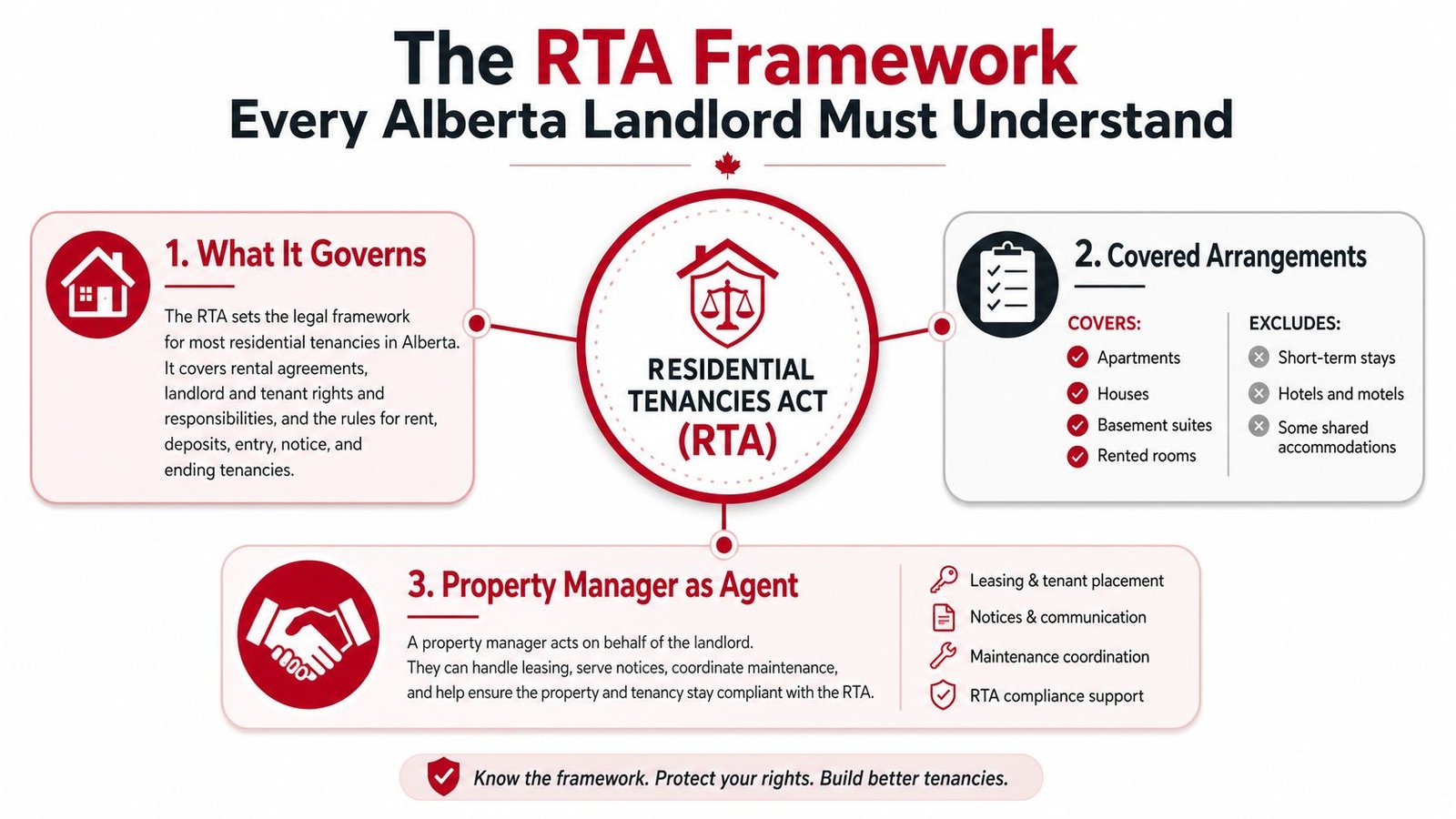
A tenancy goes sideways fast when the owner treats the file like an afterthought. The RTA is the operating manual for a residential rental, and it sets the control points that decide whether a landlord is on solid ground or exposed to a dispute. It tells you what kind of arrangement is covered, what duties sit with the landlord, and where the legal boundaries sit. Alberta also says the Act applies when the landlord is a property manager acting as the owner's agent Alberta landlord and tenant information.
Which arrangements are inside the Act
Most standard rentals fall under the RTA. That includes apartments, houses, basement suites, and similar residential tenancies in the private market. Alberta also notes that the Act does not apply to every living arrangement, including situations where a tenant shares the landlord's living quarters as though they were part of the landlord's family.
That distinction matters because owners sometimes assume every occupancy arrangement works the same way. It doesn't. A room rental in a shared home can sit outside the usual tenancy framework, while a self-contained suite in the same building is usually treated very differently. The lease title doesn't control that outcome, the actual living arrangement does.
Fixed-term and periodic tenancies are not the same thing
A fixed-term tenancy has a set end date. A periodic tenancy keeps running in repeating periods, such as month-to-month or week-to-week. That difference affects notice, renewal expectations, and the landlord's flexibility at the end of the term. The choice is not just administrative, it shapes how the tenancy ends and how future changes are handled.
A good lease makes that structure obvious from day one. For owners drafting or reviewing an agreement, a plain rental template can be useful as a starting point, and a basic example is available in this rental lease agreement example. The important part is not the template itself, it's whether the tenancy type is stated clearly and the management process matches it.
Why the structure matters in the real world
Periodic tenancies give owners more flexibility, but they don't erase notice requirements. Fixed terms give both sides more certainty, but they also lock in more of the economic plan for the tenancy. That is why the RTA should be treated like a map, not a slogan. Once the owner knows where the route begins, the next decisions about deposits, entry, pricing, and renewal become much easier to manage correctly.
Deposits, Rent Increases, and the Numbers That Control Your Cash Flow
A missed deposit deadline, a rent increase sent too late, or a trust account that is handled loosely can turn a routine Alberta tenancy into a file full of objections. The cash side of Alberta landlord and tenancy is tightly regulated, and that matters because money and timing are usually where disputes start. Alberta's rules cap the security deposit at one month's rent, require it to be held in trust, and set a 10-day deadline to return the deposit or provide a deductions statement after the tenancy ends, followed by a final accounting within 30 days if deductions are taken, as set out in the deposit and rent overview.
That structure changes how owners should read their cash flow. A deposit is not a flexible reserve fund, and it is not a way to patch weak pricing or cover ordinary operating strain. It is trust-held money with a defined end-of-tenancy process, so the accounting has to be clean before the file ever gets messy.
The rent increase clock is stricter than many owners expect
Alberta does not use statutory rent control, but it does require a landlord to wait at least 365 days between rent increases. Alberta also states that rent cannot be increased during a fixed-term tenancy, and periodic tenancies require written notice that depends on the tenancy type, including 12 full tenancy weeks for week-to-week, 3 full tenancy months for month-to-month, and 90 days for other periodic tenancies Alberta during a tenancy.
That timing forces owners to price the tenancy properly at the front end. If the rent is too low at move-in, there is no quick correction later. The landlord has to wait, serve the right notice, and let the calendar do its work.
How the numbers change the business decision
A landlord who relies on deposit pressure or frequent repricing is working against the system. The better approach is more ordinary, and more disciplined. Set the initial rate correctly, keep the tenant longer when the tenancy is working, and collect arrears early when the account slips.
Cash flow also depends on what the owner pays to get the unit managed. A fee structure can make the math tighter or looser, which is why many owners review property management fees alongside rent strategy, not after the fact.
Bottom line: in Alberta, cash flow improves more from accurate pricing and retention than from trying to force short-term adjustments.
A simple operating view
The trade-off is straightforward. The shorter the landlord's planning horizon, the more the rules feel restrictive. The longer the planning horizon, the more useful they become, because the owner can build them into underwriting, lease timing, and renewal strategy.
Landlords who understand the timing rules are usually better at the unglamorous parts too. They know when the next increase can legally happen, what the deposit must do at move-out, and why the file has to be ready before any money changes hands. That is where bookkeeping stops being clerical and starts protecting margin.
Day-to-Day Landlord Obligations and the Notices That Prove Them
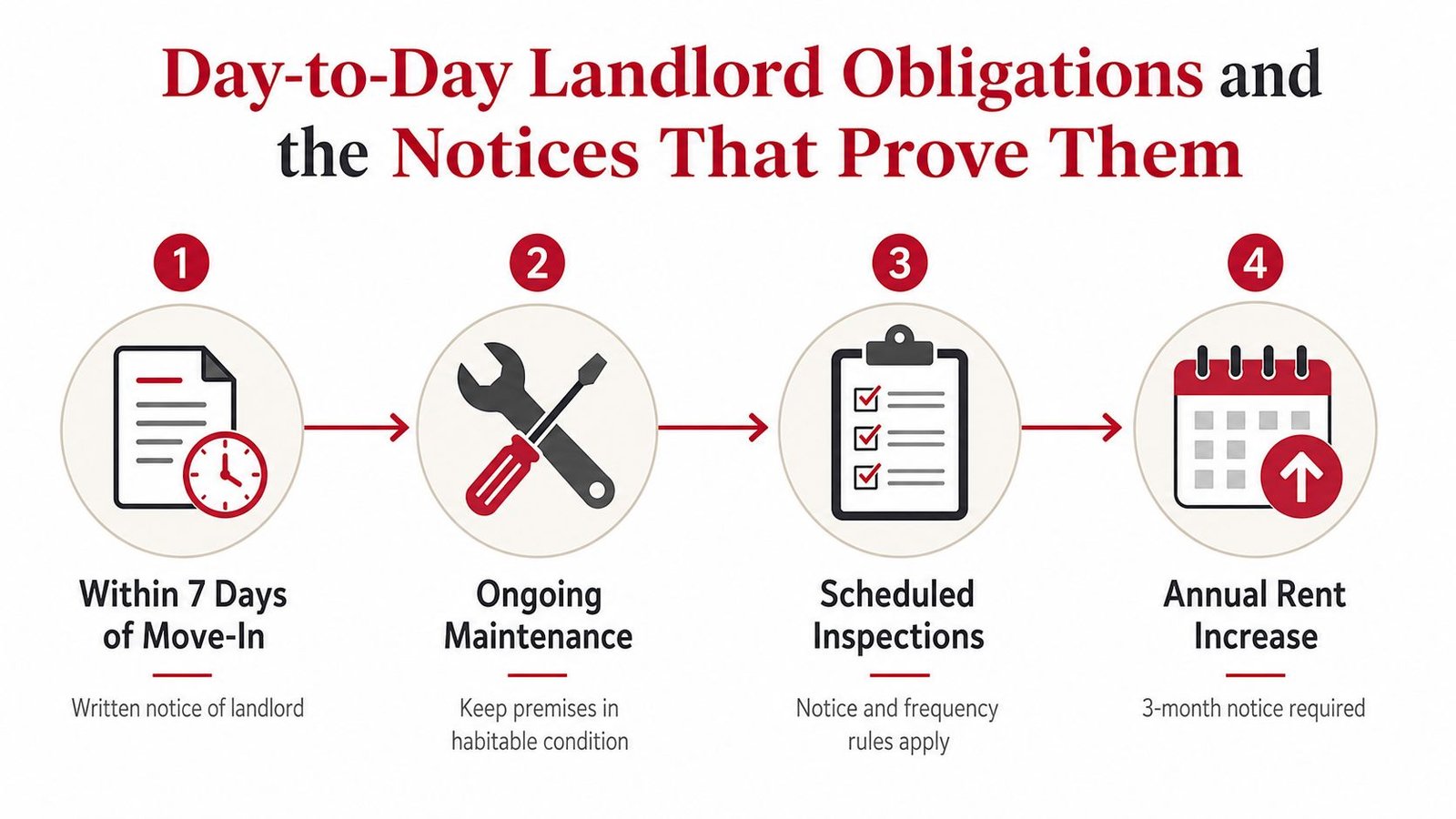
The fastest way to avoid an Alberta tenancy dispute is to make the ordinary things easy to prove. The province requires a written notice of landlord within 7 days of move-in, expects the unit to stay habitable throughout the tenancy, and says landlords may enter only with consent or with at least 24 hours' written notice for non-emergency entry Alberta rights and responsibilities. Those are process checkpoints, and if the paperwork is weak, the landlord usually feels that weakness at the kitchen table when a tenant challenges a repair, an entry, or a notice.
Move-in is the first control point
The written notice of landlord belongs in the file early, not after a problem starts. If the tenant later raises an issue about communication, repairs, or service of notices, the move-in package becomes the first thing that shows whether the landlord handled the tenancy professionally. The documentation should be clear enough that someone reading the file can tell who the landlord is, who the agent is, and where notices went.
That early record also helps when owners use a manager, a relative, or a different contact for day-to-day communication. If the file is vague, tenants often say they never knew who had authority to answer them, and that can complicate every later notice.
Maintenance has to be managed as a workflow
Habitability is not preserved by hope. It is preserved by logged requests, timely follow-up, and repair completion that can be shown later if needed. Alberta's guidance says landlords must maintain the unit in habitable condition and avoid unreasonable interference with the tenant's peaceful enjoyment of the premises.
That means maintenance dispatch should be scheduled, not improvised. If a plumber, electrician, or contractor is coming in, the file should show the request, the time window, and the repair outcome. A landlord who uses texts only may solve the repair but still lose the paper trail.
Older Alberta housing stock adds another layer here. Indoor air quality complaints, lingering moisture, and ventilation problems often start as small tenant concerns and grow into bigger disputes when the owner treats them as cosmetic. Good records show whether the issue was reported, how it was inspected, and what was done to reduce the problem.
Entry and inspections need advance planning
Non-emergency entry is one of the places where owners get caught out quickly. A last-minute visit because “the vendor is already nearby” can turn into a complaint if the notice is wrong or absent. The safer practice is simple, pre-schedule the access, confirm the written notice, and record the reason for entry.
A well-run tenancy file should read like a timeline, not a memory test.
That same habit should apply to inspections. Whether the inspection is routine or tied to a maintenance issue, the notes and photos matter. They show what was observed, what was communicated, and whether the landlord acted promptly. They also help if a tenant later disputes what was seen during a screening visit or a follow-up entry, because the file shows the difference between a legitimate inspection and a casual walkthrough.
From Missed Rent to Dispute Resolution: The Path Forward
A tenant stops paying, and the pressure starts immediately. Some owners want to react fast, others want to wait and hope the issue clears itself up. Both choices can create avoidable trouble if the file is not handled in order. In Alberta, the landlord who wins the dispute is usually the one who can show the missed rent, the proper notice, and the next steps without gaps.
The record usually decides the outcome
A chronic arrears file is only as strong as the landlord's documents. The ledger has to be accurate, the notices have to be served properly, and the communication history has to show that the landlord stayed consistent from the first missed payment onward. The tenant may dispute the reason for the arrears, but the landlord still needs a clean trail showing what was owed and when it was due.
The formal route matters because self-help is a bad gamble. Changing locks, withholding access, or using pressure tactics usually makes the situation harder to defend and can shift attention away from the tenant's default. The landlord is usually better off building the dispute file and following the formal process.
Where the dispute path leads
The Residential Tenancy Dispute Resolution Service, often called RTDRS, exists to resolve residential tenancy disputes without the courts in many cases. Heritage Law's Alberta explainer notes that RTDRS can help with lease termination disputes and that formal orders may end a tenancy early in appropriate cases Heritage Law overview. The hearing outcome depends heavily on the file presented, not on how convincing the landlord sounds at the hearing table.
That is why casual record-keeping fails when the tenancy turns adversarial. A landlord who has kept proper notices, ledgers, inspection reports, and maintenance records is in a very different position from one relying on memory. The difference shows up quickly once the dispute is in front of a decision-maker.
What the best files show
- Service history: each notice served correctly, with dates and delivery method recorded.
- Payment history: rent ledger entries that match the account, not just an owner's recollection.
- Issue history: repair requests, responses, and completion notes that show follow-through.
- Behaviour history: repeated patterns, if any, documented factually rather than emotionally.
The strongest Alberta tenancy files do not try to tell a story after the fact. They show the story as it happened.
For owners who also need a tighter process for tenant screening, a credit check guide for tenants can help keep the file focused on what matters and avoid collecting more than the decision requires.
Privacy, Screening Records, and Indoor Air Quality Issues Most Owners Miss
A tenant walks into your office, you ask for an application, a credit report, income proof, and references, then six months later the application is still sitting in an inbox and nobody can say who has access to it. That is where privacy and screening records stop being an admin issue and become part of Alberta landlord and tenancy compliance. Alberta's privacy guidance says landlords may ask only for personal information reasonably required to decide whether to rent, and tenants can request access to or correction of their information within 45 days OIPC landlord and tenant guidance. That puts a real record-handling duty on the owner, not just a preference for neat files.
Screening files need a defensible purpose
Credit checks, reference calls, income documents, and application forms all have a place, but each one creates a record that needs a clear reason for being collected. In practice, the cleanest files are the ones that match the decision being made. If the information was not needed to decide on the tenancy, it should not be sitting in the file.
A common mistake is leaving application materials scattered across email threads, shared drives, and printed folders with no retention plan. Another is keeping old applications long after the rental decision has been made. Both habits create avoidable exposure, especially if a tenant later asks to see what was collected or to correct inaccurate information.
Alberta's human-rights framework adds another layer because rental advertising and tenancy terms cannot discriminate on protected grounds, including age in tenancy contexts. Screening questions, selection criteria, and follow-up notes need to stay neutral and tied to the rental decision, not to personal assumptions about who should live in the unit.
If an owner wants a cleaner process, a structured credit check for tenants workflow helps keep the file consistent from applicant to applicant.
Radon and older housing stock sit in a grey area
Indoor air quality is another place where a lot of Alberta owners get caught flat-footed. A legal explainer notes that Alberta does not currently have legislation directly addressing radon testing, even though radon may still be handled through the Public Health Act and the RTA LawNow explainer. That leaves owners with a practical problem, not a tidy checklist item.
Older homes, basement suites, and small multifamily properties deserve extra attention because habitability questions do not disappear just because the statute is silent on one contaminant. If a landlord becomes aware of a concern, the better practice is to assess it, disclose carefully, and deal with remediation promptly. A tenant who is already worried about health will remember delay, vague answers, and a file with no action notes.
Your Alberta Landlord Compliance Checklist and Next Steps
The landlords who stay out of trouble usually run the same basic file every time. The lease is complete, the notices are ready, the deposit handling is clean, and the inspection notes are easy to find. That kind of consistency matters because Alberta tenancy disputes tend to punish memory and reward documentation.
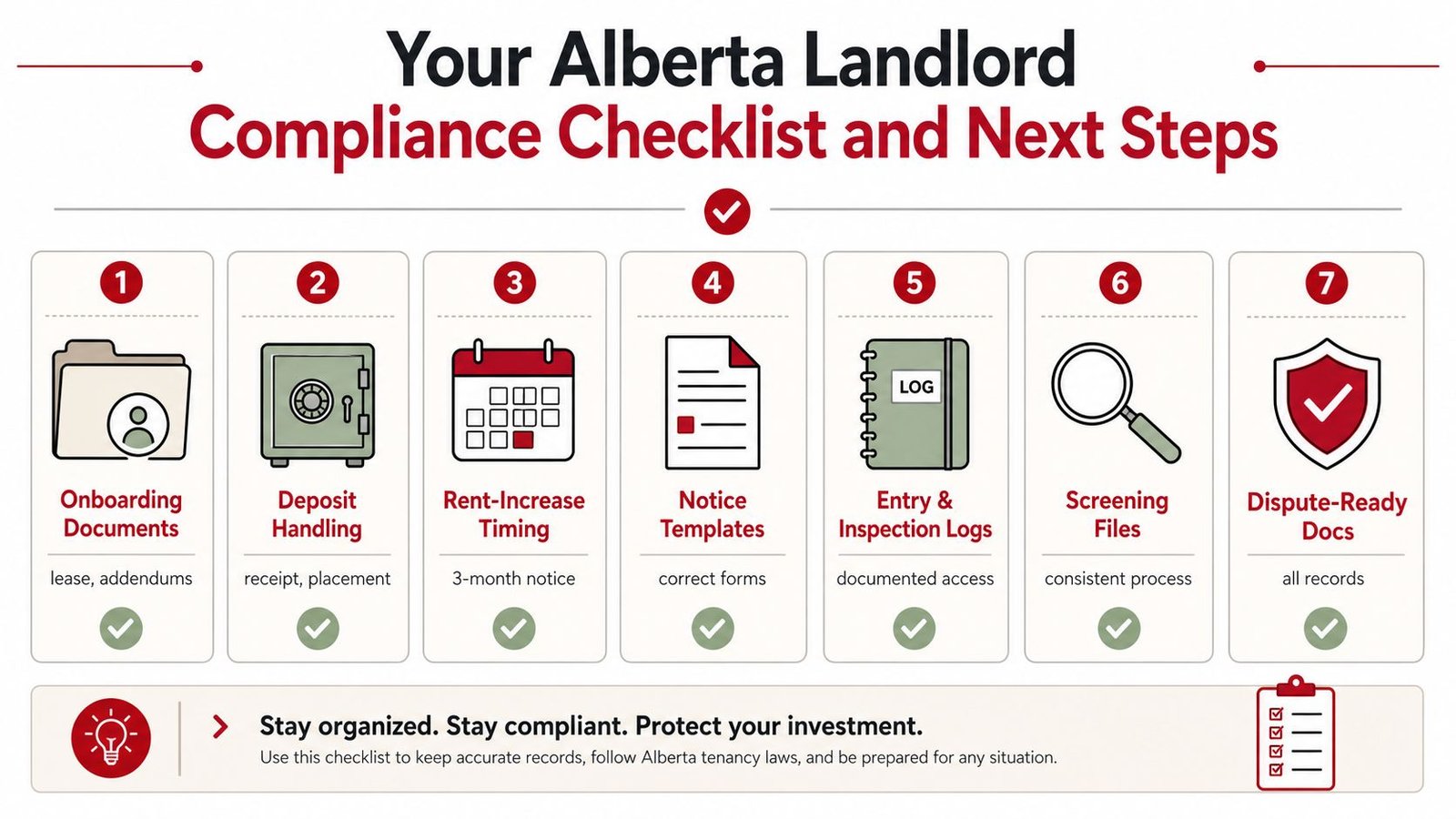
A practical audit starts with the file, not the feeling that everything is probably fine. The table below is a simple way to check the control points that matter most.
| Control Point | What to Verify | Alberta Rule |
|---|---|---|
| Onboarding documents | Lease, addendums, written notice of landlord | Written notice of landlord within 7 days of move-in |
| Deposit handling | Amount, trust placement, move-out accounting | Deposit capped at one month's rent, held in trust, returned or accounted for on the required timeline |
| Rent-increase timing | Calendar date of last increase, tenancy type, notice date | At least 365 days between increases, and written notice rules vary by tenancy type |
| Notice templates | Correct form, signature, effective date | Notice must be in writing and contain the required details |
| Entry and inspection logs | Date, reason, notice, outcome, photos | At least 24 hours' written notice for non-emergency entry |
| Screening files | Application, references, credit, storage practice | Collect only what's reasonably required, protect the records |
| Dispute-ready docs | Ledgers, notices, repairs, service records | Evidence matters if the file ends up before RTDRS |
A few habits make this checklist work in practice. First, keep every notice template matched to the tenancy type. Second, store repair photos and inspection notes in the same place every time. Third, don't wait for a dispute to discover that a deposit was handled correctly but never documented properly.
For owners who want outside support, Dreamhouse Realty Ltd. provides rental management, tenant placement, maintenance coordination, and compliance oversight for Alberta properties. That kind of system is most useful when the owner wants the file handled the same way every time, especially across Calgary, Edmonton, Red Deer, and surrounding communities.
If you want a sharper review of your Alberta rental process, contact GURIQBAL CHAHAL, MBA, PMP, REAL ESTATE BROKER, Phone 403-966-6072 for a free rental consultation and market analysis, or visit Dreamhouse Realty Ltd. to discuss rental management, tenant placement, and compliance support for your Alberta property.